
You can give your entry a lived-in, warm look without guessing at how the beige will behave in light. Check Behr Aged Beige to see full color specs, LRV, and matching tones so you know how your door will sit against the facade. An aged beige front door works best when you balance soft warmth with clear visual anchors that keep the entry from feeling flat.
This post shows practical ways to make an aged beige door feel intentional and layered, from how finishes and hardware shape perception to the kinds of lighting and planting that support the color. Expect straightforward guidance you can use whether you aim for quiet cohesion or a subtle point of focus.
Classic Black Door With Aged Beige Brick
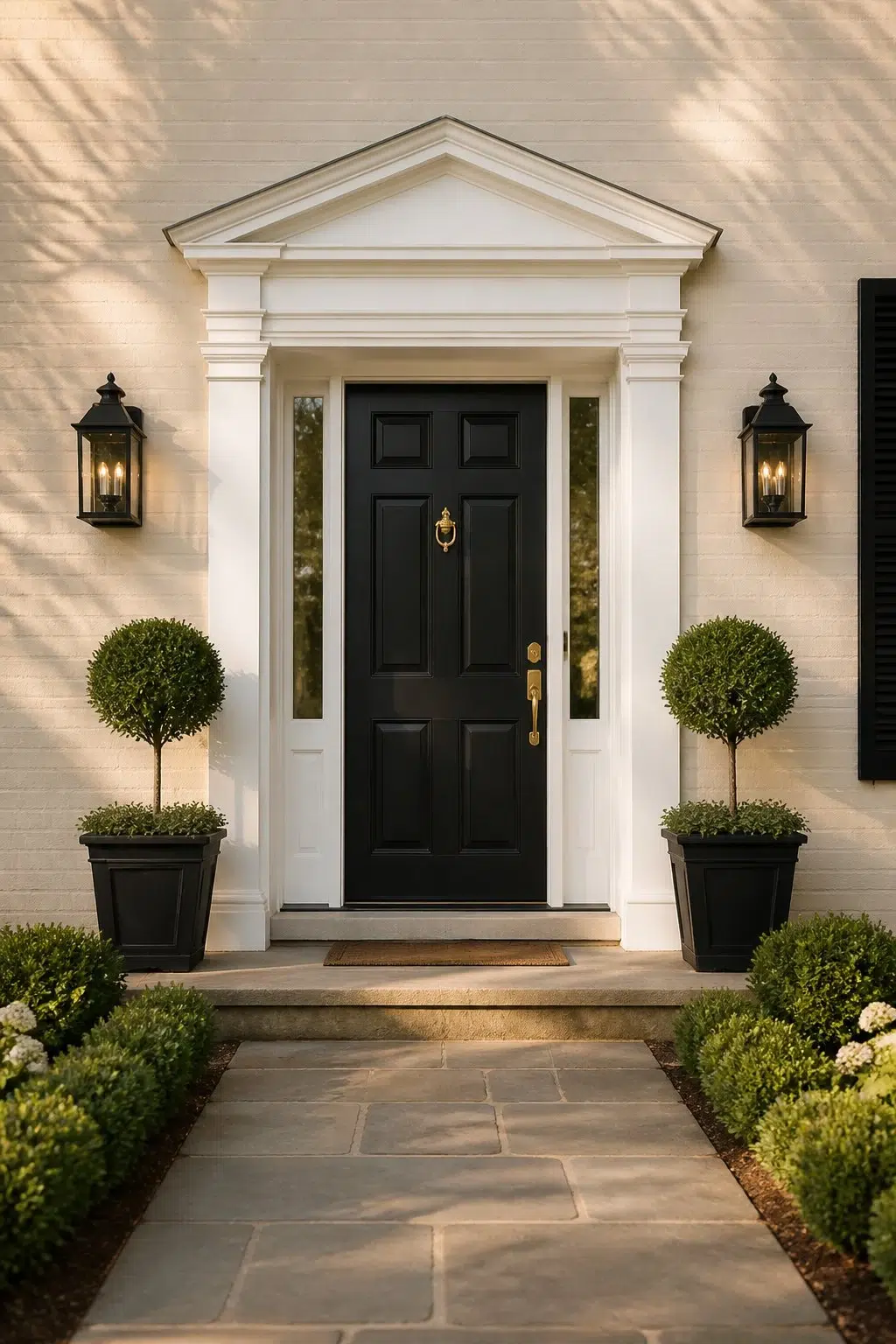
Pair a matte or satin black door with aged beige brick to create a timeless, high-contrast entrance. The black anchors the facade and highlights the warm, weathered tones in the brick.
Paint the door in a durable exterior black and choose hardware in brushed brass or antique bronze for subtle warmth. Add a simple black lantern or matte sconces on either side to echo the door without competing with the brick texture.
Frame the entry with crisp white or soft cream trim to sharpen lines and prevent the look from feeling too heavy. Place two matching planters with evergreen shrubs to add symmetry and year-round color.
For steps and walkways, use charcoal or slate pavers to bridge the black door and beige brick. Keep accessories minimal: a plain welcome mat, a polished house number, and a single wreath in muted greens will finish the look without clutter.
Modern Oak Door and Beige Stucco Entry
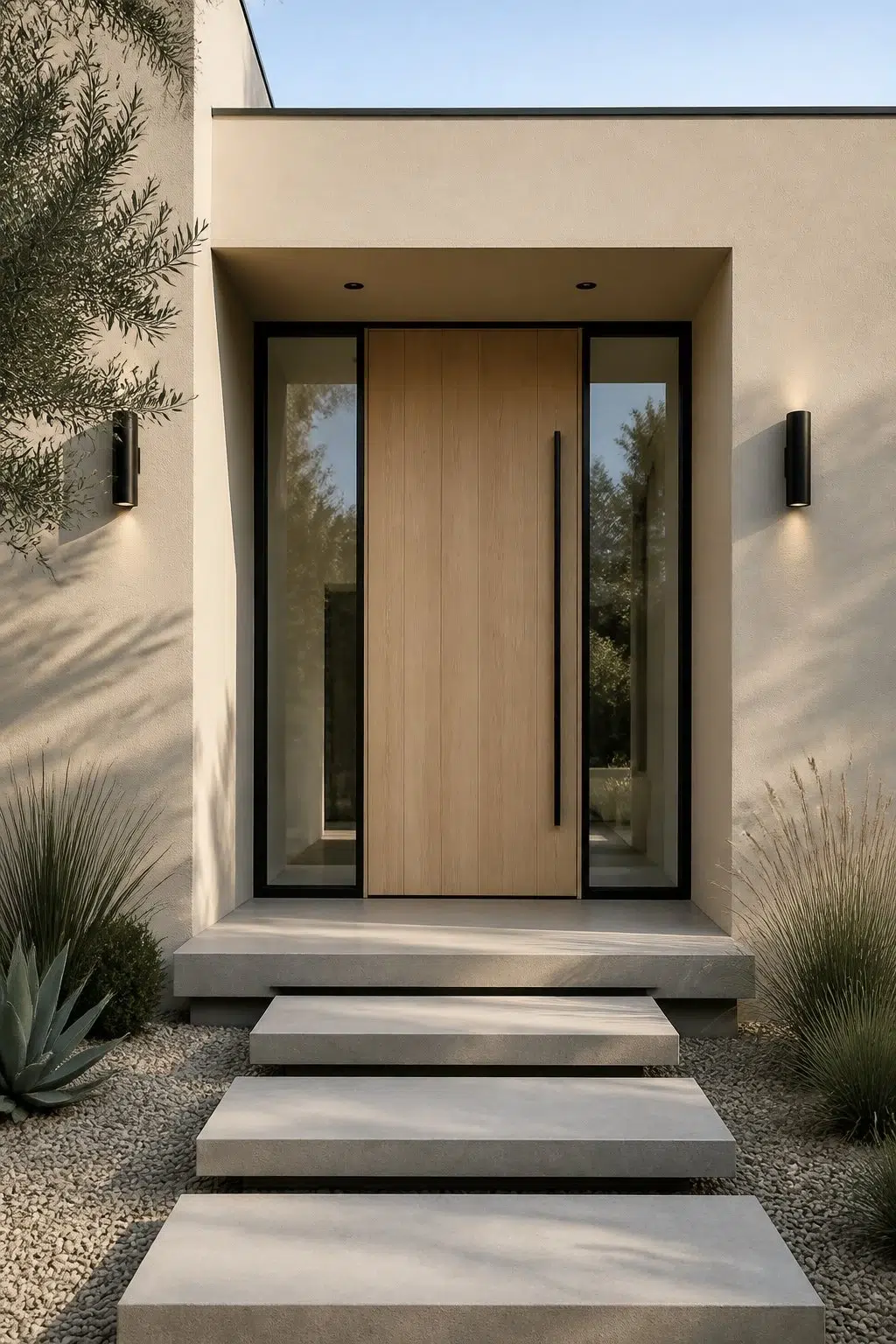
A warm oak door pairs naturally with beige stucco to create a modern, grounded entry. Choose a full-grain oak with a clear or matte sealer to show the wood’s texture; avoid high gloss that fights the stucco’s soft look.
Balance color and contrast by picking oak with medium to dark tones if your stucco is light. Add slim black or brass hardware for a crisp accent—brass warms the palette, black gives a sharper, contemporary edge.
Frame the door with simple trim or a narrow reveal rather than heavy molding to keep the modern feel. Place low planters with coarse grasses or olive trees nearby to echo the wood’s warmth and soften the stucco plane.
Use a matte or low-sheen finish on the stucco and door so light reads as texture, not glare. Add a linear porch light or recessed step lighting in warm white (2700–3000K) to enhance wood grain after dusk.
Sage Green Door With Cozy Beige Porch
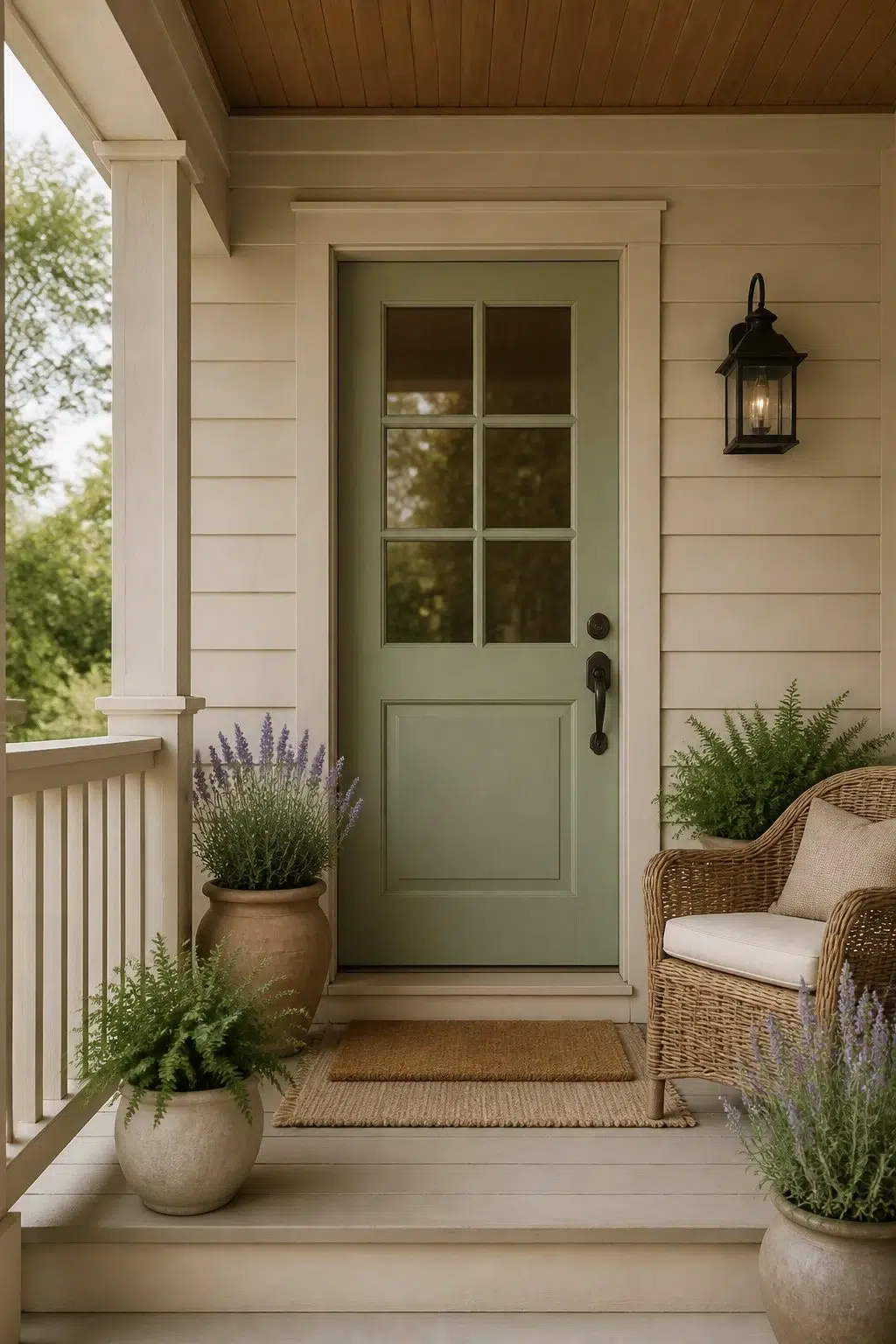
A sage green door brings calm color to a beige porch without being bold. Paint the door in a muted, slightly gray-green to match natural plants and keep the beige trim warm but neutral.
Add texture with a tumbled or light-patterned beige rug and simple terracotta or weathered wood pots. Place low-growing lavender or boxwood near the steps to echo the green and add scent without clutter.
Choose matte or eggshell finishes for both door and trim to avoid glare and hide small wear. Use oil-rubbed bronze or aged brass hardware for contrast that feels lived-in, not flashy.
Keep extra color to a minimum: one coordinating throw pillow or a woven basket on a bench will tie the look together. For maintenance, test paint samples outside and wipe down the porch seasonally to keep the soft tones even.
Navy Door With Beige Board and Batten
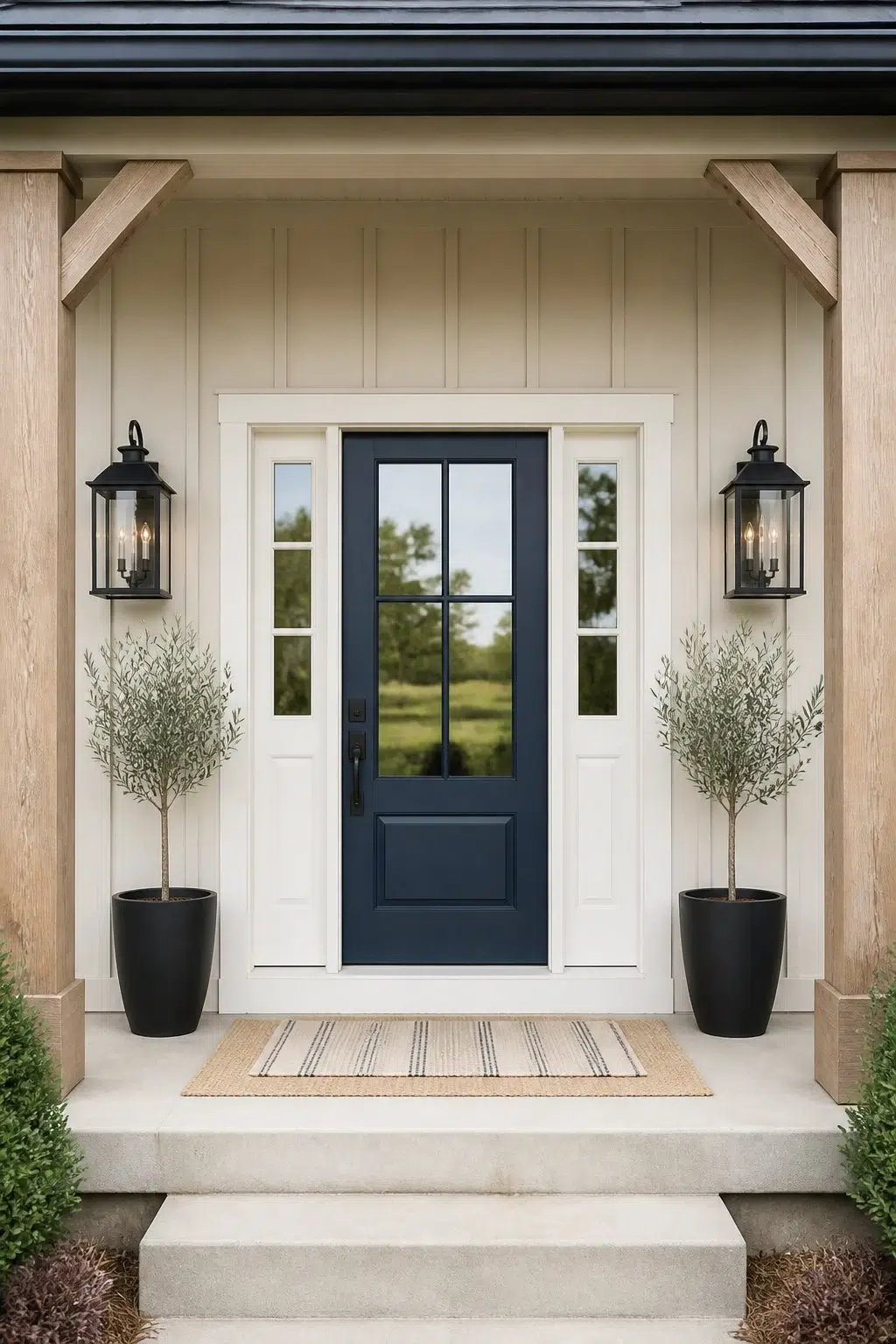
A navy front door adds strong contrast to beige board-and-batten siding while keeping a classic, grounded look. Paint the door in a deep, low-gloss navy to avoid glare and to let texture show.
Keep trim and battens a warm beige or soft white to maintain clean lines; this preserves the board-and-batten pattern and prevents the door from overpowering the façade. Add brass or aged bronze hardware for a warm metallic accent that pairs well with both navy and beige.
Frame the entry with simple planters or low shrubs in green tones to soften the contrast and add depth. If you have porch lighting, choose fixtures with warm LED bulbs and a finish that matches the hardware for a cohesive, intentional feel.
Terracotta Door With Sun-Washed Beige Walls
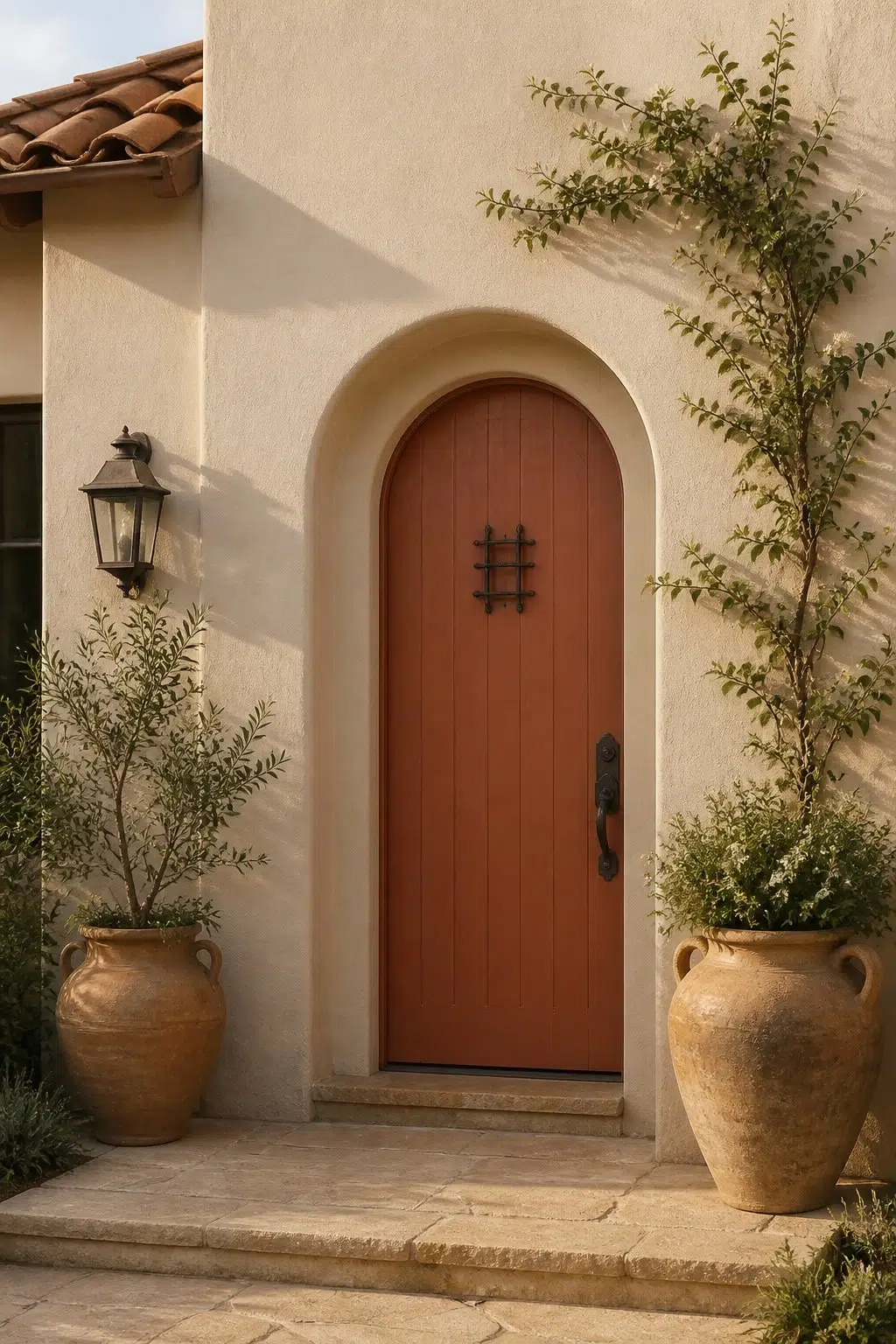
A terracotta door brings warm, earthen color that complements sun-washed beige walls. Choose a matte or low-sheen finish to keep the look grounded and avoid glare that fights the soft wall tone.
Frame the door with a slightly darker trim or a narrow black edge to give it definition without harsh contrast. Add warm brass hardware—pulls and a kick plate—to echo terracotta’s golden undertones and link the door to nearby light fixtures.
Use potted plants with silvery or olive foliage to balance the warmth; their cool greens mute the palette and add texture. For lighting, pick warm LED sconces aimed downward so shadows enhance the door’s depth in evening light.
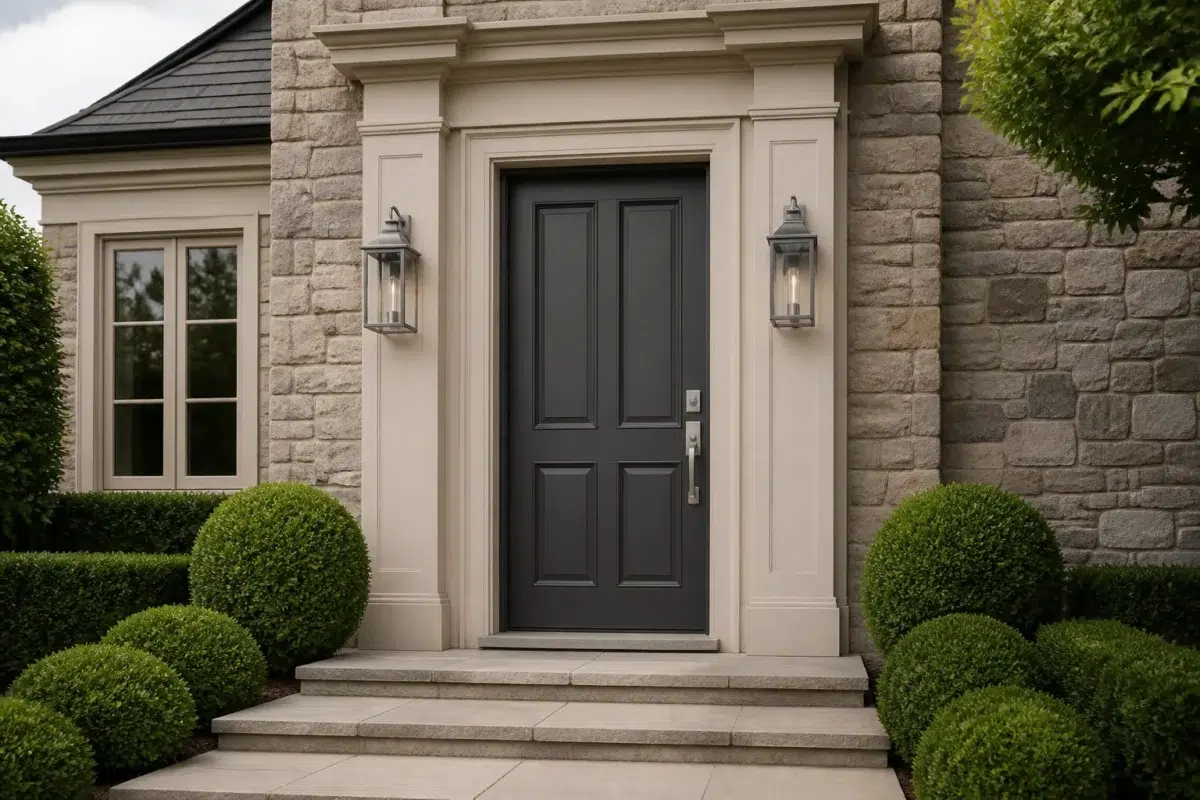
Charcoal Door With Beige Stone Surround
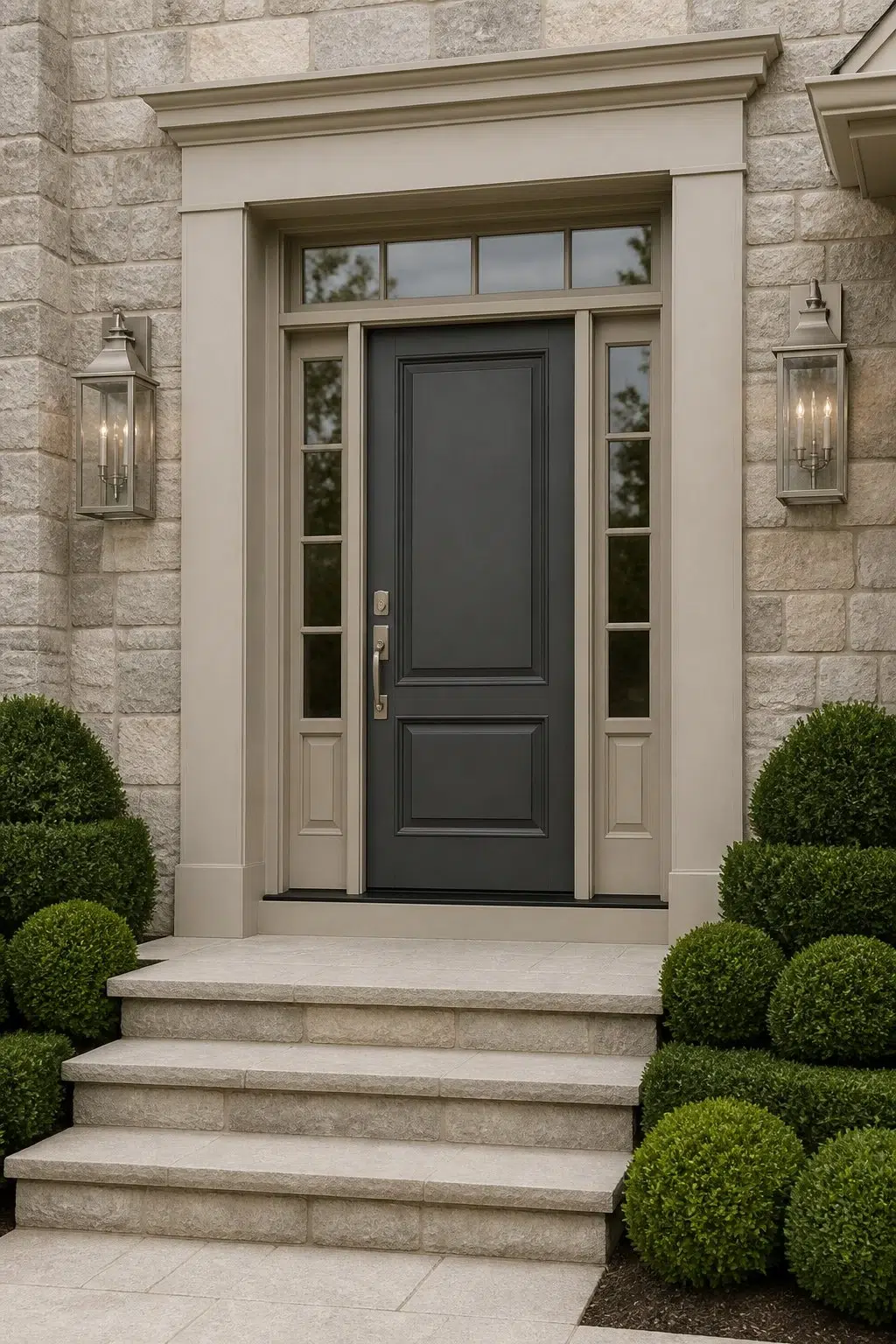
A charcoal door creates a strong, modern anchor against aged beige stone. Choose a low-sheen charcoal paint to avoid glare and let the stone’s warm undertones show; matte finishes read more refined next to textured masonry.
Balance the contrast with warm metal hardware—brass or aged bronze links the cool door to the beige stone. Use a slim vertical pull or simple knob so the metal reads as a deliberate accent, not visual clutter.
Frame the entry with soft greenery to soften the hard contrast. Plantings with silvery foliage or clipped boxwood echo the stone’s tones and keep the composition calm.
Add layered lighting: warm LED sconces or step lights bring out the beige warmth after dusk and prevent the charcoal from appearing flat. Keep trim minimal and match it to either the door or the stone to preserve a cohesive look.
Soft Blue Door and Beige Coastal Entry
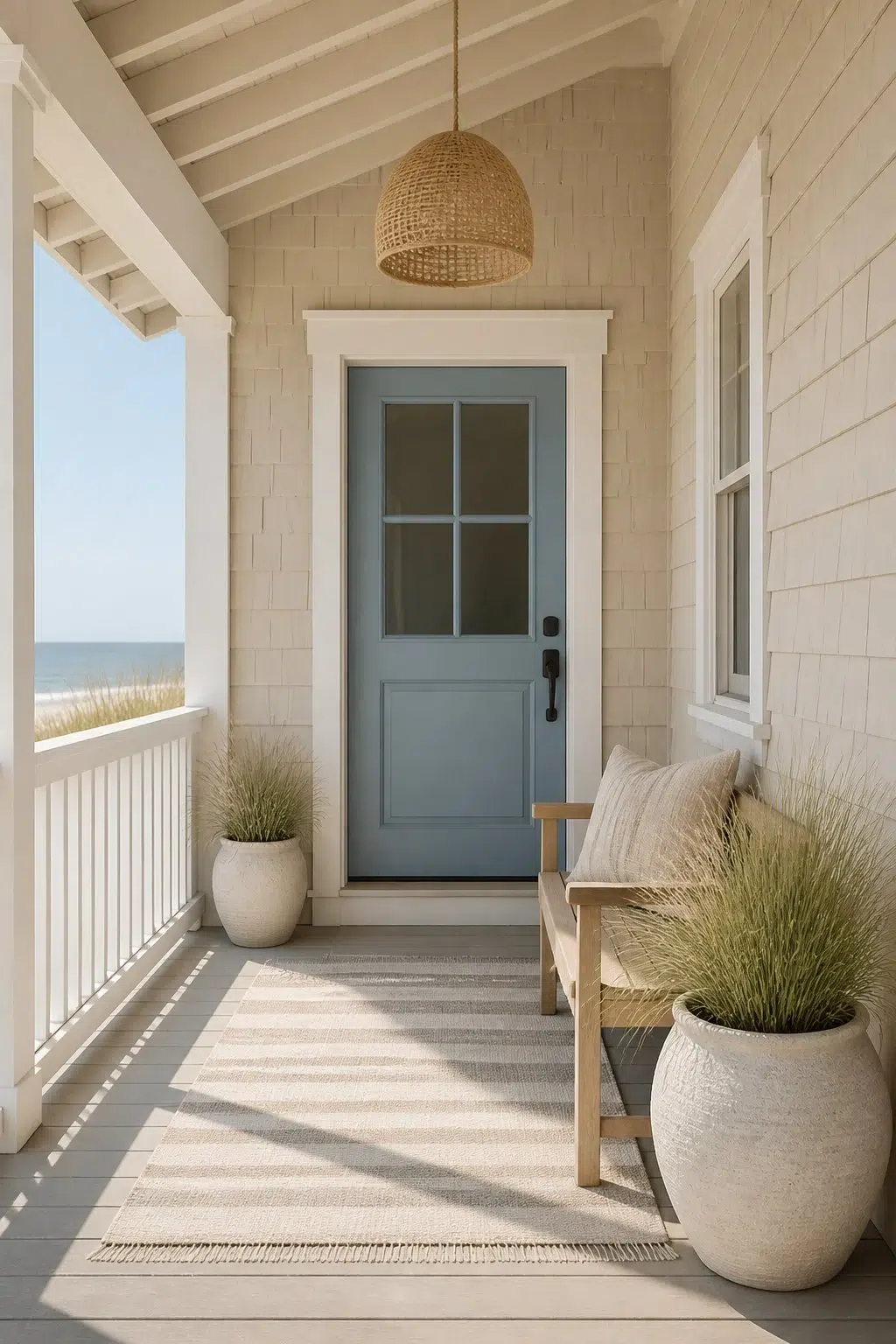
Pair a soft blue door with an aged beige facade to create a calm, coastal look that reads fresh but lived-in. Paint the door a muted sea glass or powder blue; choose semi-gloss exterior paint so it resists salt and cleans easily.
Frame the entry with beige or sand-toned trim to keep the palette warm and cohesive. Add simple brass or matte black hardware for contrast, and keep ornamentation minimal so the colors stay the focus.
Use two matching planters with low-maintenance plants (roses, boxwood, or palms) to anchor the doorway and echo coastal greenery. Put down a neutral woven mat or sisal rug to add texture without competing with the color pair.
If your siding fades, test samples in morning and afternoon light before committing. For durability, scrub the painted door yearly and touch up edges to keep the soft blue looking crisp against the aged beige.