
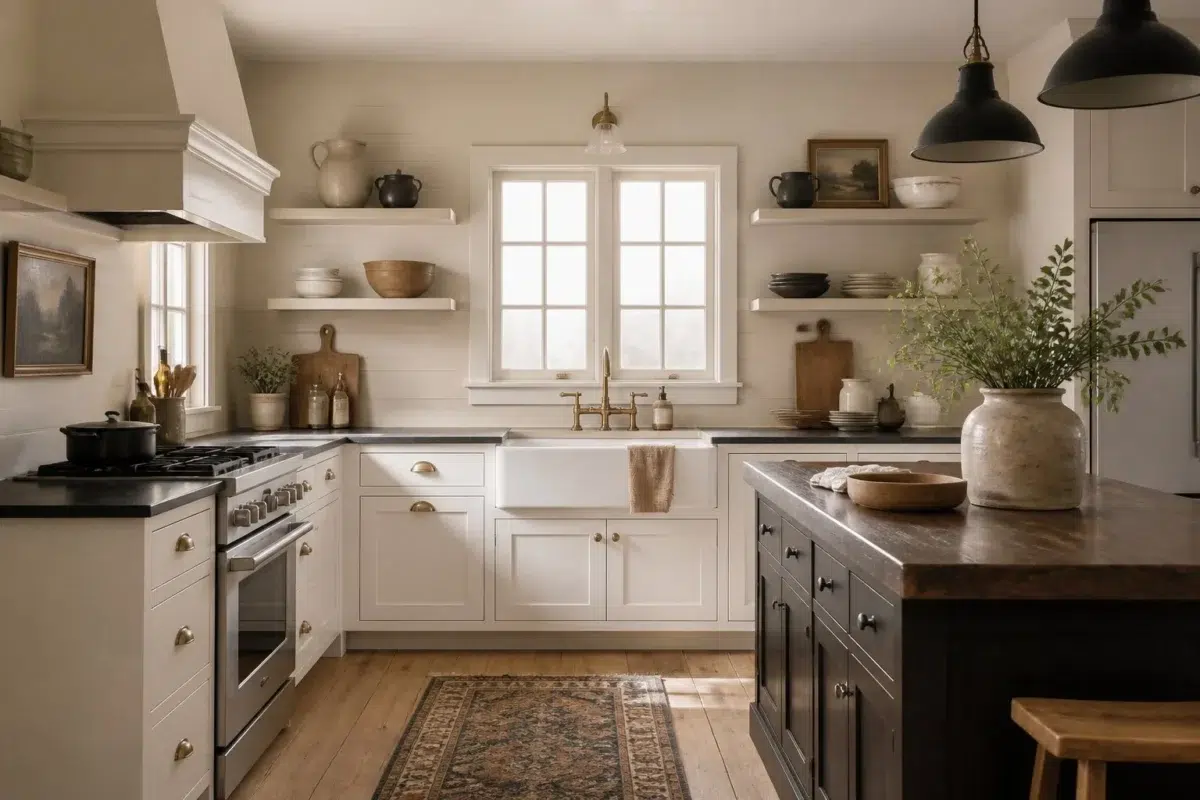
You can instantly explore the full color specs, LRV, and coordinating palettes on the Behr Aged Beige page to see how this warm neutral will behave in your kitchen. Aged Beige gives you a soft, lived-in base that warms surfaces and hides wear, so you can create a timeless kitchen that feels calm and welcoming.
Use Aged Beige as your starting point to layer texture, contrast, and function so the room feels balanced without being flat. You’ll learn practical ways to apply it across different layouts and styles, with clear tips on pairing, lighting, and finishes that help the color read right in real life.
Warm Minimal Galley Kitchen
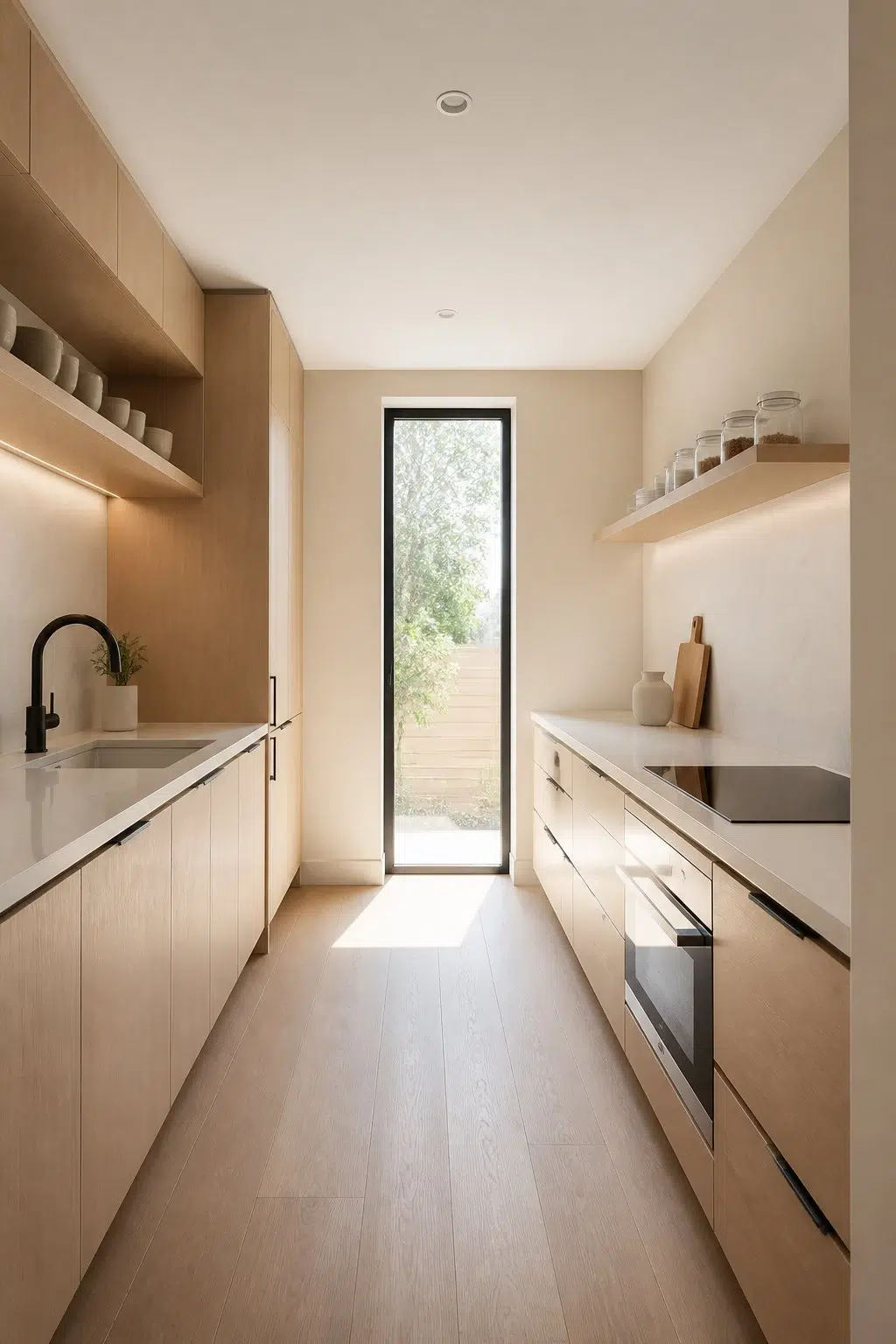
Choose a narrow galley layout with flat-panel aged beige cabinets to keep lines clean and calm. Pair them with a light, matte quartz countertop in a slightly lighter beige to maintain contrast without harshness.
Add warm wood open shelves or a slim butcher-block run on one side for texture and quick access to dishes. Use under-cabinet LED strips for task light and a single row of small pendant lights above the walkway to add warmth without clutter.
Keep hardware minimal—brushed brass or aged bronze pulls work well and echo the aged beige tone. Limit decor to functional pieces: a few wooden cutting boards, neutral ceramics, and a small pot of herbs to add life without crowding surfaces.
Finish with pale stone or large-format porcelain floor tiles in cream or soft gray to reflect light and make the galley feel wider. Maintain clear counter space and concealed storage to preserve the minimal, efficient flow.
Classic Farmhouse Contrast
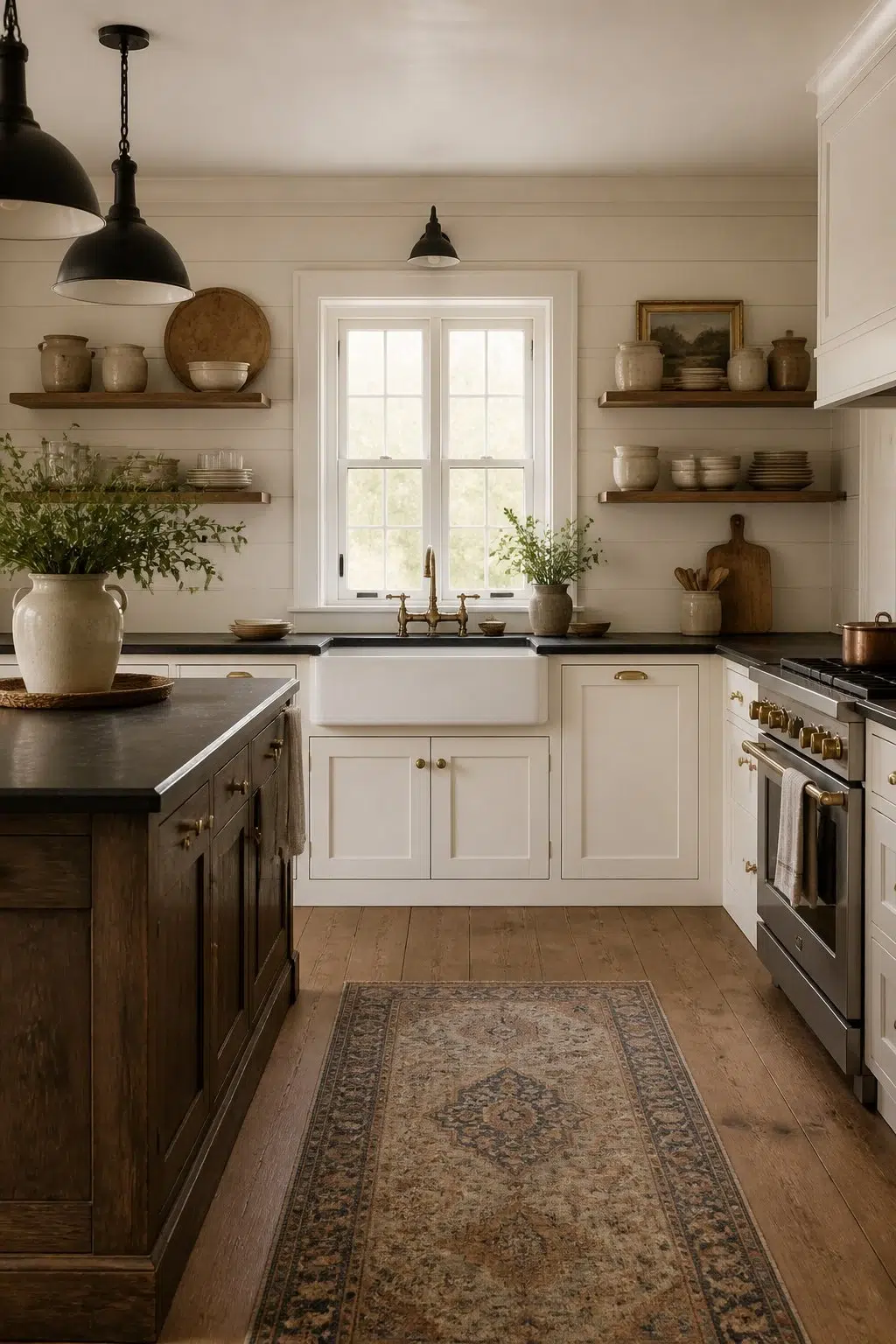
Pair aged beige cabinets with darker lower cabinets or a stained wood island to create a classic farmhouse contrast that feels warm and grounded. Use matte black or oil-rubbed bronze hardware and fixtures to add crisp lines without overpowering the soft beige tones.
Introduce warm wood floors or a chestnut-toned countertop to tie the palette together and add texture. Keep upper cabinets lighter to lift the room, and paint the walls a very light warm gray or muted cream to keep sightlines simple.
Add open shelving or a peg rail in natural wood for function and visual breaks. For lighting, choose simple pendants in dark metal above the island to echo the darker base cabinets and create balance.
European Bistro Nook
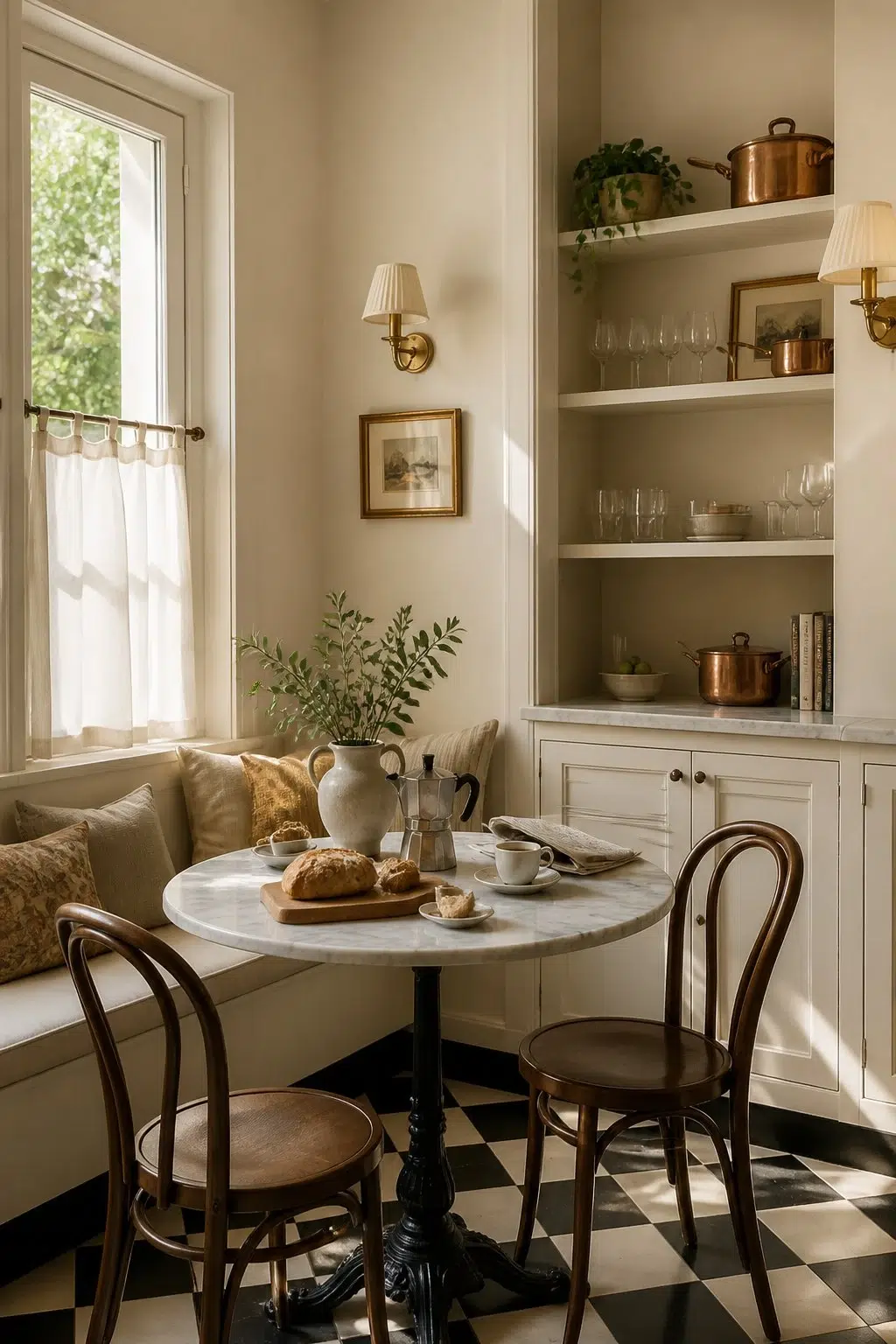
Create a small, aged beige bistro nook by starting with a warm, muted palette: soft beiges, ivory, and a touch of sage or warm gray. Paint built-in benches or a small banquette in a slightly darker beige to anchor the space and add depth.
Choose a round pedestal or marble-top table to keep the footprint intimate and European in scale. Pair it with a mix of bentwood or simple metal bistro chairs and a textured cushion or ticking-striped upholstery for classic movement.
Add aged brass or antique-look lighting above the table to introduce warm metal tones that read as well-worn. Keep accessories minimal: a small vase with fresh herbs, a single framed vintage print, and open shelving with stacked plates to suggest everyday use.
Use brick, worn-stone, or reclaimed wood for the floor or a framed cooking niche to give the nook a grounded, heritage feel. Layer in natural wood accents and soft linen textiles to make the space cozy without clutter.
Modern Organic Island Focus
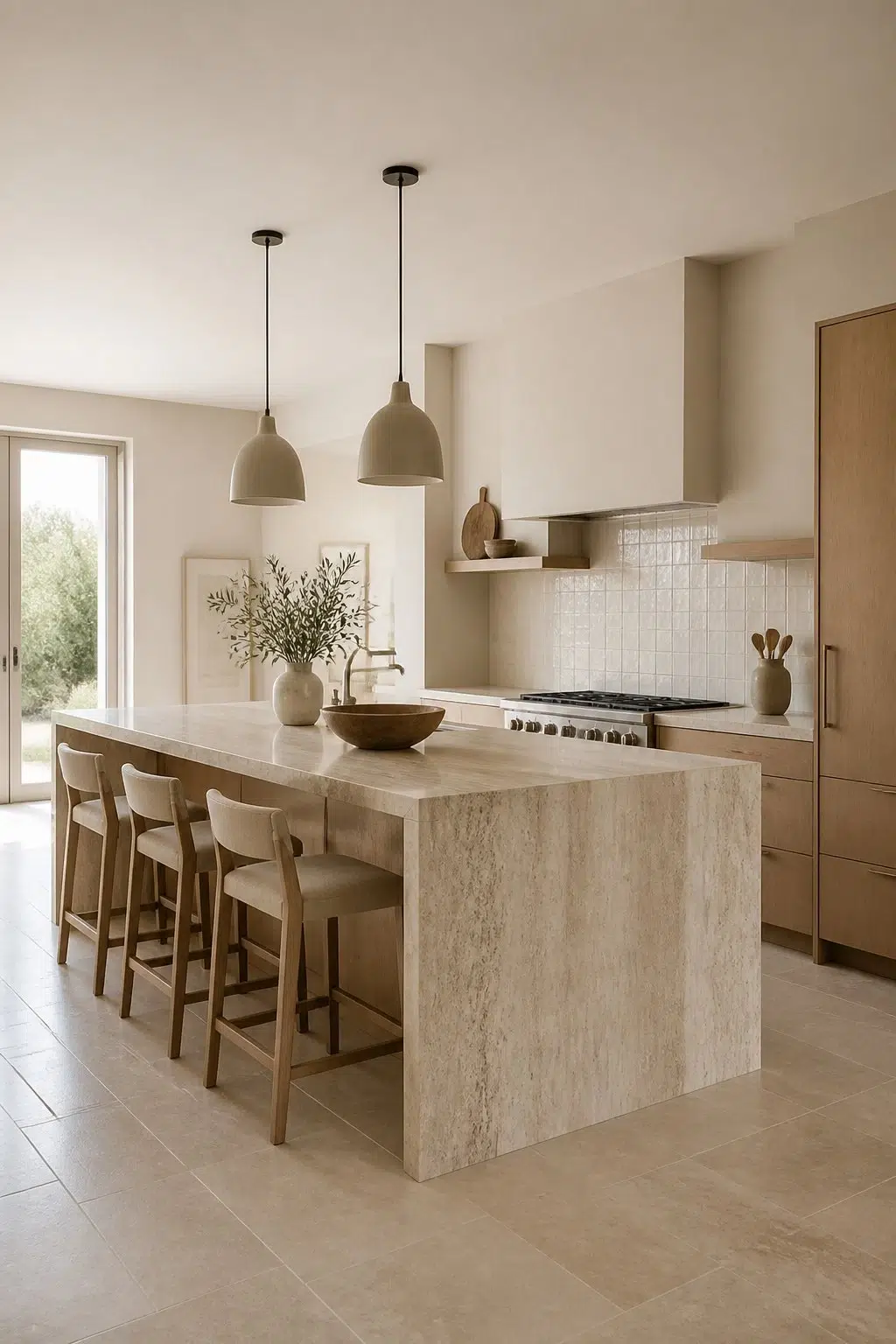
Choose an island that anchors your aged beige kitchen with natural textures and clean lines. Opt for a warm wood base or a beige-toned plaster finish and pair it with a quartz or honed stone waterfall top in a soft cream or light taupe.
Add practical storage: deep drawers for pots, built-in recycling bins, and an open shelf for cookbooks or woven baskets. Keep hardware minimal—matte brass or aged black pulls will read modern but still warm.
Create a lived-in look by layering simple accents: a bowl of lemons, a linen runner, and a small cluster of potted herbs. Use low, warm pendant lighting centered over the island to highlight texture without harsh contrast.
For seating, pick stools with natural woven seats or slim wood frames in beige or light oak. Balance scale by keeping walkways at least 36 inches on all sides so the island feels purposeful, not cramped.
Vintage Cottage Pantry Wall
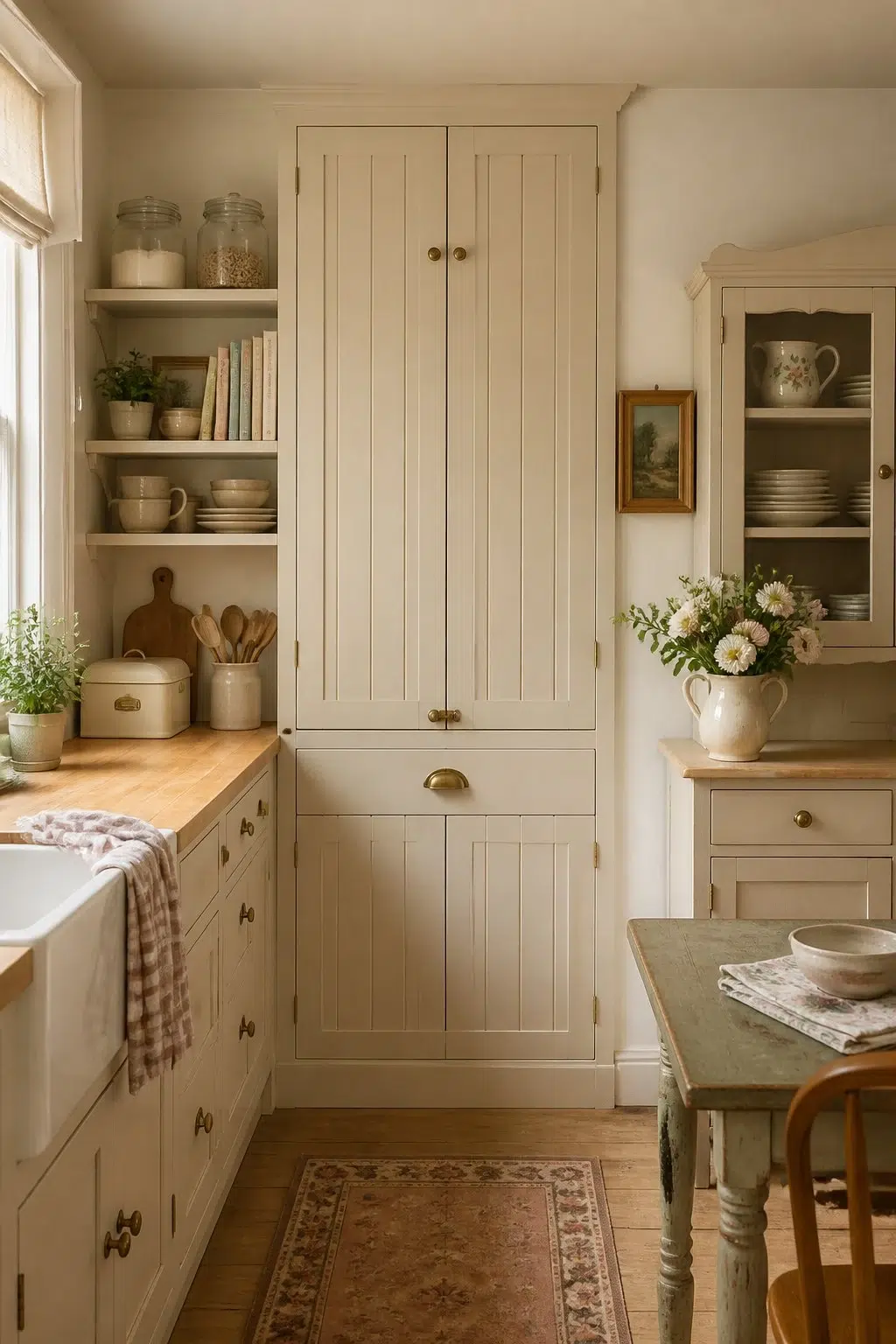
Give your pantry wall an aged beige paint with a matte finish to set a warm, lived-in tone. Add open shelving in natural wood or distressed white to show jars, crockery, and folded linens; space shelves so taller jars fit without crowding.
Use glass or labeled mason jars for dry goods to keep things tidy and visual. Hang a peg rail or narrow rail with S-hooks for ladles, a small colander, or drying herbs to add function and charm.
Install beadboard or shiplap behind shelves for texture and a vintage feel; paint it a slightly lighter or darker beige for subtle contrast. Finish with brass or oil-rubbed bronze hardware and a woven runner rug to soften the area and protect floors.
Transitional Kitchen With Beige Ceiling
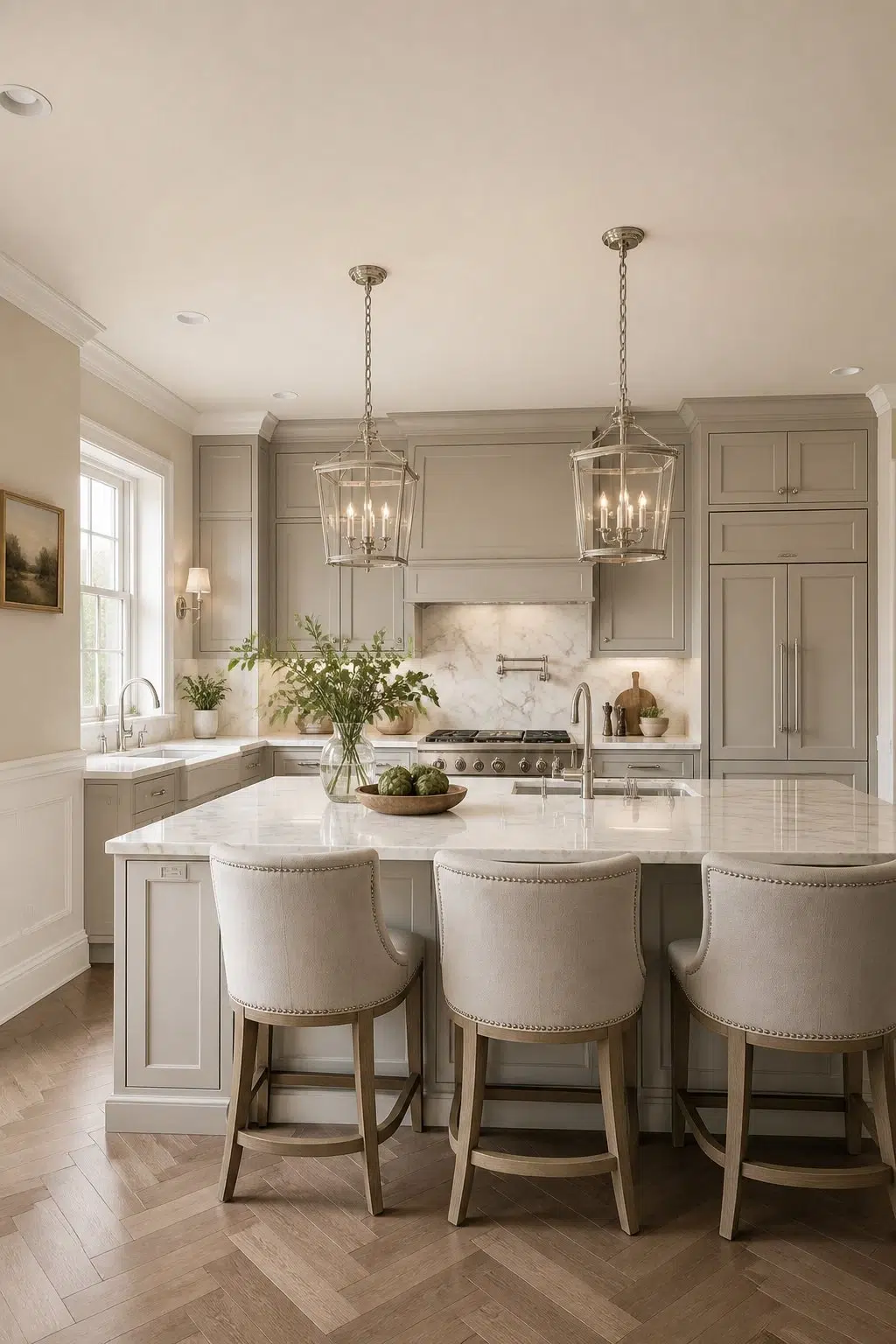
A beige ceiling ties together warm cabinets and cooler walls without stealing focus. Paint the ceiling a soft, warm beige that’s one to two shades lighter than your cabinetry to add height while keeping a calm, unified look.
Use matte or eggshell finish so light reflects softly and does not highlight imperfections. Pair the ceiling with recessed lighting and a few warm-toned pendants to keep light even and color true.
Add trim or simple crown molding painted the same beige to create a seamless transition between wall and ceiling. Keep other finishes mixed — warm wood floors, stone counters, and brushed metal hardware — so the ceiling feels intentional, not monochrome.
If your kitchen gets strong daylight, test paint swatches at different times to check undertones. For smaller kitchens, a slightly lighter beige will open the space; for larger rooms, a deeper warm beige adds coziness without feeling heavy.
Desert-Inspired Textured Kitchen
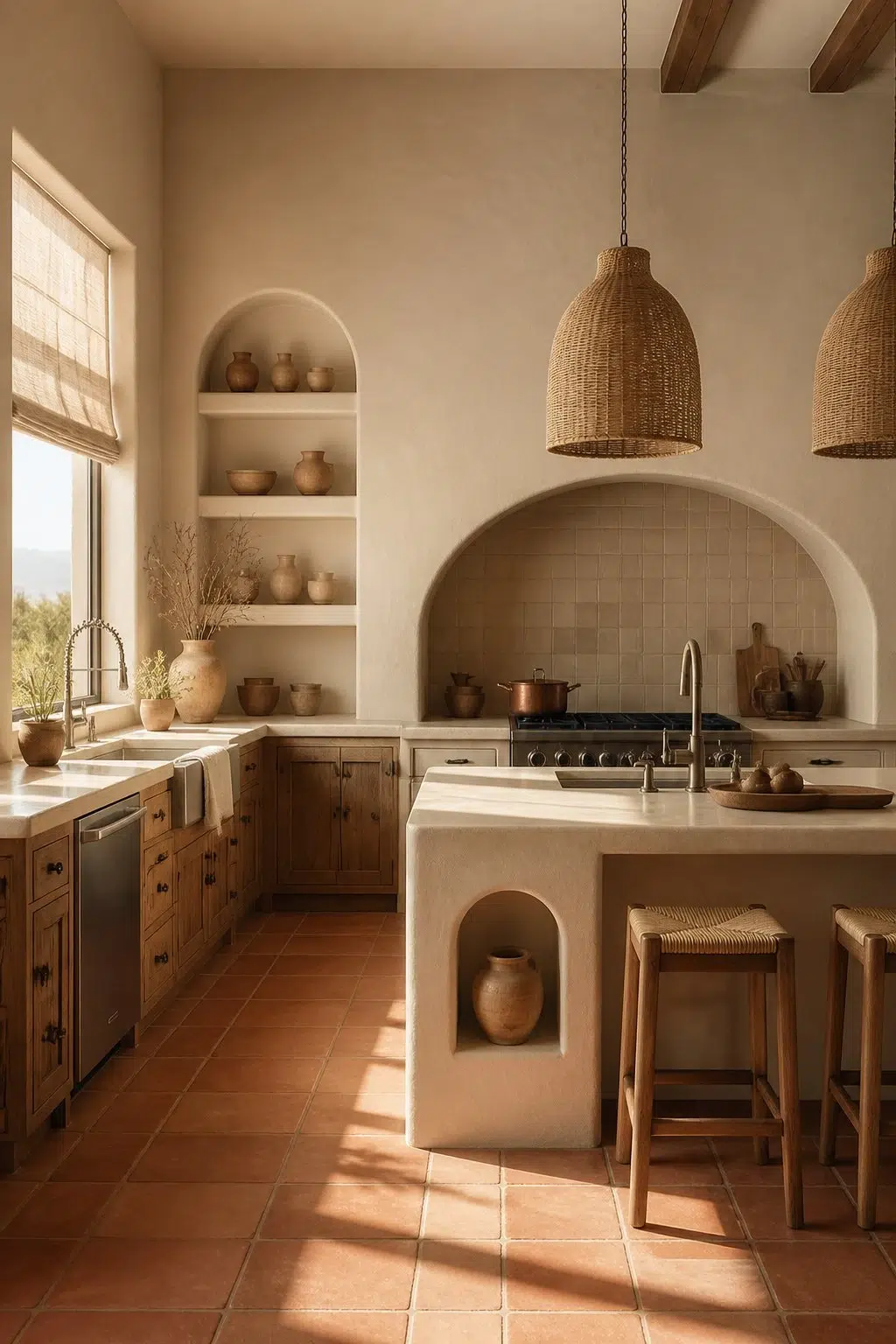
Bring desert warmth to your aged beige kitchen with layered textures and sandy tones. Use matte beige or clay-colored cabinetry and pair it with a textured stone or plaster backsplash to mimic sunbaked surfaces.
Add tactile elements like rough-hewn wood open shelves and a woven rattan pendant to introduce natural fiber contrast. Choose countertops in warm sandstone or honed travertine; keep edges simple to maintain an earthy, worn look.
Introduce color with muted terracotta, dusty rose, or ochre accents in dishware and textiles. Finish with oil-rubbed bronze or aged brass hardware for a subtle metallic warmth that feels collected over time.
Tip: balance texture by limiting each surface to one dominant texture (cabinet faces, backsplash, or flooring) so the room reads calm rather than cluttered.