
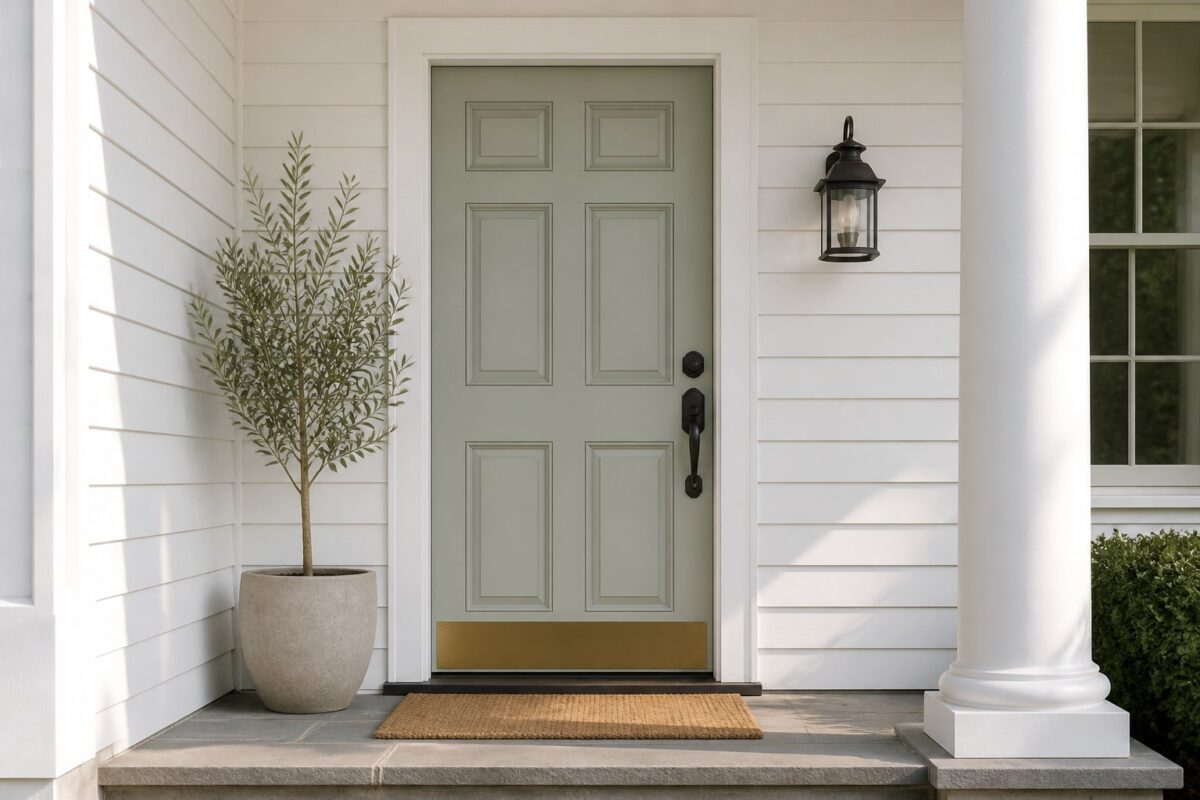
Oyster Bay by Sherwin-Williams, SW 6206, gives your front door a soft gray-green finish that feels calm, tailored, and easy to live with. Its muted blue-gray undertone keeps the color from looking minty, while its organic character works with traditional, cottage, Craftsman, and modern exteriors.
The best Sherwin-Williams Oyster Bay front door ideas balance the paint with durable finishes, warm natural textures, and hardware that gives the entry clear definition. Test a sample outdoors first, since the shade can look airier in sunlight and deeper in the evening.
Classic Panel Door in Soft Sage
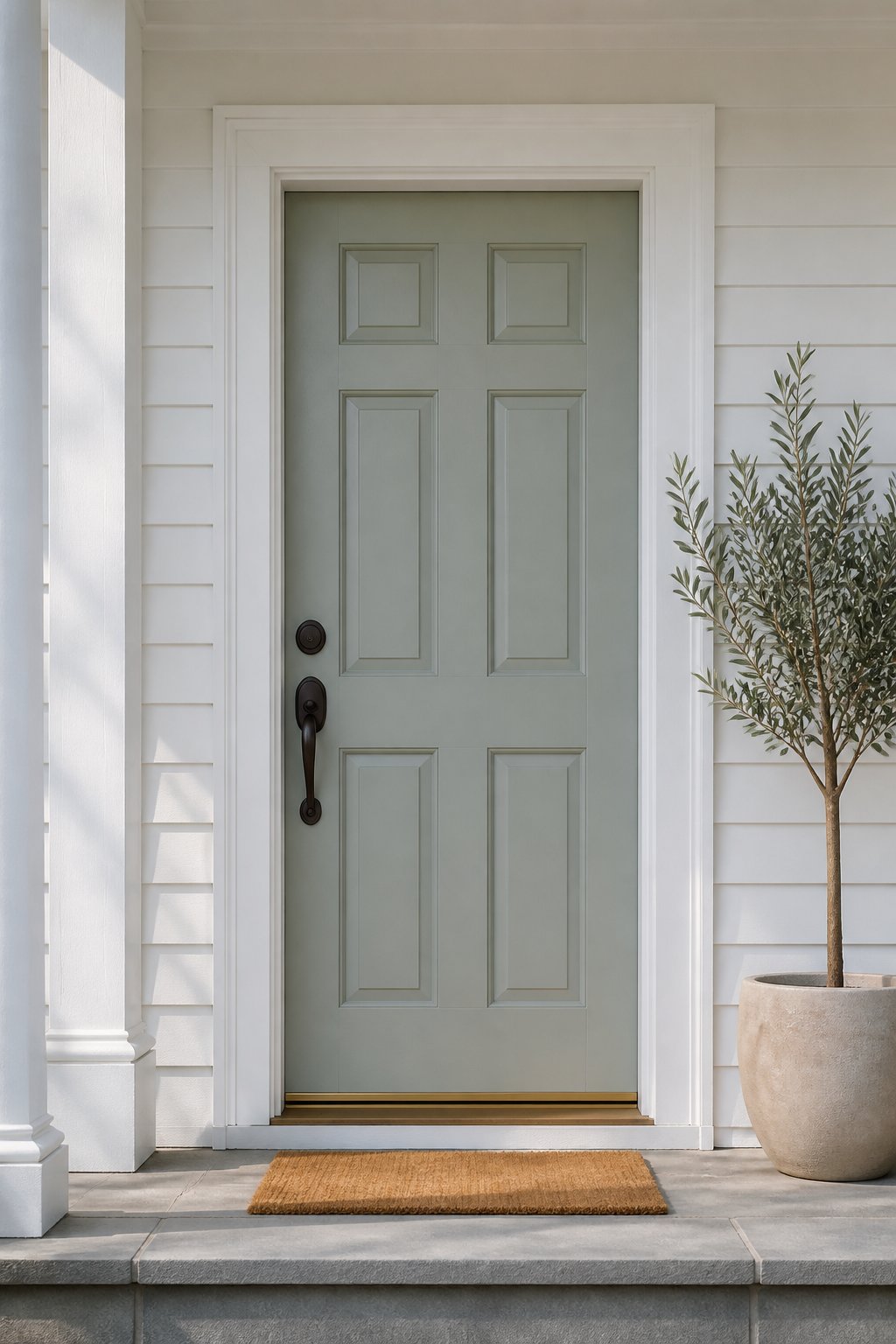
A traditional six-panel or three-panel door gives Oyster Bay a quietly classic setting. Against white clapboard, the color feels fresh and restrained; beside warm brick or gray stone, its gray undertone helps it settle naturally into the exterior.
Use a high-quality exterior enamel in a satin or semi-gloss finish. Satin gives you a softer, more understated look, while semi-gloss highlights the panel details and makes routine cleaning easier. Lightly sand and prime a previously painted door so the finish looks even across each recessed panel.
Oil-rubbed bronze or matte-black hardware creates a grounded contrast. Choose a substantial handleset with a clean backplate, then add a simple brass kick plate for a small touch of warmth. Repeat the brass only once or twice, perhaps with a petite lantern accent, so the entry remains tailored rather than busy.
Finish the threshold with a natural coir mat and a terracotta or stone planter filled with ferns, rosemary, or clipped greenery. These organic textures bring out Oyster Bay’s connection to nature and soften the geometry of the door.
Sage Door with Crisp White Trim and Black Shutters
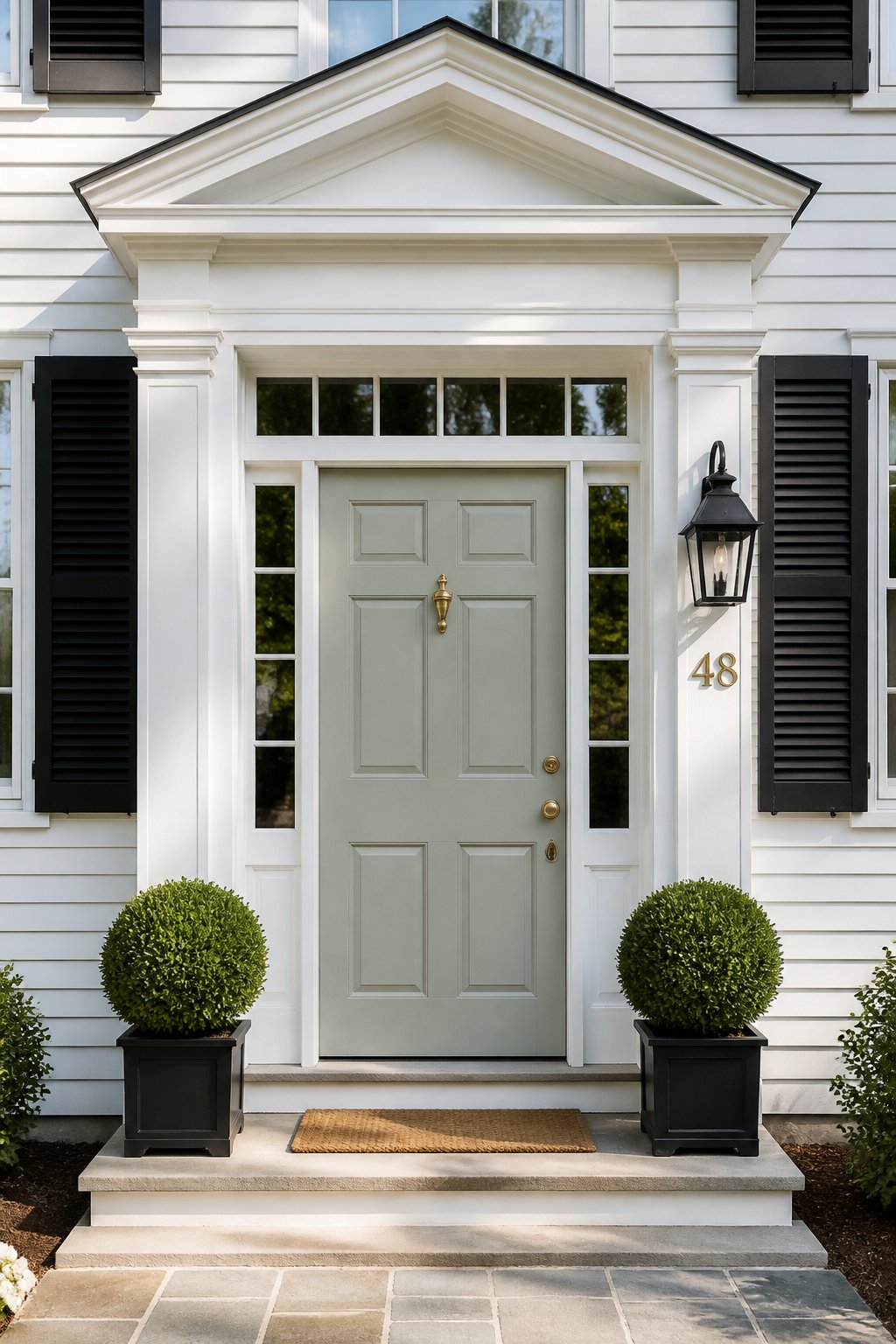
Pairing an Oyster Bay door with bright white casing creates a crisp New England character. White trim around the door, sidelights, and portico makes the muted sage feel architectural, while black shutters and a matching lantern add structure.
Use a durable satin enamel on the door and a low-luster exterior trim paint around it. Keep the white casing clean and warm rather than starkly blue-white, especially if your home has natural stone, aged brick, or creamy siding.
Choose a black lantern with clear glass and a simple silhouette. Matching black shutters across the facade will make the entry feel intentional, even if the door is the only painted color. Polished-brass house numbers mounted on the white trim add a tailored detail that catches afternoon light.
A natural coir mat, clipped boxwoods in dark planters, and a small limestone step keep the arrangement classic. Leave enough space around the door for the white frame and Oyster Bay color to remain the focus.
Full Entry Envelope: Door, Frame, and Overhead Beadboard
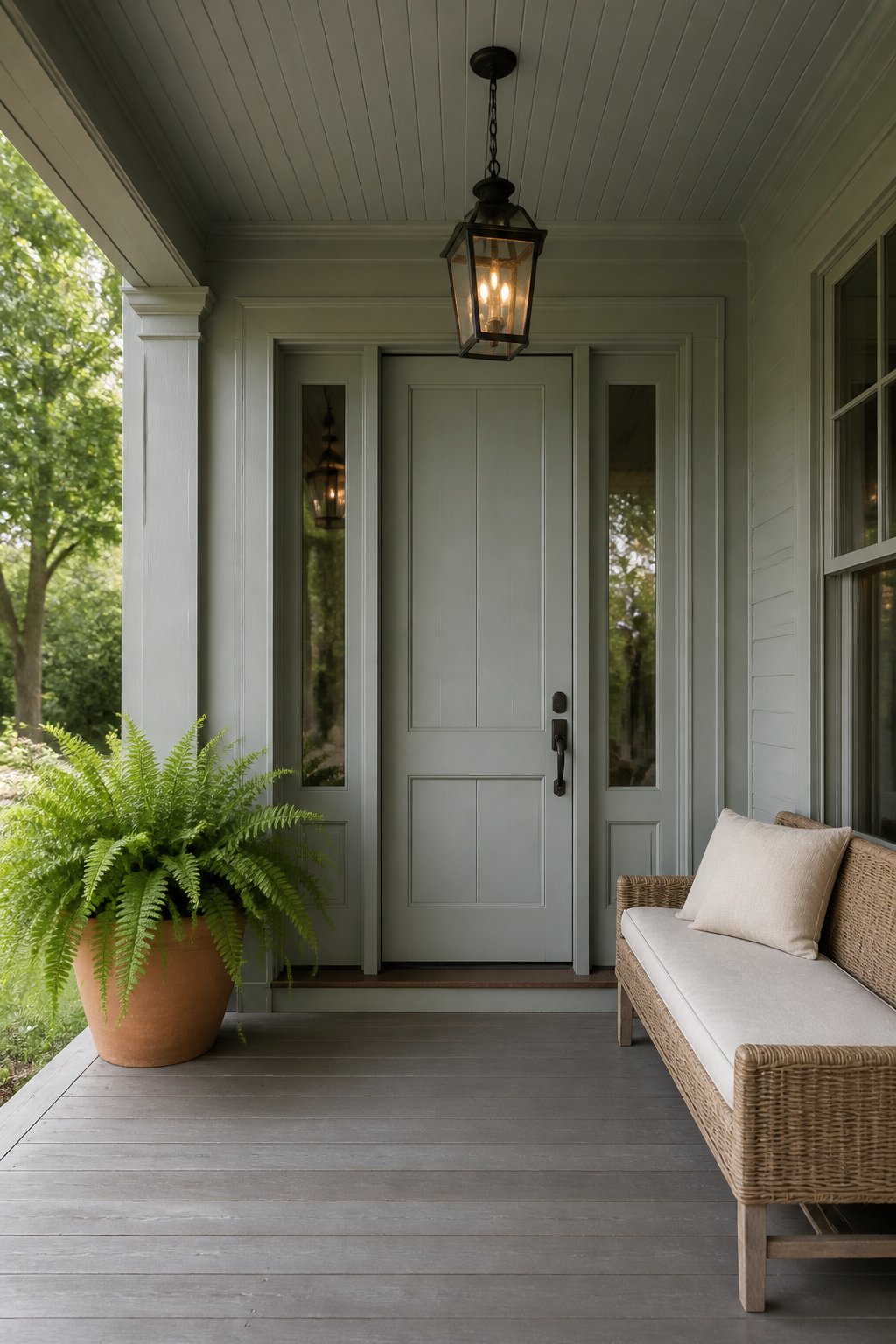
Color-drenching a covered entry in Oyster Bay can turn a narrow stoop into a sheltered outdoor room. Paint the door, frame, sidelights, porch ceiling beadboard, and selected trim in the same soft hue for a continuous, enveloping effect.
Use exterior satin enamel on the door and a durable porch paint on the beadboard and trim. The subtle difference in sheen will add depth without breaking the tonal palette. If the entry receives limited daylight, sample the paint on both the wall and ceiling before committing, since the shade may read richer in the shade.
Keep the porch floor warm gray or natural wood. A woven bench in rattan or teak introduces texture, while a lantern-style pendant gives the ceiling a welcoming point of light. Black or aged-brass hardware will stand out gently against the green.
Place a large terracotta pot of ferns near the door, with enough room for the fronds to move freely. A striped cushion, folded cotton throw, or small woven basket can make the nook feel useful without cluttering its calm, color-drenched character.
Craftsman Door with Sage Body and Stained Accents
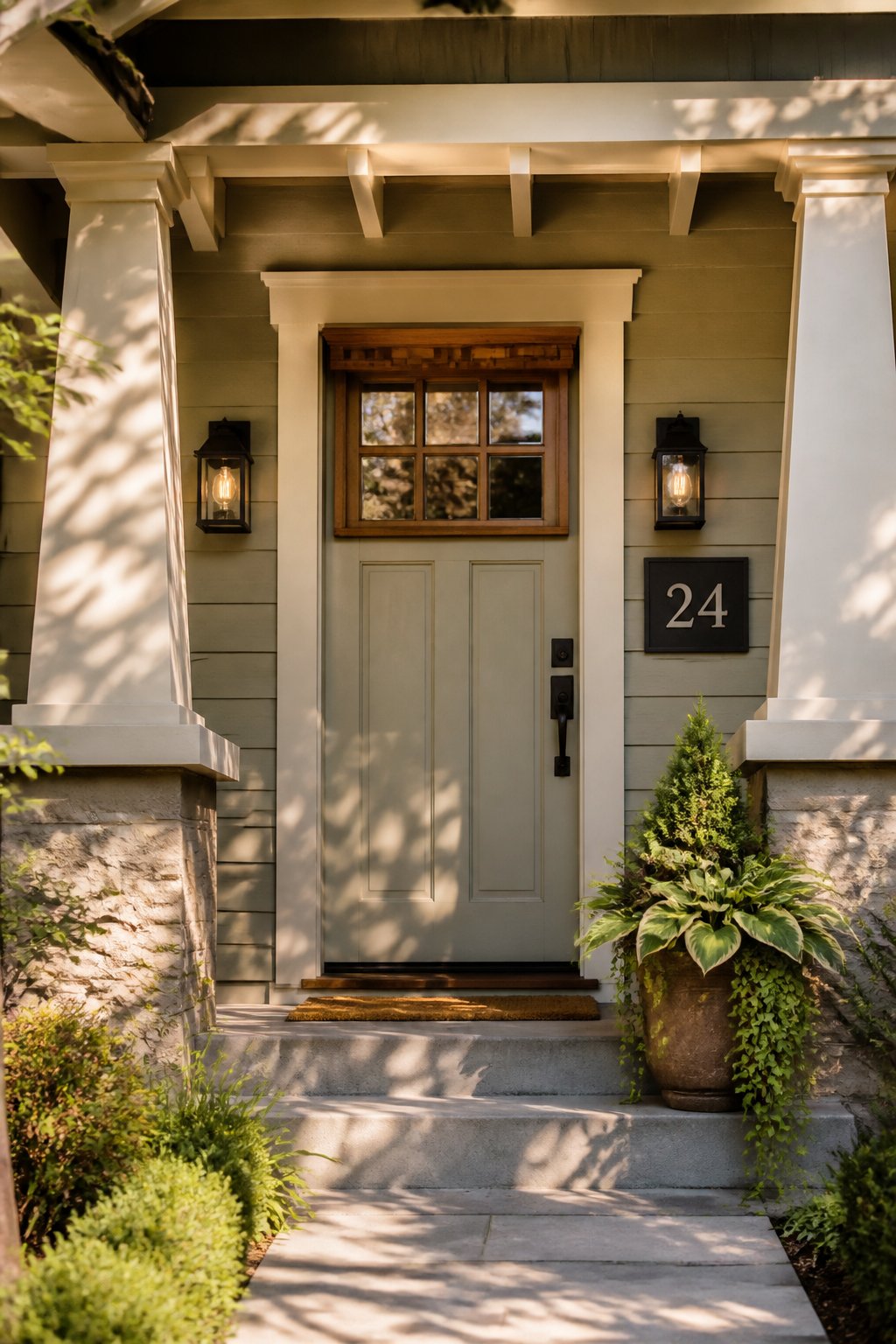
On a Craftsman or bungalow home, Oyster Bay works best when the door’s original details remain visible. Paint the main door body in a satin exterior enamel, then leave the dentil shelf, divided upper glass grilles, and exposed wood in a warm stain or deep bronze tone.
The contrast between muted sage and honey oak, walnut, or medium teak gives the entry an earthy, period-friendly balance. If the wood is weathered, clean and lightly sand it before applying an exterior stain with UV protection. Protect painted and stained areas separately so each finish keeps its character.
Square black carriage lights suit the strong lines of Craftsman architecture. Add an oversized house number plaque in blackened metal, bronze, or stained wood to give the facade a clear focal point.
A bungalow-style planter filled with ferns, heuchera, or layered evergreen greenery will echo the natural palette. Clay, cream, and brown accents also work well with the gray-green door, creating a grounded entrance that feels connected to the home’s original materials.
Modern Flush Door with Sage and Warm Wood
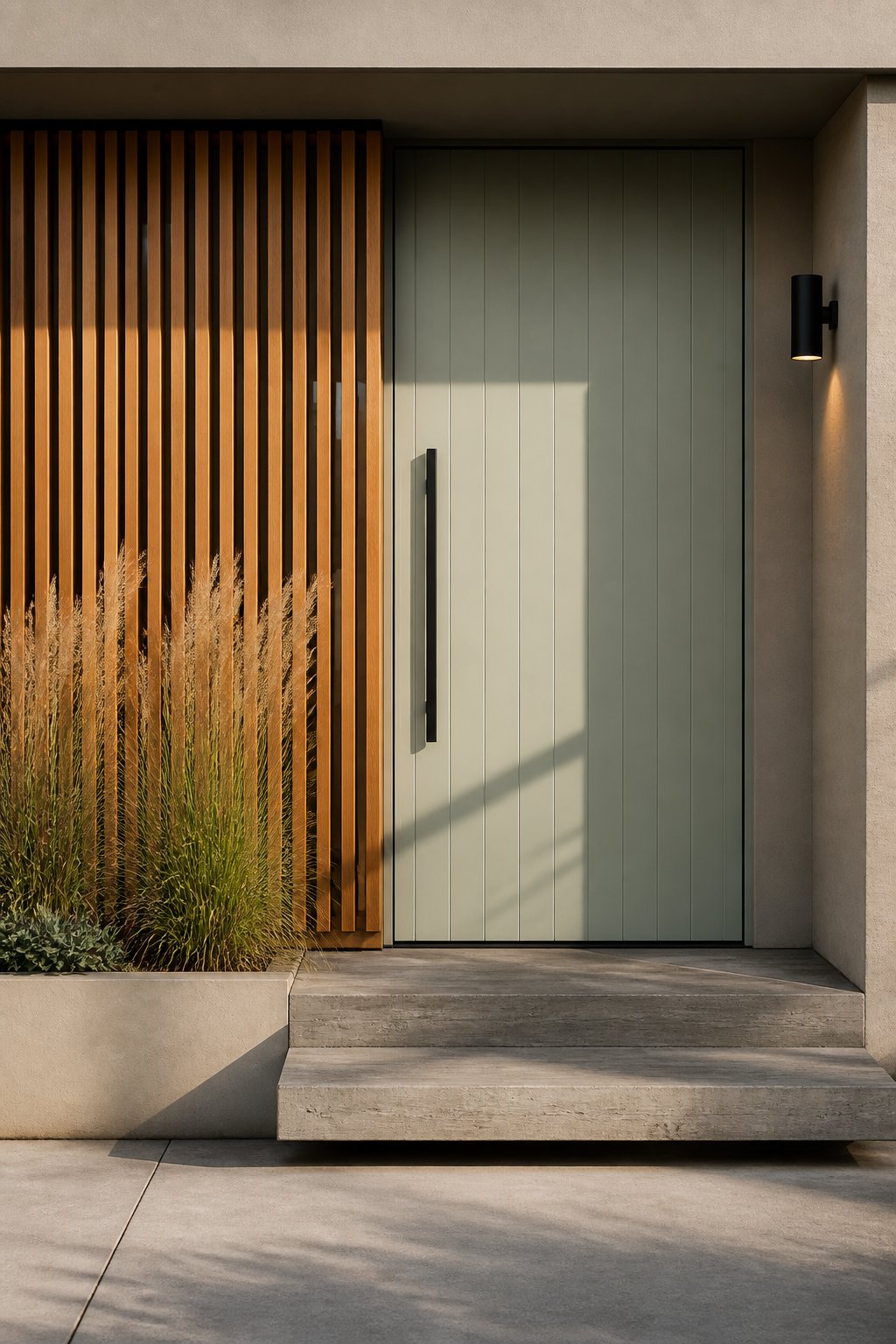
A flush or narrow-plank door gives Oyster Bay a clean, contemporary presence. The flat sage surface looks especially composed beside a warm cedar or iroko slat privacy screen, where the vertical wood grain adds movement and contrast.
Choose a smooth exterior enamel in satin for a refined finish that does not exaggerate the door’s surface. A long stainless-steel or matte-black bar pull reinforces the modern shape. Keep other hardware minimal, with concealed hinges where practical and a low-profile lockset.
A floating concrete step creates a crisp transition at the threshold. Pair it with a linear planter of ornamental grasses, whose fine texture softens the hard edges without making the entrance feel decorative or crowded.
Use one sculptural sconce rather than several competing fixtures. Black metal, aged brass, or brushed stainless steel can work, depending on the screen and window frames. Warm-white lighting will keep Oyster Bay from feeling cool after sunset.
Sage Dutch Door for a Cottage or Farmhouse
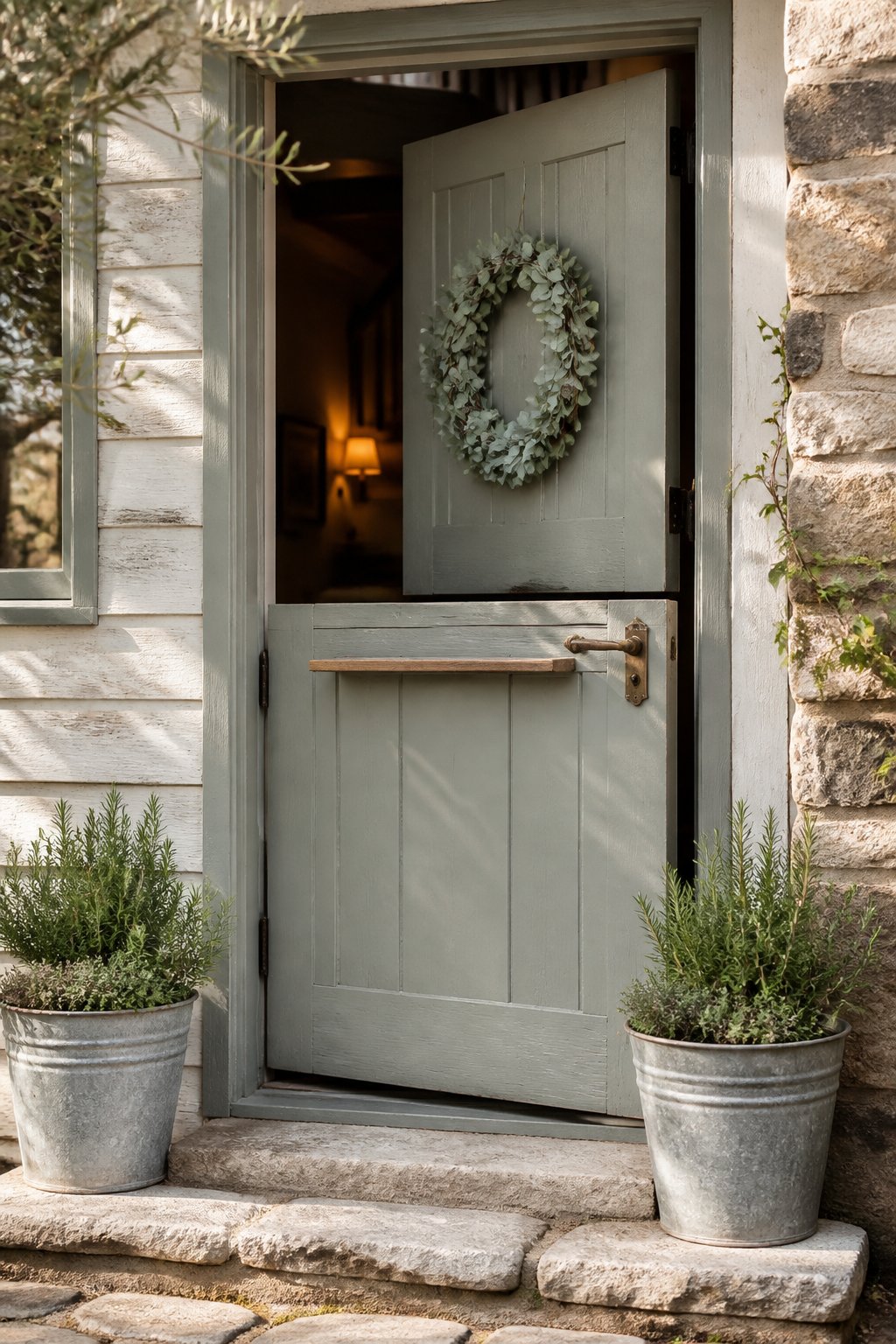
Painting both halves of a Dutch door in Oyster Bay creates a charming, softly layered entrance. When you open the top half, the color forms a gentle band around the opening while allowing light and air inside. The arrangement is also practical when you want to keep pets or young children safely indoors.
Use a satin exterior enamel on both door sections, taking care to paint the edges and the meeting rail evenly. An aged-brass latch brings warmth to the muted green, while black hinges can add a more farmhouse-inspired note.
A small shelf ledge on the lower half offers space for a potted herb, a tiny vase, or a seasonal object. Keep the display shallow so it does not interfere with the door’s movement. A hanging wreath made from olive branches, dried grasses, or eucalyptus will suit the color in every season.
Flank the entry with galvanized buckets planted with herbs or annuals. A woven mat and a simple wood stool can complete the cottage setting while preserving a clear, welcoming path to the door.
Sage Door and Painted Porch Floor
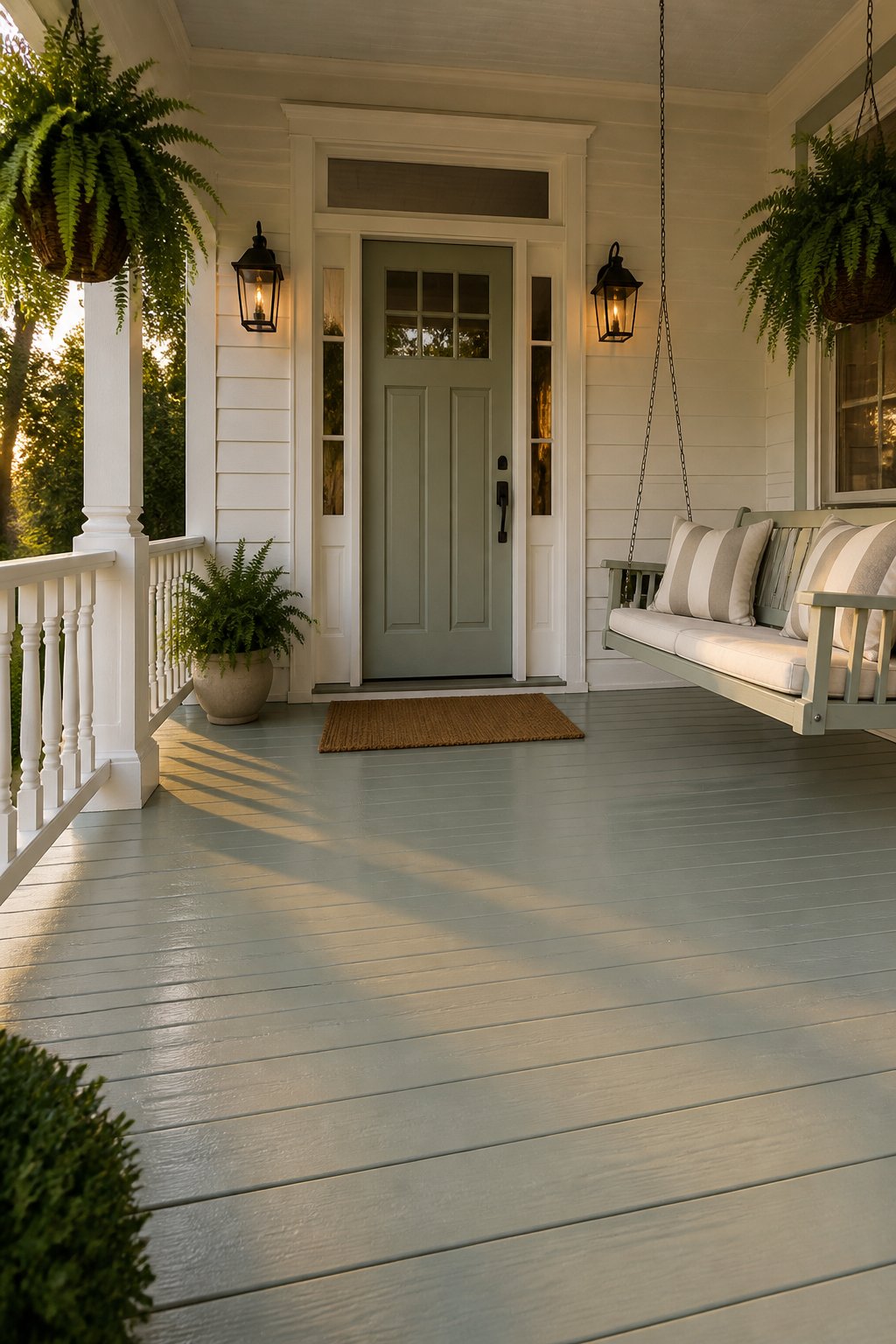
Painting your front door and porch floor in Oyster Bay, or in a close tonal match formulated for porch use, creates a cohesive cottage-porch feel. The color carries from the threshold beneath your feet, quietly unifying the entry and disguising everyday dust better than stark white paint.
Use separate products for each surface. Apply exterior door enamel to the door and porch-and-floor enamel to the floor, following the required curing time before placing furniture or rugs. A satin or low-luster floor finish will provide a softer look and help reduce visible scuffs.
White porch columns and railings create a fresh frame around the continuous green. Add a porch swing with striped cushions in cream, charcoal, or faded blue, then soften the ceiling with hanging baskets filled with trailing plants.
Black lantern sconces on either side of the door give the entry a balanced evening glow. Choose weather-resistant cushions and planters, and leave enough floor space for easy movement. The result feels relaxed and lived-in while still retaining a tailored, welcoming shape.