
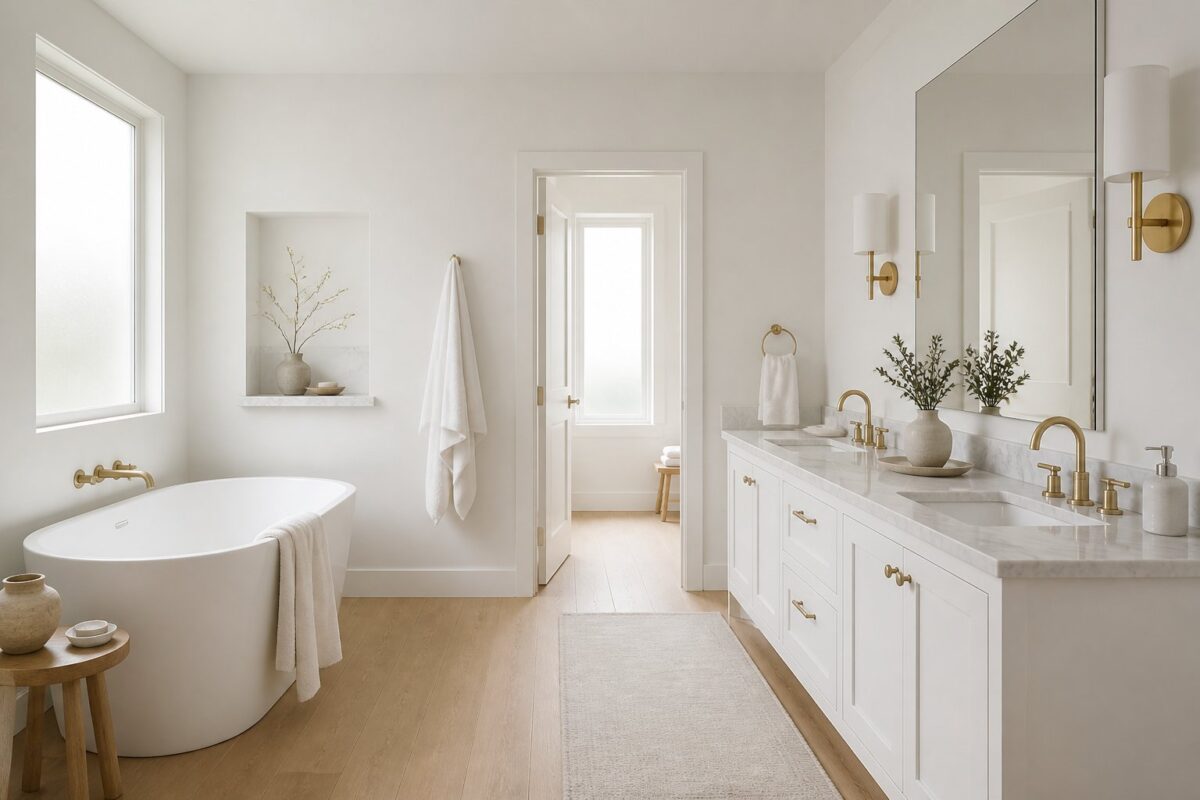
Sherwin-Williams Pure White (SW 7005, #EDECE6) gives your bathroom a bright, tailored foundation without the icy feel of a stark blue-white. Its soft warm-gray cast shifts gently with daylight, tile, and metal finishes, making it flexible for a compact powder room or a spacious primary bath.
The best Sherwin-Williams Pure White bathroom ideas balance the clean backdrop with warm wood, natural stone, layered lighting, and carefully chosen hardware. The seven approaches below show you how to keep white feeling dimensional, personal, and quietly refined.
The All-White Spa Bathroom
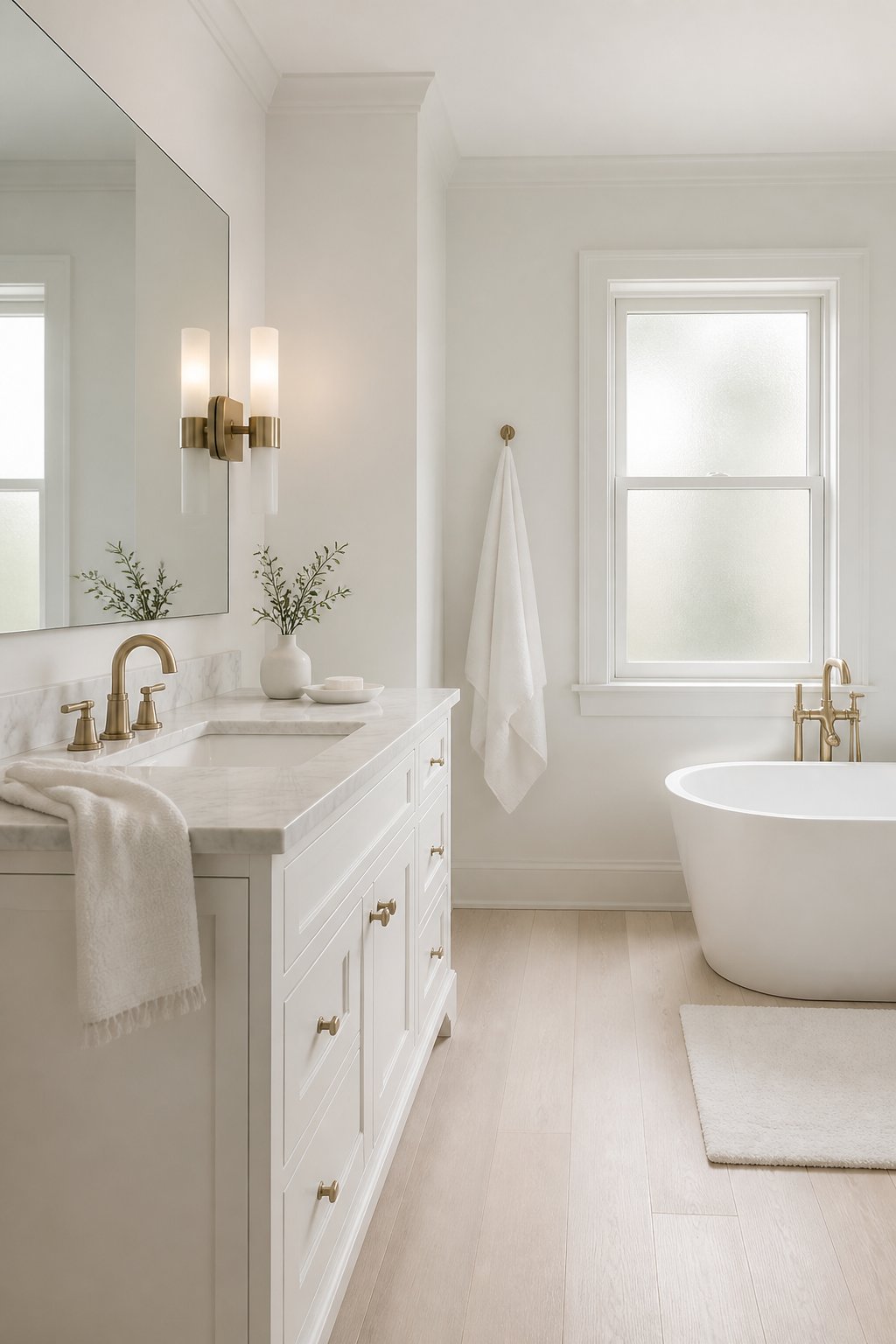
For a calm, gallery-like retreat, carry Pure White across the walls, ceiling, trim, and vanity. Using one shade throughout reduces visual breaks, which makes a small or windowless bathroom feel more open and uncluttered. Choose an eggshell finish for the walls and a satin finish for the vanity and trim so each surface catches light differently.
The slight warm-gray undertone keeps the room clean without making it feel blue or sterile. In a bathroom with limited daylight, use 2700K to 3000K bulbs and place sconces on both sides of the mirror for even, flattering light.
Give the white room depth with a white oak floor, honed marble shower walls, and a simple quartz or marble vanity top. Brushed-brass faucets, a matching shower frame, and slim cabinet pulls add a quiet glow. A teak stool, heavy linen towels, and a woven basket bring in the tactile warmth the palette needs.
Keep countertop styling restrained. A stone tray, amber soap dispenser, and one small vase are enough to preserve the airy mood while making the room feel lived in.
Pure White Walls, Warm Wood Vanity
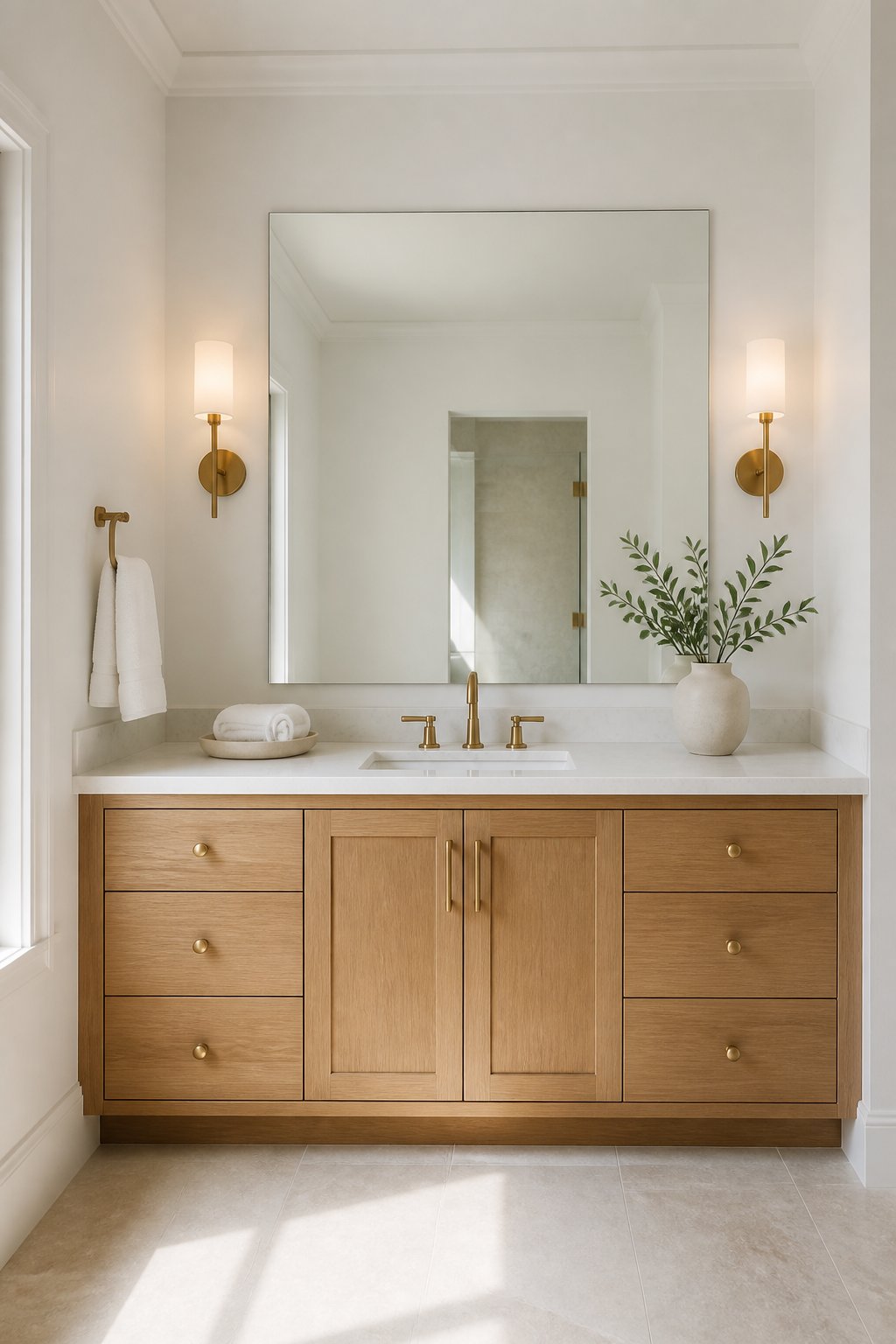
Use Pure White on the walls and trim as a crisp backdrop for a natural white oak or walnut vanity. The clean paint allows the wood grain to become the focal point, while the light walls keep the vanity from making the room feel crowded.
Choose a flat-panel vanity for a modern look or a furniture-style cabinet for a softer, more traditional feel. A white quartz or stone top keeps the composition tailored, and an undermount sink maintains a smooth visual line. Unlacquered brass hardware warms the wood, while matte-black pulls create a sharper, more graphic contrast.
A large frameless mirror works especially well here because it lets the wall color and vanity carry the design. Add warm globe sconces at eye level, or use slim vertical fixtures beside the mirror to reduce shadows at the sink.
Finish with a white cotton runner, a wood stool, and one ceramic vessel. If you choose walnut, repeat its deeper tone in a small picture frame or soap dish so the vanity feels connected to the rest of the room.
Pure White with Black Accents
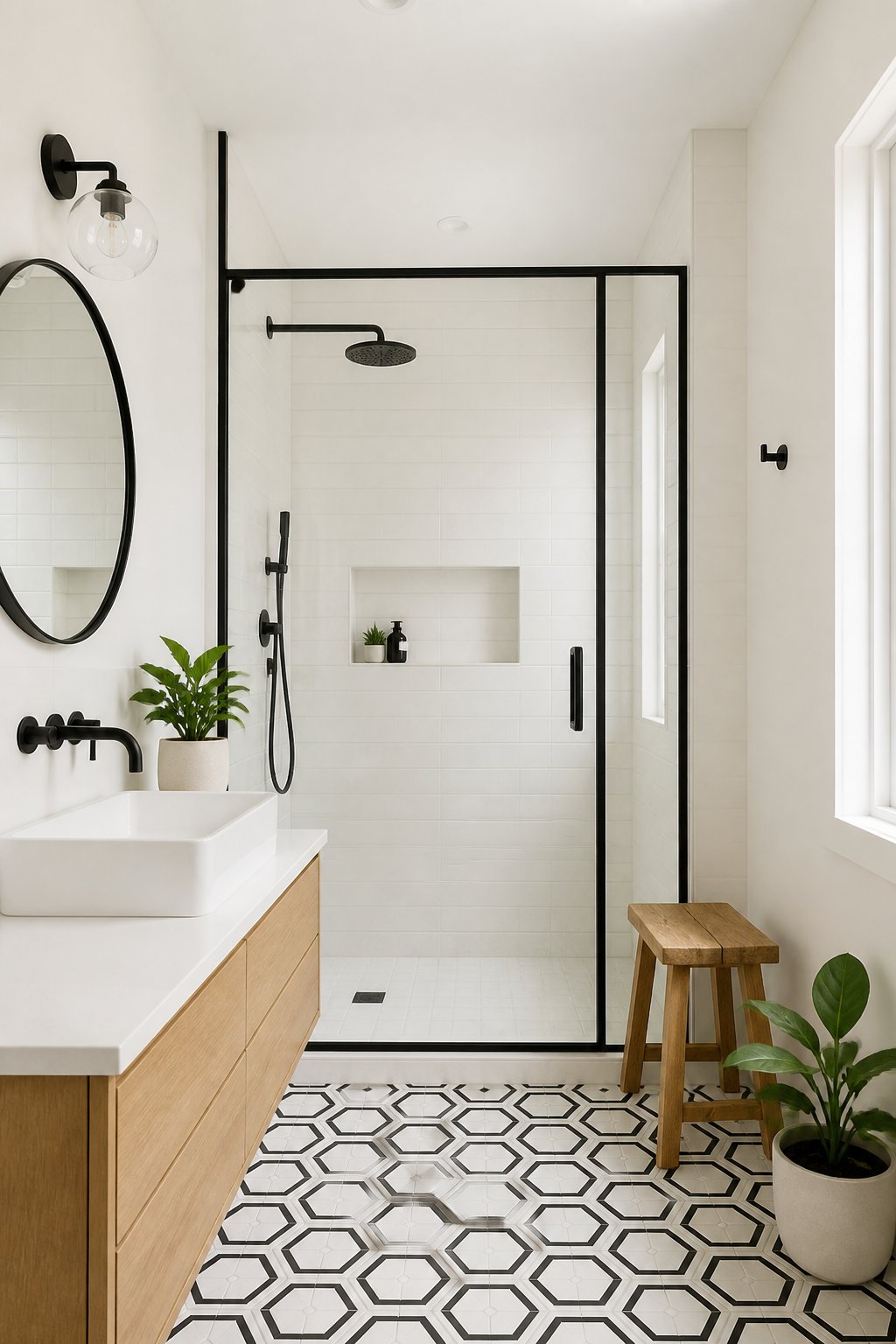
Let Pure White cover the walls and most of the tile, then use black accents to create a tailored, graphic scheme. Matte-black faucets, shower fittings, cabinet pulls, and a black-framed shower enclosure give the room structure without overpowering the light backdrop.
For the floor, choose black hex tile, a checkerboard pattern, or a black-and-white cement tile. White grout keeps wall tile quiet, while dark grout on the floor emphasizes the pattern and helps disguise everyday marks. A honed finish is practical underfoot and adds a soft contrast to glossy fixtures.
Keep the vanity simple, perhaps in white oak with a white stone top. A wood stool softens the strong contrast, and a few humidity-loving plants add an easy note of green. Choose a simple black mirror frame if you want to repeat the shower enclosure, or use a frameless mirror to keep the walls visually open.
Warm the scheme with 2700K lighting and natural accessories such as a teak bath mat or woven storage basket. The result feels crisp and timeless, with enough softness for daily use.
Textured White: Shiplap and Beadboard
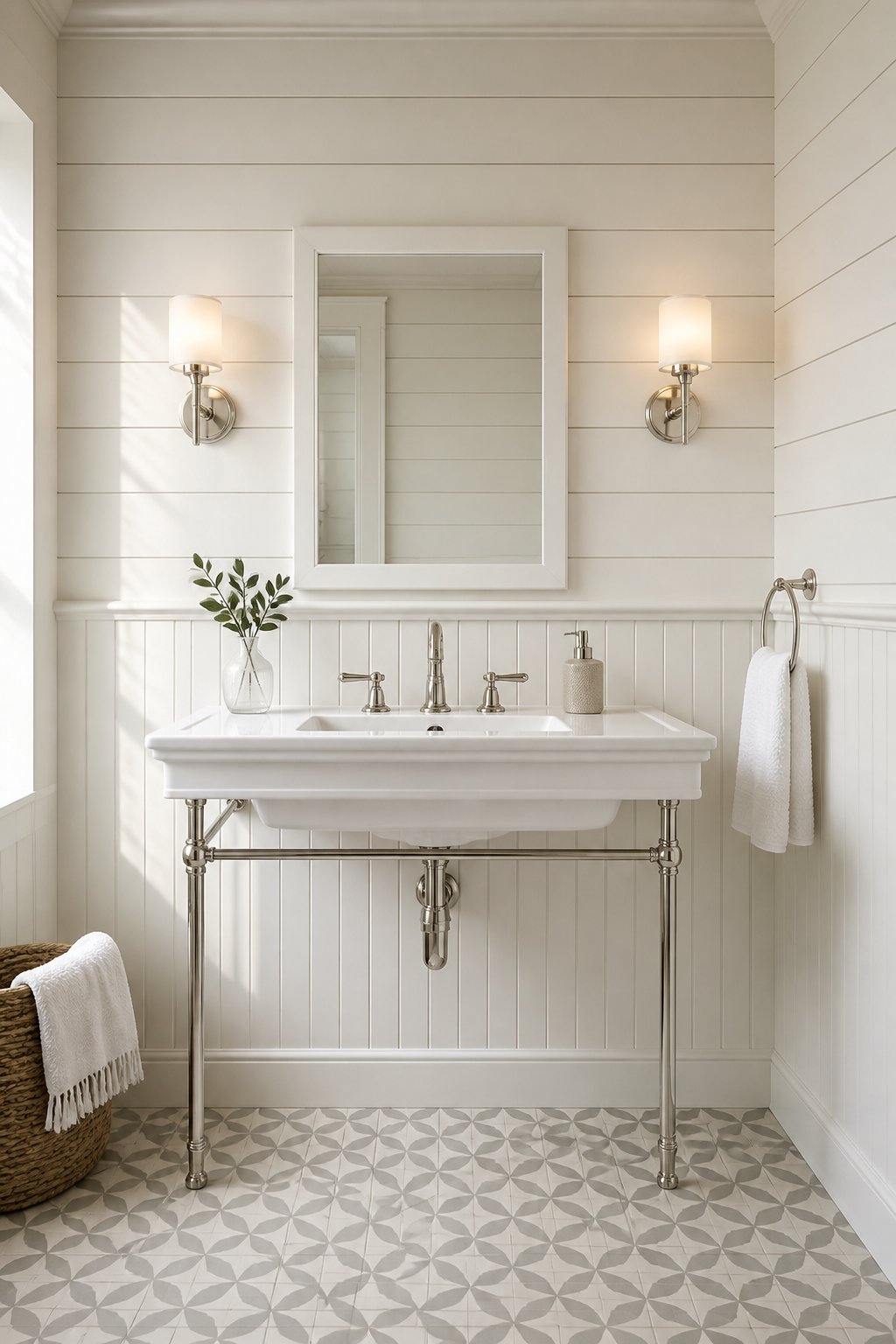
Paint horizontal shiplap or vertical beadboard in Pure White to add shadow lines and subtle movement to an all-white bathroom. The paneling gives the walls character, so your fixtures can remain simple and well tailored.
Use shiplap for a relaxed coastal or farmhouse mood, or install beadboard as wainscoting below a painted upper wall. A satin finish makes the grooves easy to clean while preserving a gentle glow. Seal wood paneling carefully around sinks and wet areas, and use moisture-resistant materials where direct spray is possible.
Pair the wall treatment with a white pedestal sink or a slim console sink in polished chrome or nickel. Polished-nickel sconces reflect light softly and suit the classic character of the paneling. A plain framed mirror, perhaps in light wood or aged metal, keeps the room from becoming overly decorative.
Ground the design with patterned cement tile or a small white-and-gray mosaic floor. Add a linen shower curtain, a wooden stool, and one framed print for warmth. The varied surfaces let Pure White feel layered rather than flat.
Pure White Cabinetry with a Statement Floor
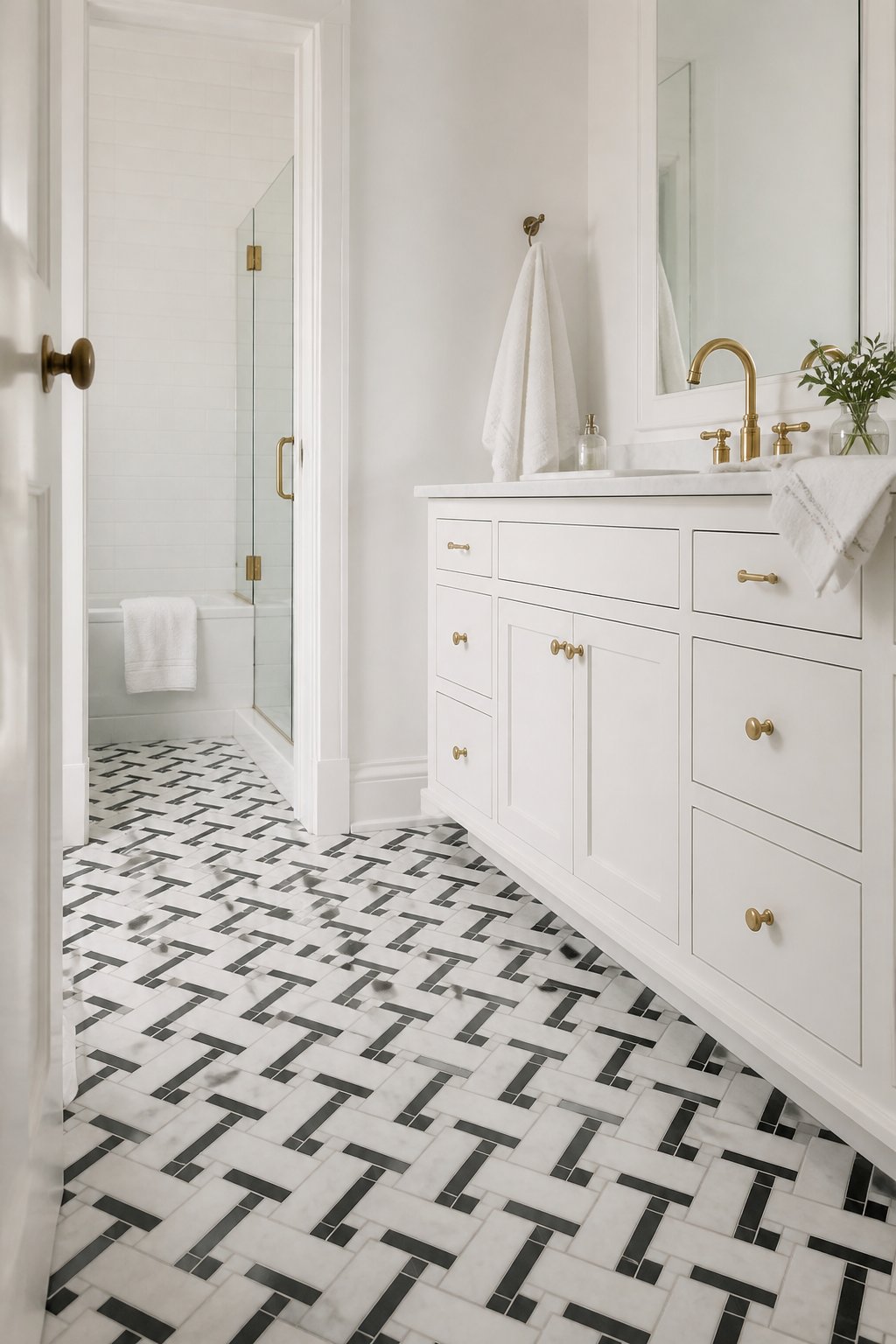
Keep the walls and vanity in Pure White, then make the floor the room’s defining feature. A bold marble mosaic, graphic cement tile, or classic black-and-white pattern adds personality while the white cabinetry and walls keep the composition balanced.
Choose a floor with a matte or honed finish for better traction and a softer visual effect. If the pattern is busy, use a simple slab backsplash and a quiet white quartz counter. Brass or polished-nickel hardware can add a tailored highlight, while white towels keep the upper half of the room calm.
For a rental-friendly update, focus on removable elements such as a washable patterned runner, new cabinet pulls, and a framed mirror. In a remodel, carry the floor tile into a shower niche or a narrow backsplash for a deliberate connection.
Use a simple vanity light rather than another statement fixture. Warm sconces, a small wood stool, and a stone soap tray provide enough texture without competing with the floor.
White Trim and Ceiling as a Frame for Wallpaper
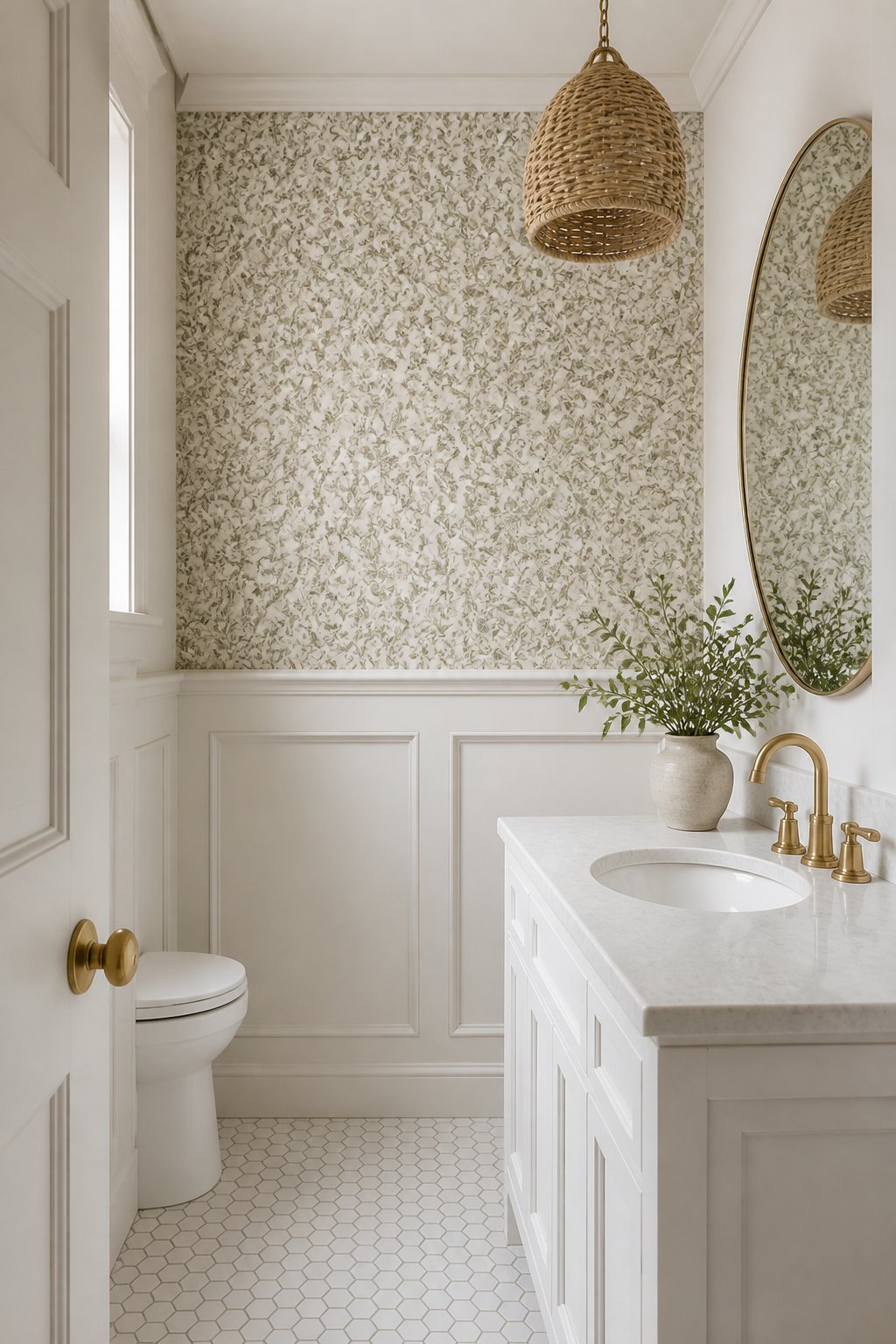
Use wallpaper on one wall or above a wainscot, then keep the trim, ceiling, and remaining painted surfaces in Pure White. A botanical print introduces color and pattern, while the crisp white frame keeps the design contained and intentional.
Choose a small-scale print for a compact powder room, where it can create intimacy without making the walls feel busy. In a larger bathroom, a single accent wall behind the vanity gives the pattern a clear focal point. Use a moisture-rated wallpaper and protect exposed edges near sinks and shower areas.
Paint the vanity Pure White to connect it with the trim. A white quartz top, aged-brass faucet, and brass mirror frame bring warmth to the print. If the wallpaper includes green, blue, or tan, echo one of those tones in the hand towels or a small ceramic accessory.
Complete the look with a woven pendant or natural-fiber shade, using a damp-rated fixture where required. Layer it with warm sconces so the wallpaper reads softly at night and Pure White retains its gentle, clean presence.
Warm Layered All-White
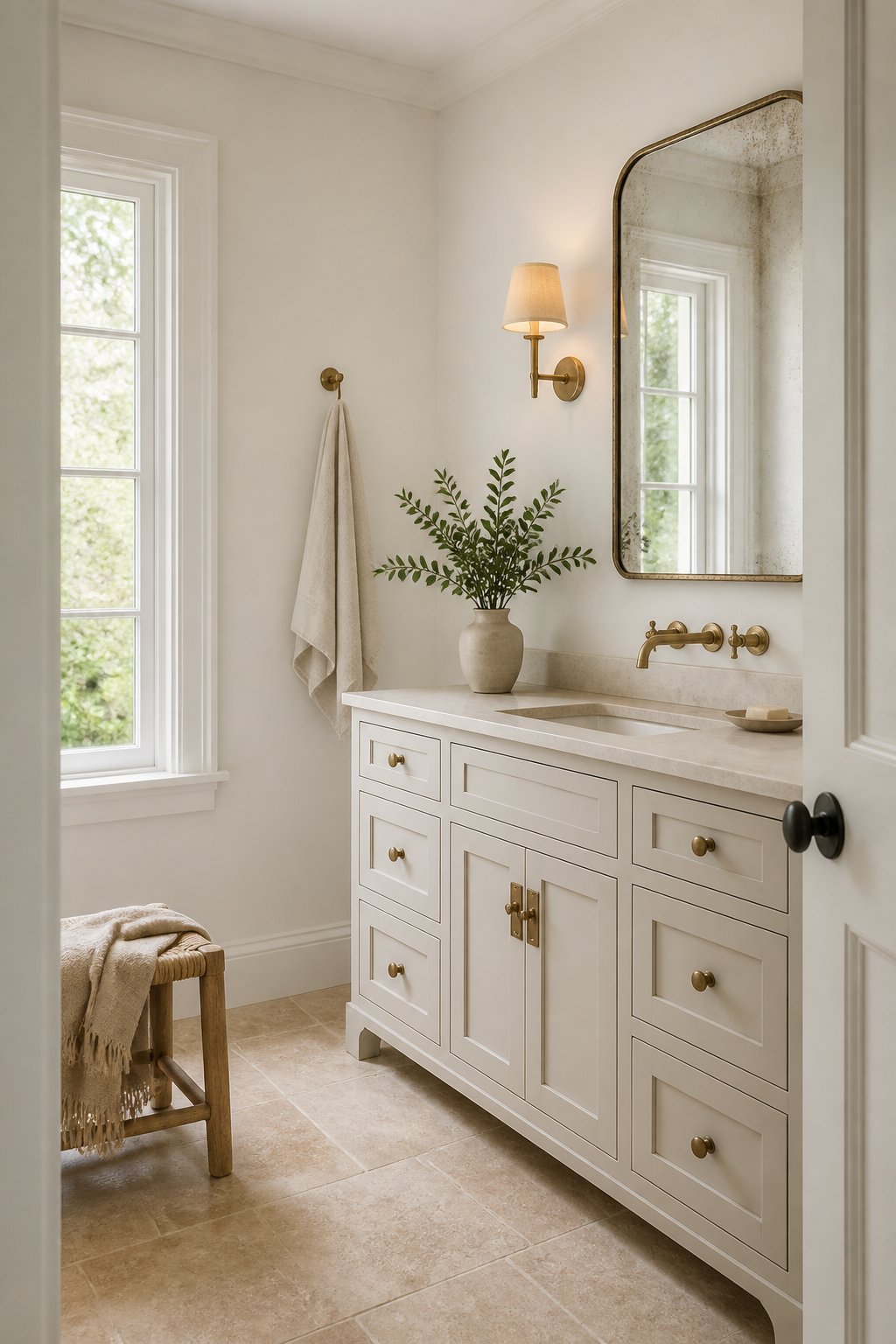
Build a tonal bathroom around Pure White by combining white walls and trim with an ivory or bone vanity, cream towels, oatmeal textiles, and aged brass. The narrow warm-white palette feels serene and relaxed because the surfaces differ slightly rather than matching exactly.
Bring in natural materials to create quiet variation. Travertine floor tile, a limestone tray, linen curtains, and an antiqued mirror add softened texture. Unlacquered brass faucets develop character over time and work naturally with the warm undertones in SW 7005.
Choose a vanity with a simple recessed panel or rounded profile to keep the room from feeling too stark. A creamy stone counter can bridge the Pure White walls and the warmer cabinet finish. Add a woven basket for extra towels and a small wood stool near the tub or shower.
Lighting matters most in this layered scheme. Combine ceiling lighting with wall sconces and, where practical, concealed vanity lighting. Warm bulbs around 2700K make the ivory, cream, and white tones feel connected, creating a gentle bathroom atmosphere from morning through evening.