
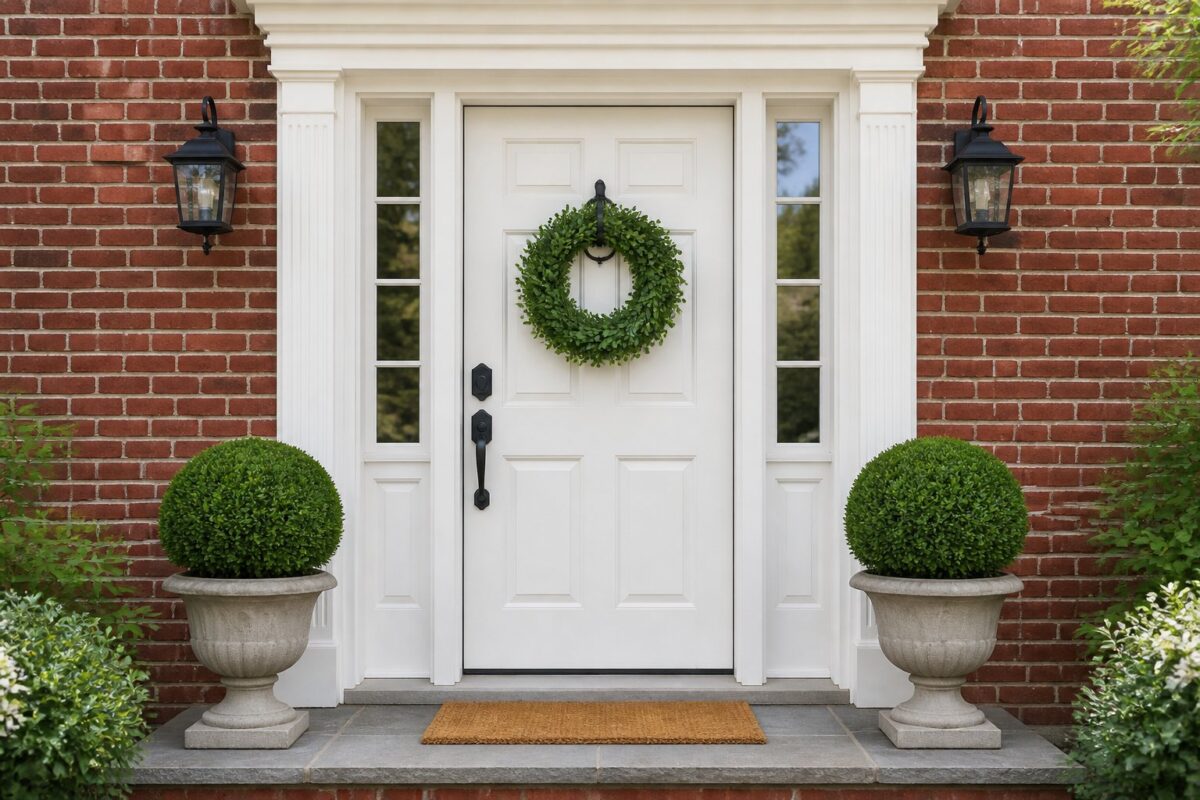
Sherwin-Williams Pure White (SW 7005, #EDECE6) gives your front door a clean, welcoming presence without feeling stark. Its faint warm undertone helps it sit comfortably beside bright white trim, natural wood, brick, stone, and nearly any siding color.
The best Sherwin-Williams Pure White front door ideas pair the soft white finish with deliberate contrast, tactile materials, and a few well-scaled accents. From classic black hardware to a wood screen door or bold planters, you can create a tailored entry without relying on a loud paint color.
Classic White Panel Door with Black Hardware
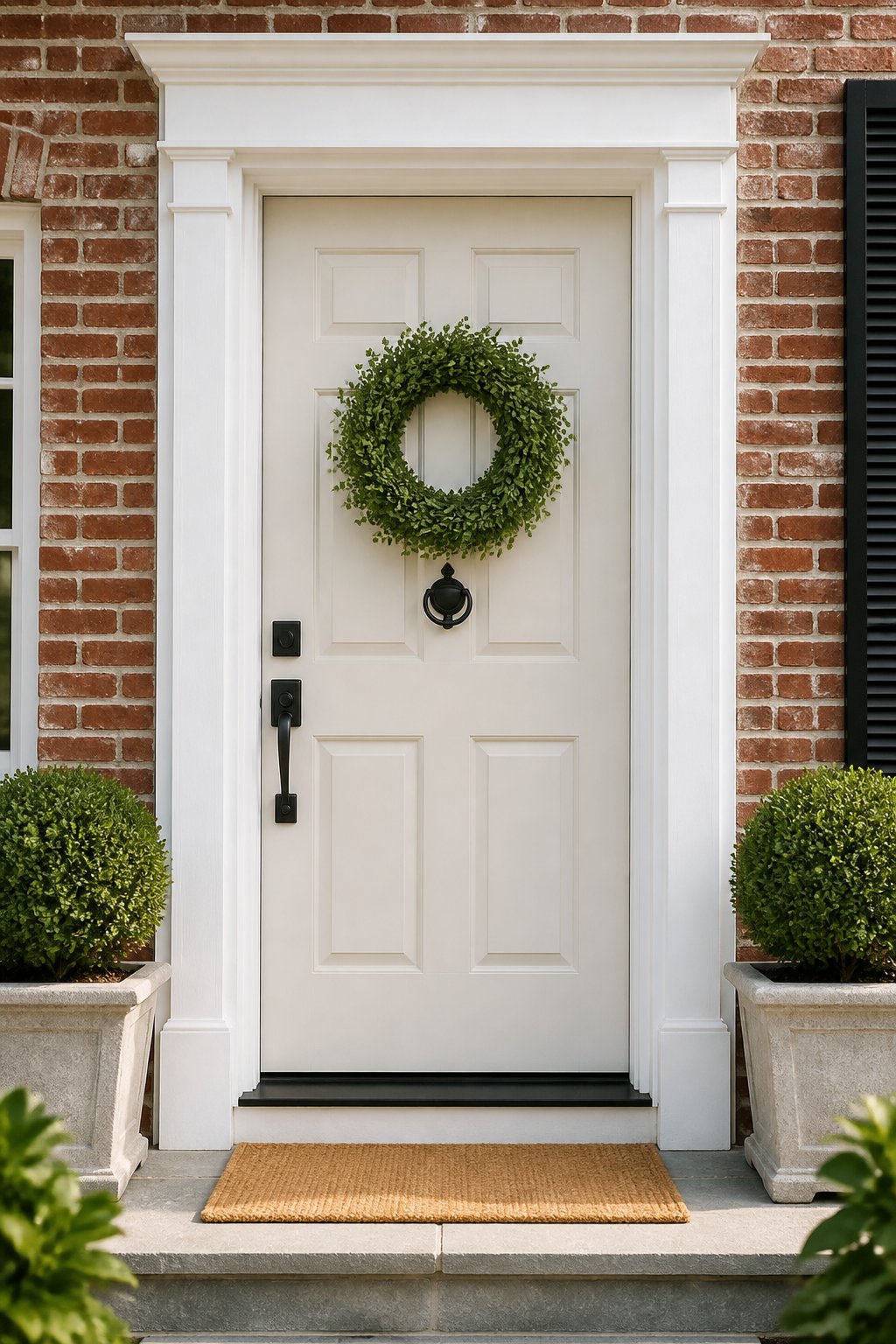
A traditional six-panel or three-panel door painted in Pure White gives your entry a familiar architectural shape. Choose a satin or semi-gloss exterior finish so the panels catch soft daylight and stand up to fingerprints, rain, and regular cleaning.
Pair the door with an oil-rubbed-bronze or matte-black handleset. A matching knocker, kick plate, house numbers, and porch light will repeat the dark accent without making the entry feel busy. This white-and-black combination works with brick, gray siding, warm beige stucco, and painted wood.
Pure White has enough warmth to avoid looking gray or dingy beside bright white casing. Before painting, clean and lightly sand the door, then use an exterior bonding primer where the old finish is glossy or peeling.
Complete the look with a green wreath centered on the upper panels and two clipped boxwoods in simple charcoal or terracotta pots. A low-profile coir mat keeps the classic styling practical.
White Door and Trim Against Dark Siding
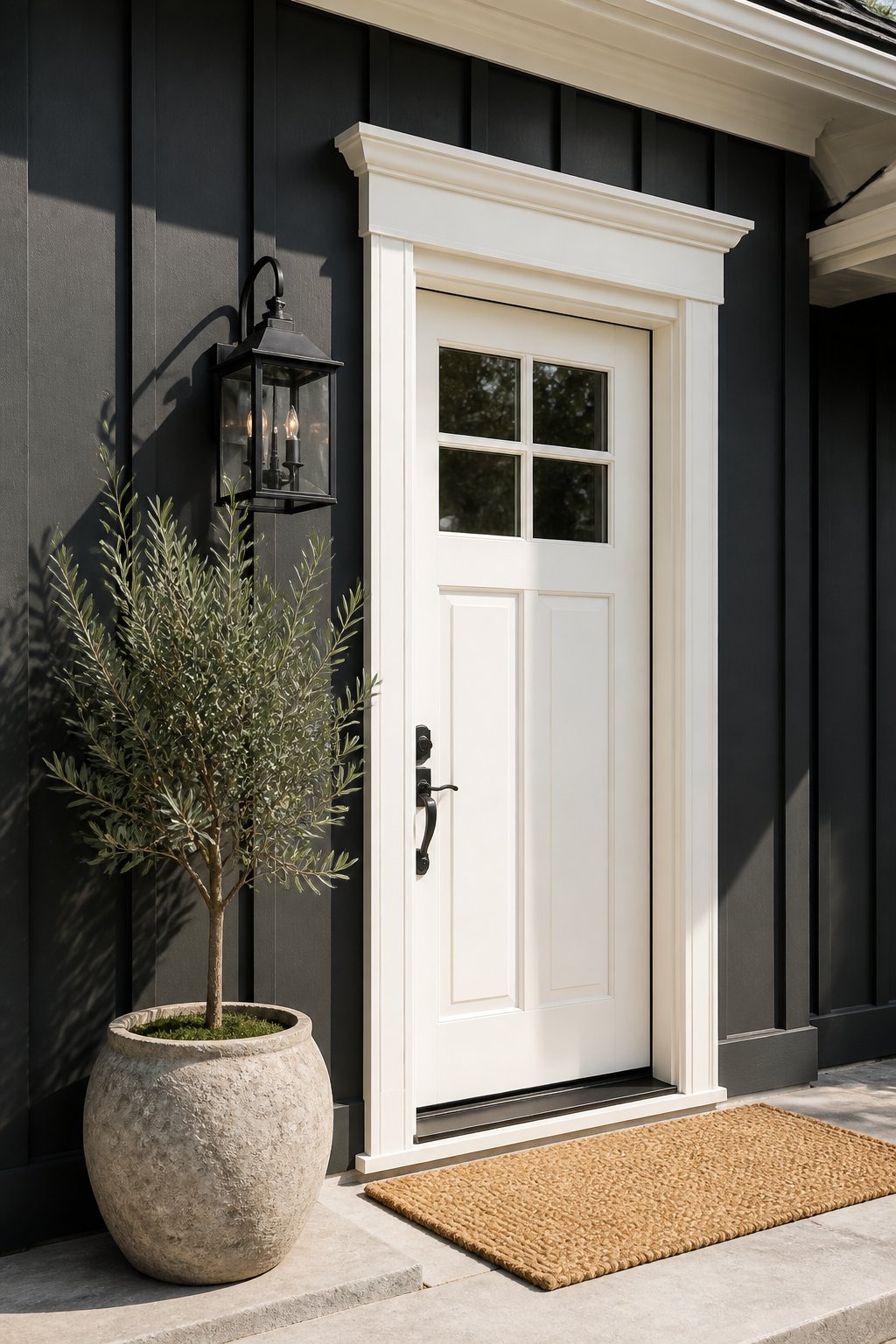
Set a Pure White door and matching casing into charcoal, black, or deep green siding for a crisp, tailored facade. The white casing acts like a clear architectural frame, drawing attention to the entry while giving the darker exterior a lighter point of focus.
A satin finish on the door and a semi-gloss finish on the trim provide gentle variation without introducing another color. Use a matte-black lantern with warm LED bulbs, keeping the light soft rather than blue or overly bright.
Ground the threshold with a natural-fiber mat in jute or seagrass. A substantial stone planter adds weight and keeps the high-contrast palette connected to the landscape. You can fill it with clipped grasses, an olive tree, or seasonal greenery.
This pairing suits a modern farmhouse especially well, though it also brings quiet structure to a white-painted-brick house with dark shutters or window frames.
Full White Entry Envelope: Door, Trim, Columns, Porch Ceiling
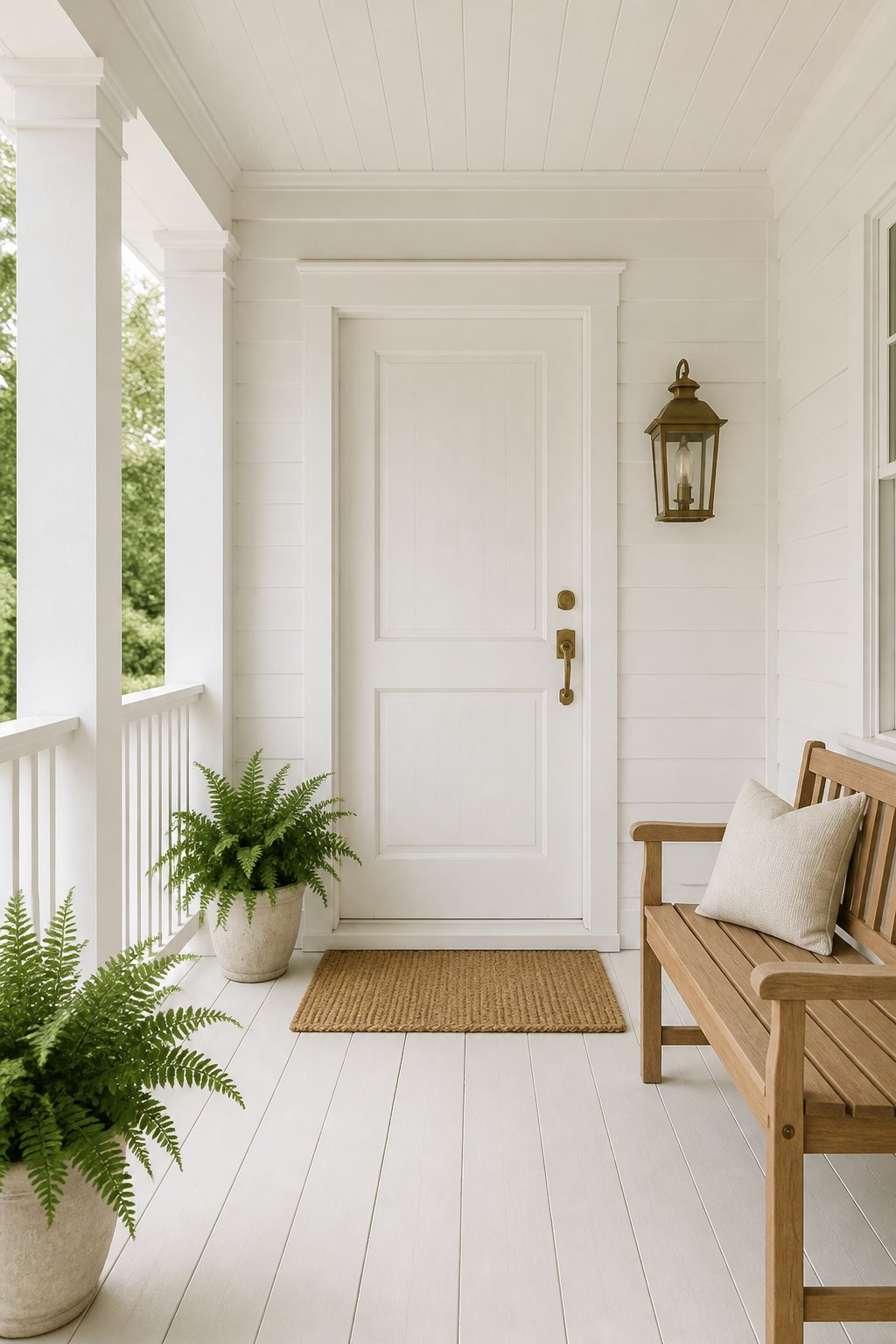
Carry Pure White across the door, casing, porch columns, railings, and ceiling for a serene, continuous entry. The repeated color lets the porch’s structure feel airy, while shadows between the panels, posts, and railings supply subtle depth.
Use a satin exterior finish on the door and a soft semi-gloss on trim and columns. If the porch ceiling is tongue-and-groove wood, paint it in the same color to emphasize its lines. Aged-brass hardware and an aged-brass lantern introduce warmth without disturbing the calm palette.
Add a small teak bench or a warm oak chair beneath the porch. Natural wood gives the all-white envelope a lived-in quality, while woven cushions or a muted linen pillow soften the seating.
Keep plants simple and architectural. Ferns, clipped shrubs, or leafy branches in weathered terracotta pots will bring color and texture to the entry of a classic colonial or cottage.
White Door with a Natural Wood Screen or Storm Door
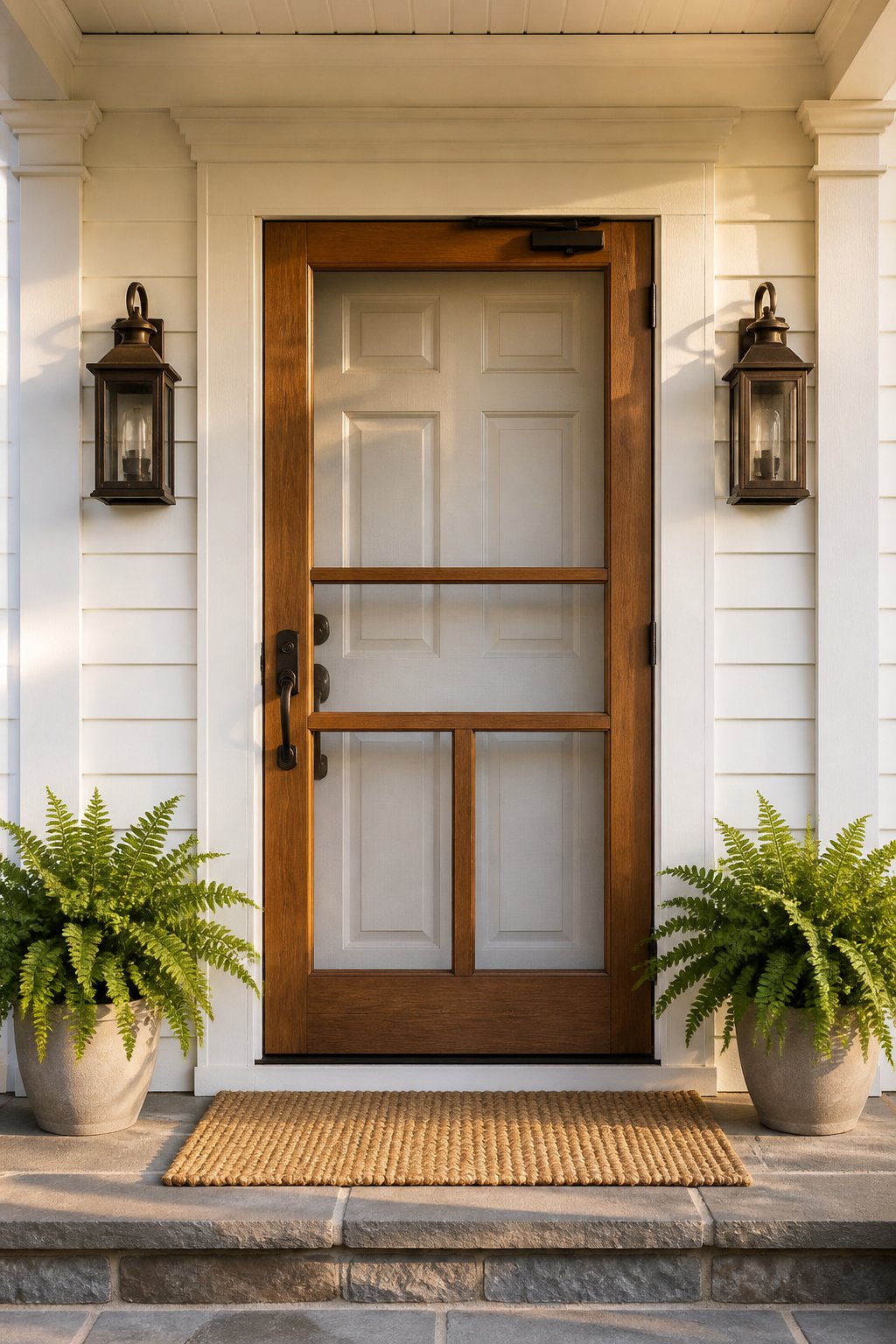
Paint the main door in Pure White, then layer a natural stained-wood screen or storm door in front. The wood frame adds warmth and depth, while the white door remains visible behind it like a softly lit backdrop.
Choose clear-sealed oak, fir, or cedar with a medium stain that complements your porch floor or nearby shutters. A satin finish protects the wood while preserving its grain. Use black or bronze hardware on both doors, and align the handles so the layered entry feels intentional.
A jute mat works well against the wood and white combination. Place a pair of potted ferns on either side if you have enough clearance for the door swing. Their loose fronds soften the straight lines of the frame and bring a fresh green note to the threshold.
This approach feels especially natural on cottages, farmhouses, and older homes where a screen door adds practical ventilation and a touch of familiar character.
White Dutch Door for a Farmhouse
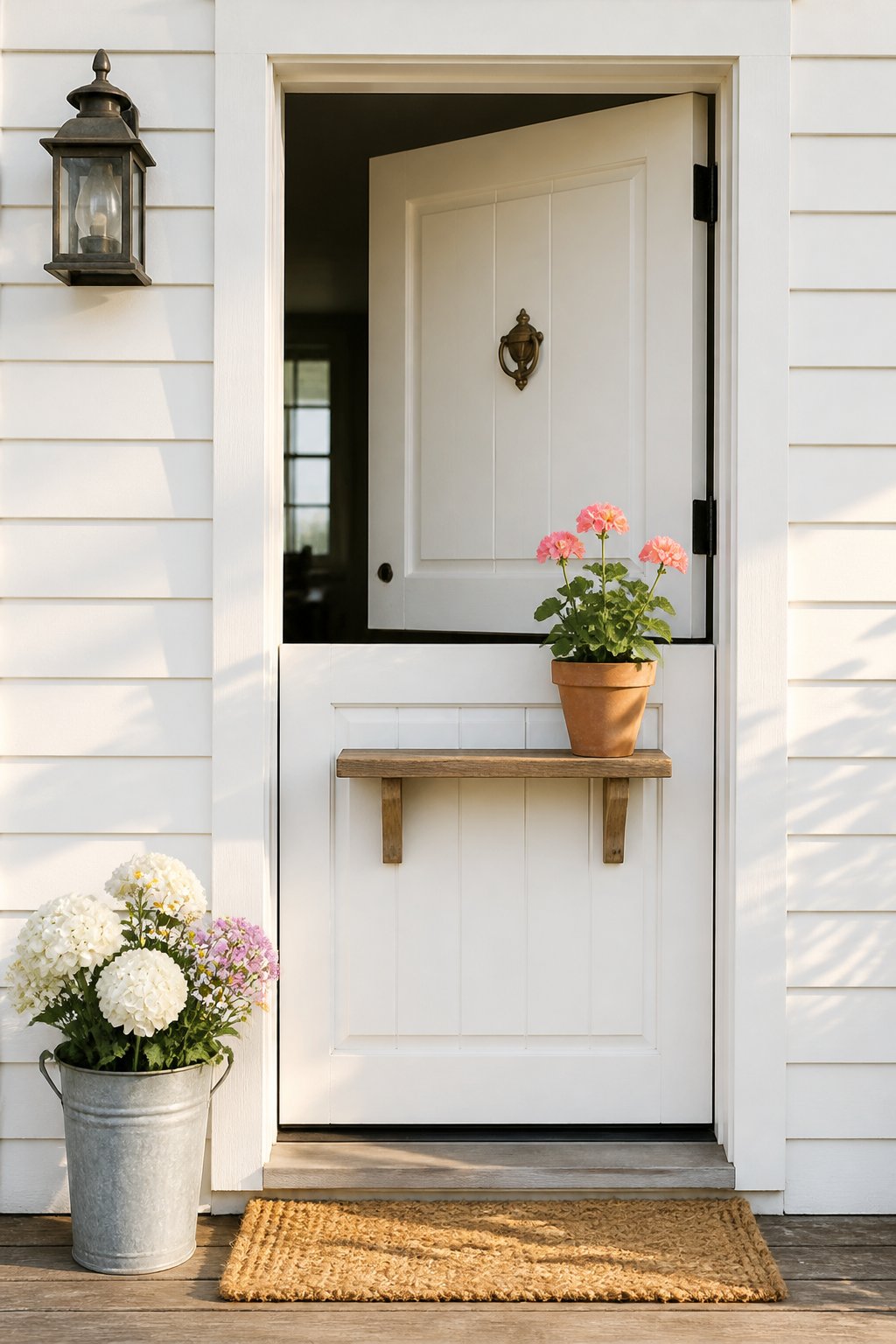
A split Dutch door in Pure White gives your farmhouse or cottage entry both charm and function. You can open the upper half for air and daylight while the lower half helps keep pets or toddlers safely inside.
Use a durable satin exterior finish and choose a simple plank, Shaker, or three-panel design. Warm clapboard, exposed brick, and cedar shingles all provide a pleasing backdrop for the soft white color. An aged-brass knocker adds a gentle vintage note, while black hinges or a bronze latch keep the hardware grounded.
Mount a narrow wood shelf on the lower half only if it will not interfere with the door’s movement. A small galvanized bucket of blooms can sit on the porch beside the door, bringing in seasonal color without crowding the opening.
Skip the storm door so the Dutch-door split, hinges, and hardware remain visible. A flat coir mat and one generous planter are enough to complete this practical, welcoming arrangement.
White Door as a Calm Anchor for Bold Planters and a Mat
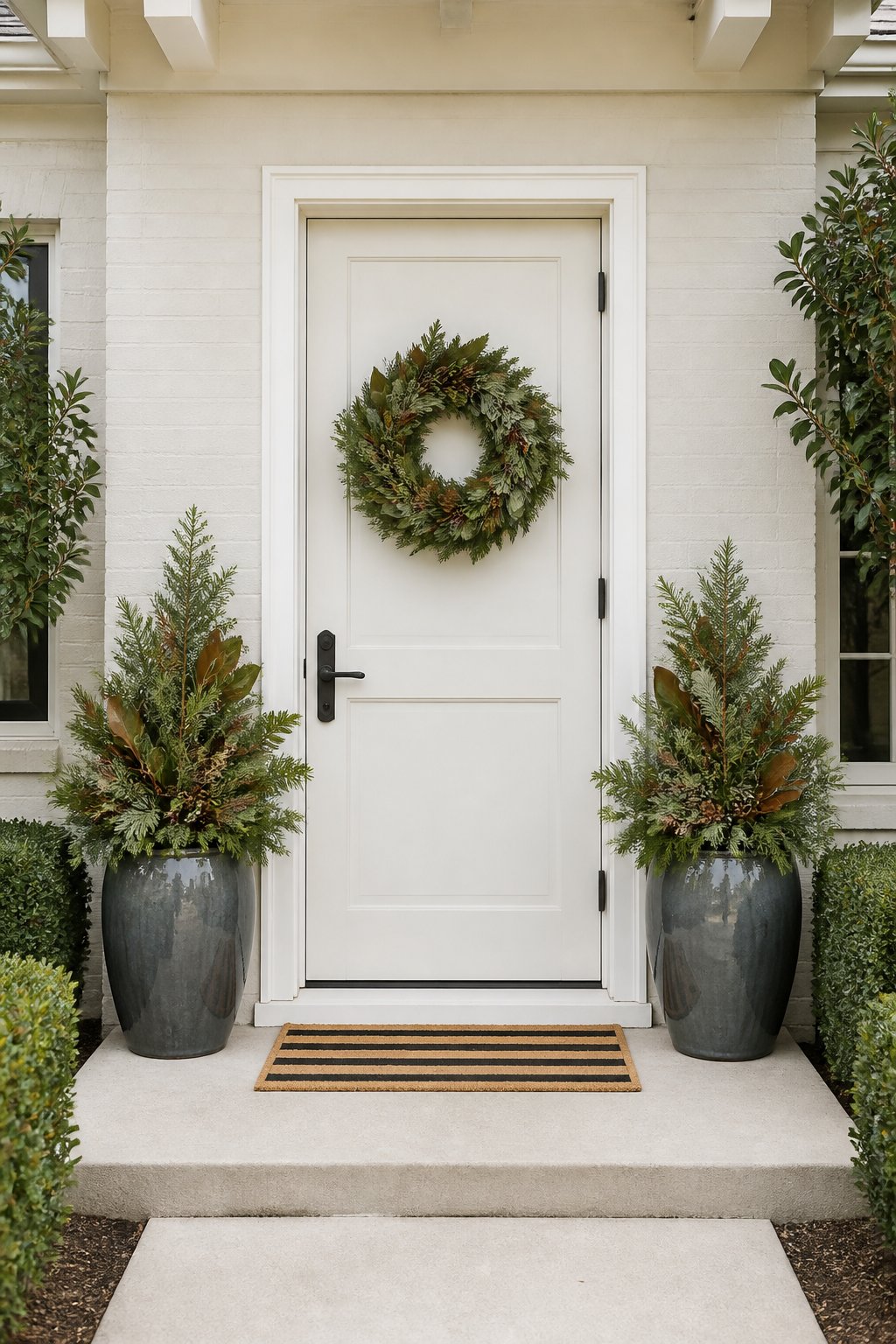
Keep the door itself simple in Pure White and let the surrounding styling provide the personality. A smooth or lightly paneled door becomes a quiet backdrop for oversized glazed planters, a patterned coir mat, and a seasonal wreath.
Choose planters in cobalt, deep green, rust, or a muted geometric pattern. Their color will stand out against SW 7005 without competing with the architecture. Fill them with a mix of height and texture, such as ornamental grass, trailing ivy, and compact flowering plants.
A striped or patterned mat adds a small graphic detail at ground level. Black or aged-brass hardware gives the door a defined focal point, while a matching lantern provides warm evening light.
This is a low-maintenance way to refresh your curb appeal through the year. You can switch the wreath, plants, and mat for the season while keeping the door color and hardware consistent.
White Door and White-Painted Brick
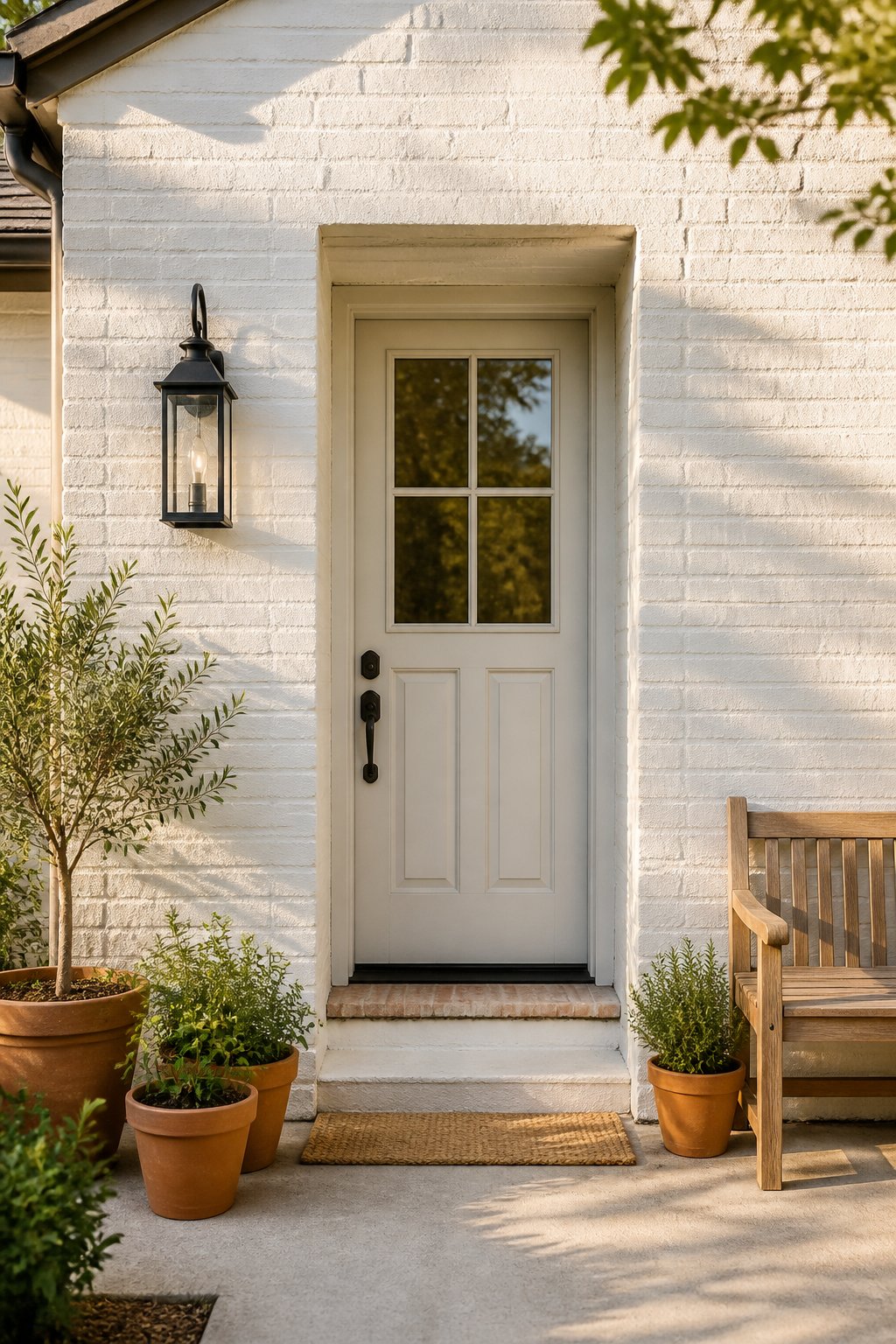
Paint the door and the surrounding brick facade in Pure White for a soft, unified entry that emphasizes texture rather than strong color contrast. The paint settles into the brick’s mortar lines and highlights the changing shadows across each uneven surface.
Use a satin finish on the door and a breathable masonry coating or suitable exterior brick paint on the facade. If you prefer a more weathered appearance, choose a limewash finish that allows some of the original brick tone to show through instead of creating a solid block of white.
Add a warm wood bench near the entry for contrast and usefulness. A black lantern, simple black handleset, and dark house numbers give the pale facade a tailored outline. Terracotta pots filled with rosemary, olive branches, or leafy greenery bring earthy color to the threshold.
A natural-fiber mat and a restrained wreath keep the look welcoming without covering the brick’s quiet character.