
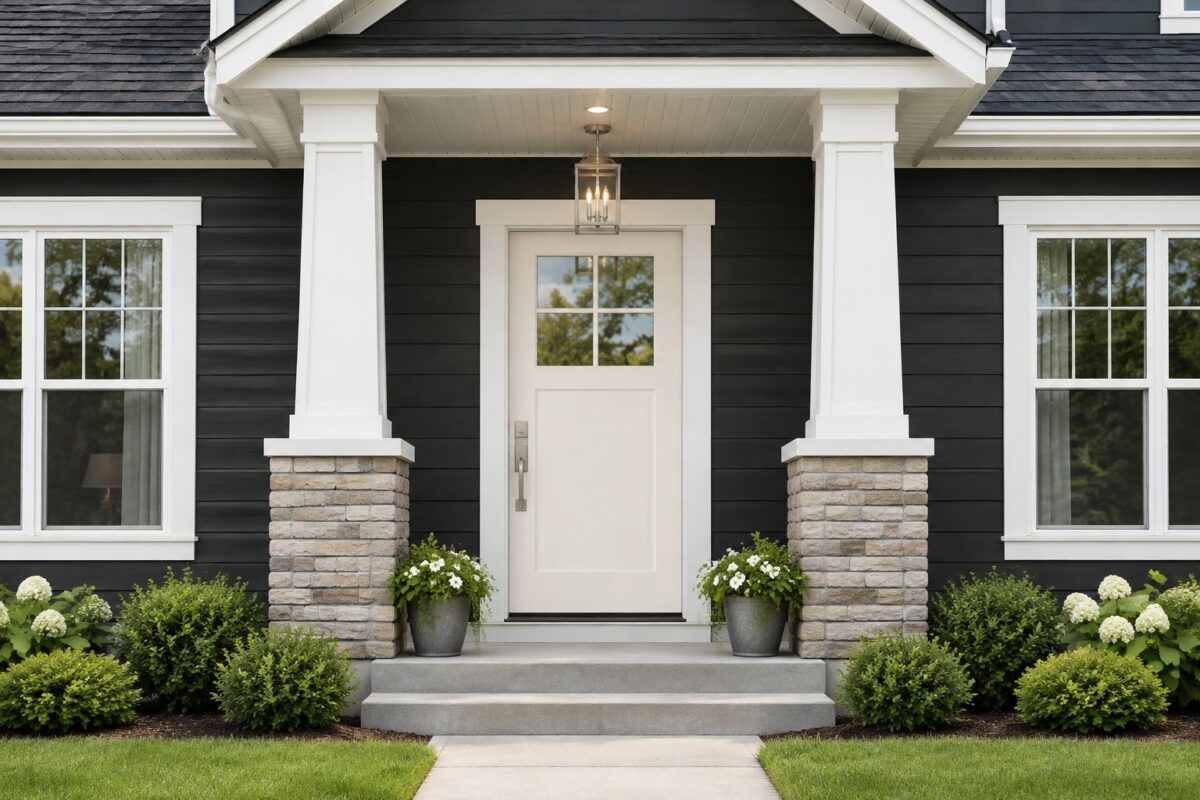
Sherwin-Williams Snowbound SW 7004 gives a front door a soft off-white finish with more warmth and character than a stark white. Sherwin-Williams Snowbound is a strong choice for homeowners who want a calm, flexible front-door color because its gentle gray base shifts subtly with daylight, nearby materials, and porch lighting.
On an exterior door, Snowbound can read lightly gray in cool daylight, then show a faint pink or violet cast beside warm brick, cedar, or yellow bulbs. Test a large sample on the actual door and view it in morning, afternoon, and evening light before committing. Choose an exterior coating made for doors and outdoor exposure, and check how the color sits beside your siding, trim, roof, and hardscape.
Classic Black and White Contrast
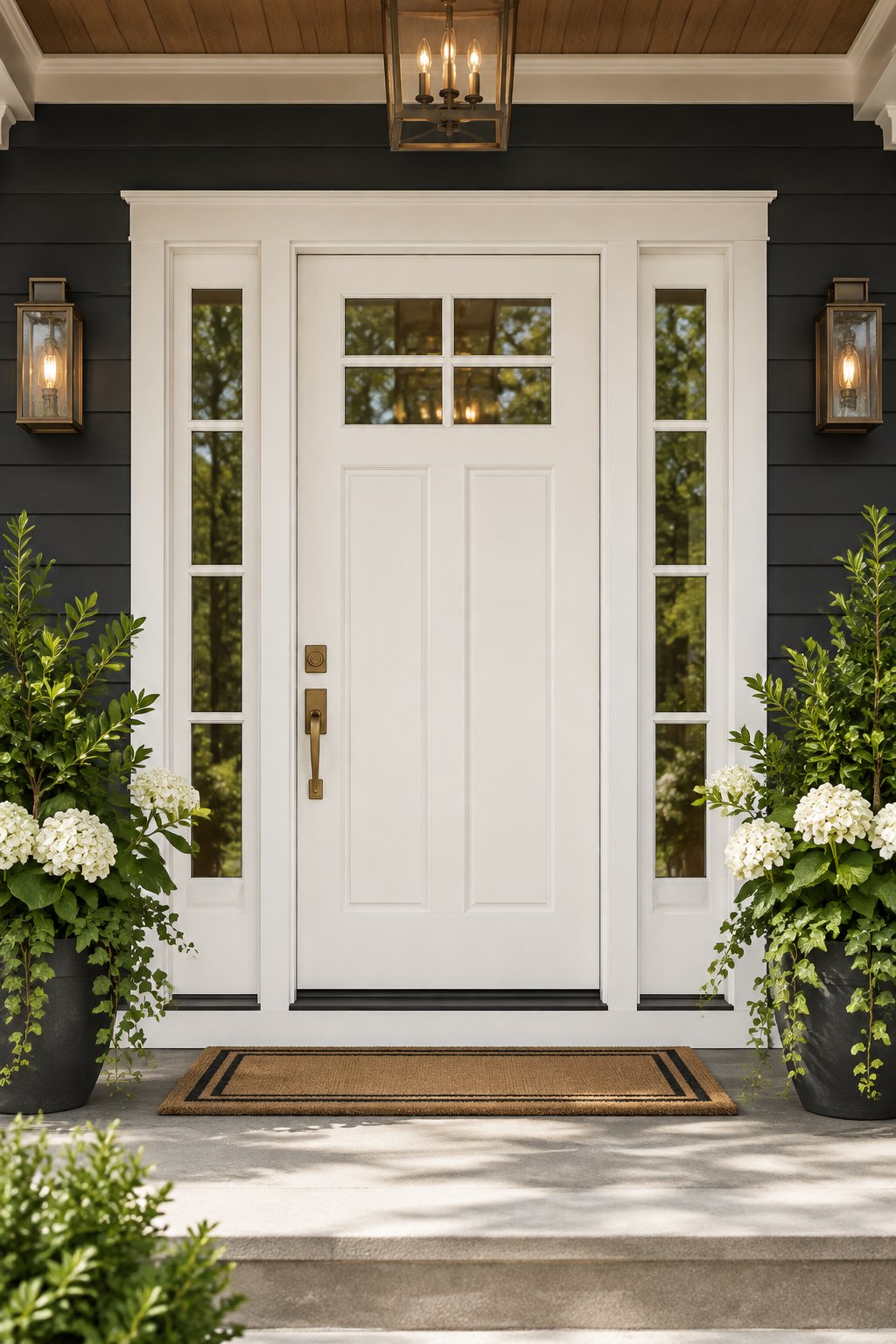
Snowbound on the front door creates a crisp focal point against dark charcoal siding and bright white trim, giving a traditional exterior a tailored, high-contrast look.
Choose a classic six-panel or four-panel door with a satin or semigloss exterior finish. The slight sheen catches daylight across the recessed panels and makes the entry feel cared for without turning the door glossy. Pair it with charcoal siding in a low-sheen finish so the door remains the brightest point.
Use stark white trim around the door, windows, and porch columns for clean architectural definition. Matte black or aged-bronze hardware adds weight through a lever, round knob, rectangular house numbers, and a streamlined knocker. Two black lantern sconces with clear glass keep the palette structured.
A charcoal doormat with a fine stripe, symmetrical planters, and clipped evergreen shrubs reinforce the formal mood. Choose planters in black metal or pale concrete to bridge the siding and door. Sample Snowbound beside the white trim first, since the adjacent whites may make it appear warmer or softer.
Warm Natural Wood Integration
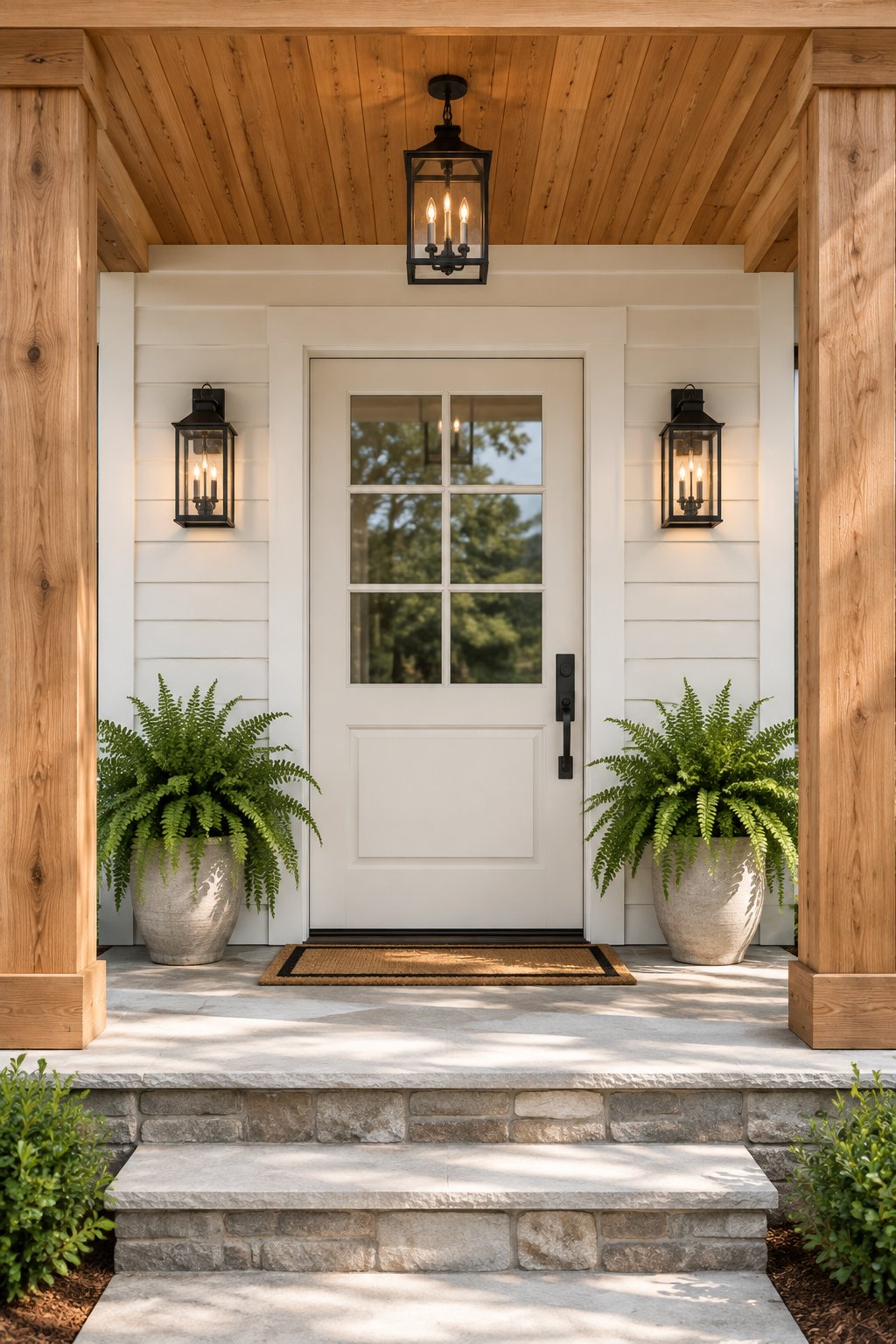
A Snowbound front door feels welcoming and grounded when cedar posts, a warm wood porch ceiling, and leafy plants surround it.
Use a smooth or lightly paneled door in an exterior-grade Snowbound coating, then let the wood provide the texture. Clear-sealed cedar posts show honey and russet grain, while a tongue-and-groove porch ceiling in cedar or fir adds warmth overhead. A matte finish keeps the wood from competing with the pale door.
Aged brass hardware suits this organic setting. Choose a simple pull or lever, a matching deadbolt, and warm brass house numbers. Lanterns with bronze frames and seeded glass give the porch a gentle evening glow.
Place broad ceramic pots on both sides of the entry with ferns, boxwoods, or glossy-leaf plants suited to your climate. Add a small teak bench if the porch allows it, keeping its profile low so the Snowbound door remains visible. A natural-fiber mat softens the transition from the walkway.
Modern Minimalist Monochromacy
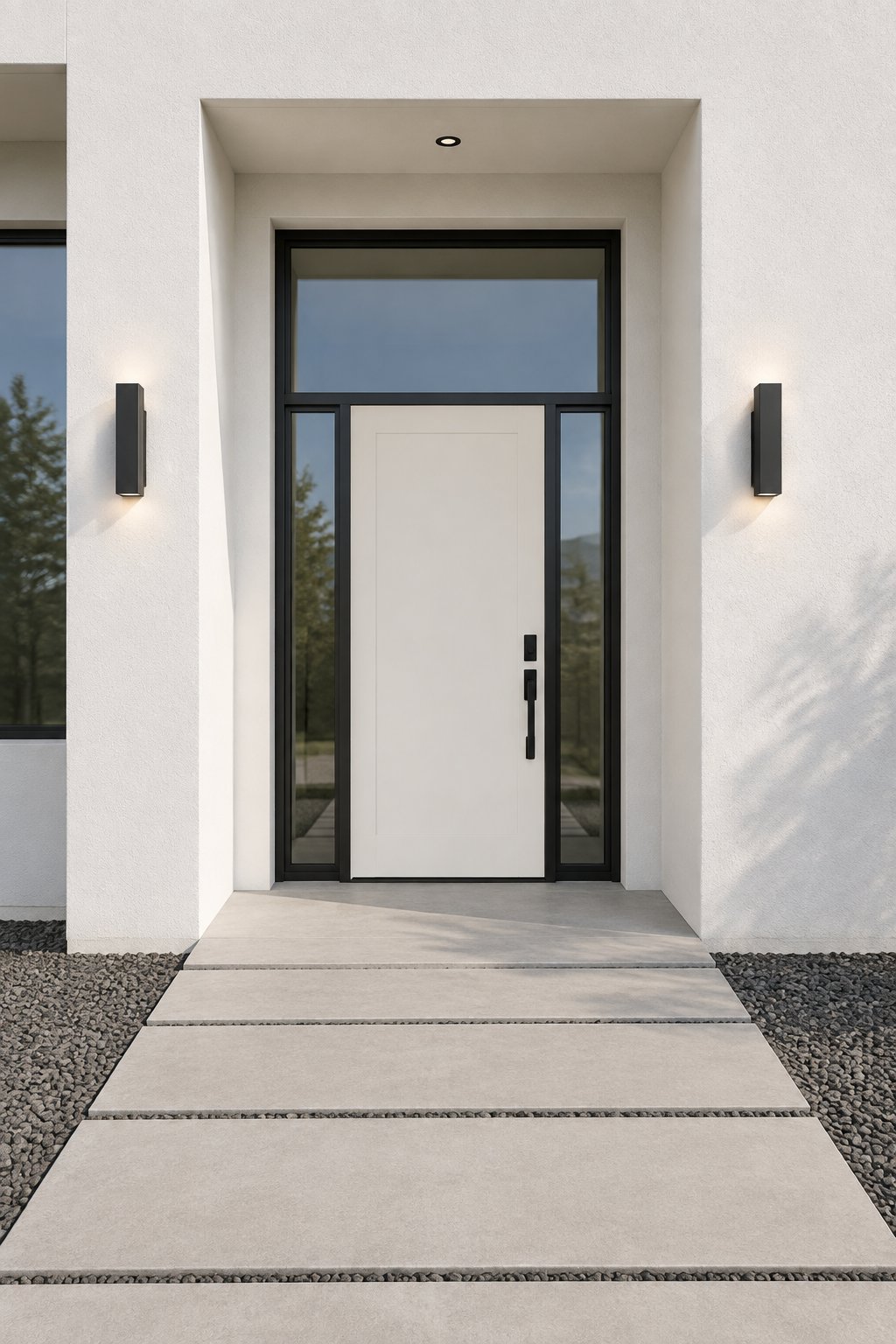
Using Snowbound on both the front door and surrounding stucco creates a quiet monochromatic entry with clean lines and restrained detail.
Select a flush or narrow-panel door and finish it in an exterior coating formulated for the substrate. Apply Snowbound to the stucco in a flat or low-sheen exterior finish, then use a slightly smoother satin finish on the door to create a subtle shift without introducing another color.
Matte black hardware provides the needed punctuation. A slim pull, rectangular lockset, and flush house numbers keep the composition spare. Add one pair of compact black cylinder sconces or a single architectural wall light with warm-white bulbs.
Keep furniture minimal with a narrow concrete bench or a black metal stool. One oversized planter in charcoal fiber cement gives the entry scale, while a sculptural olive tree or clipped grass supplies movement. Watch the wall and door at different times of day, since direct sun can make Snowbound look cleaner and cooler while shaded stucco may bring out its softer undertones.
Cozy Cottage Charm with Brick
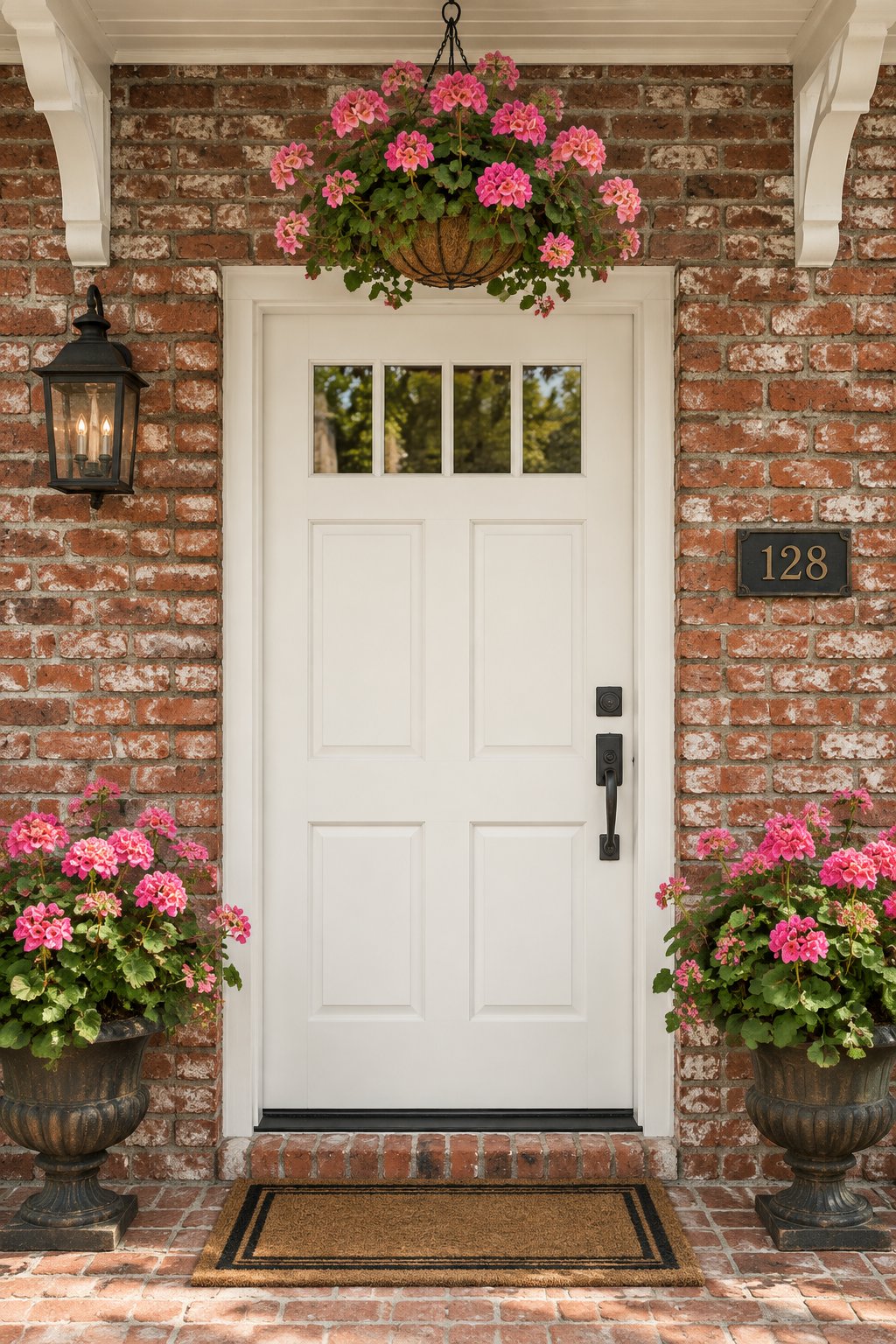
A Snowbound front door softens traditional red brick by placing a calm, pale focal point within the wall’s rich texture.
A paneled door with a small upper glass pane suits the cottage character, especially when finished in a durable satin exterior coating. Keep the brick exposed so its varied reds, browns, and mortar lines remain visible. White or Snowbound trim around the opening creates a gentle frame without adding visual clutter.
Choose aged brass or matte black hardware with a rounded knob, surface-mounted hinges, and a small mail slot. A black or bronze lantern with clear glass brings old-house charm and illuminates the brick joints after dark.
Hang a woven flower basket from a dark bracket above or beside the door. Fill it with trailing ivy, bacopa, calibrachoa, or seasonal blooms that suit your light conditions. A weathered wood bench, terracotta pots, and a coir mat complete the welcoming arrangement while preserving the brick’s rustic texture.
Subtle Coastal Blue Pairing
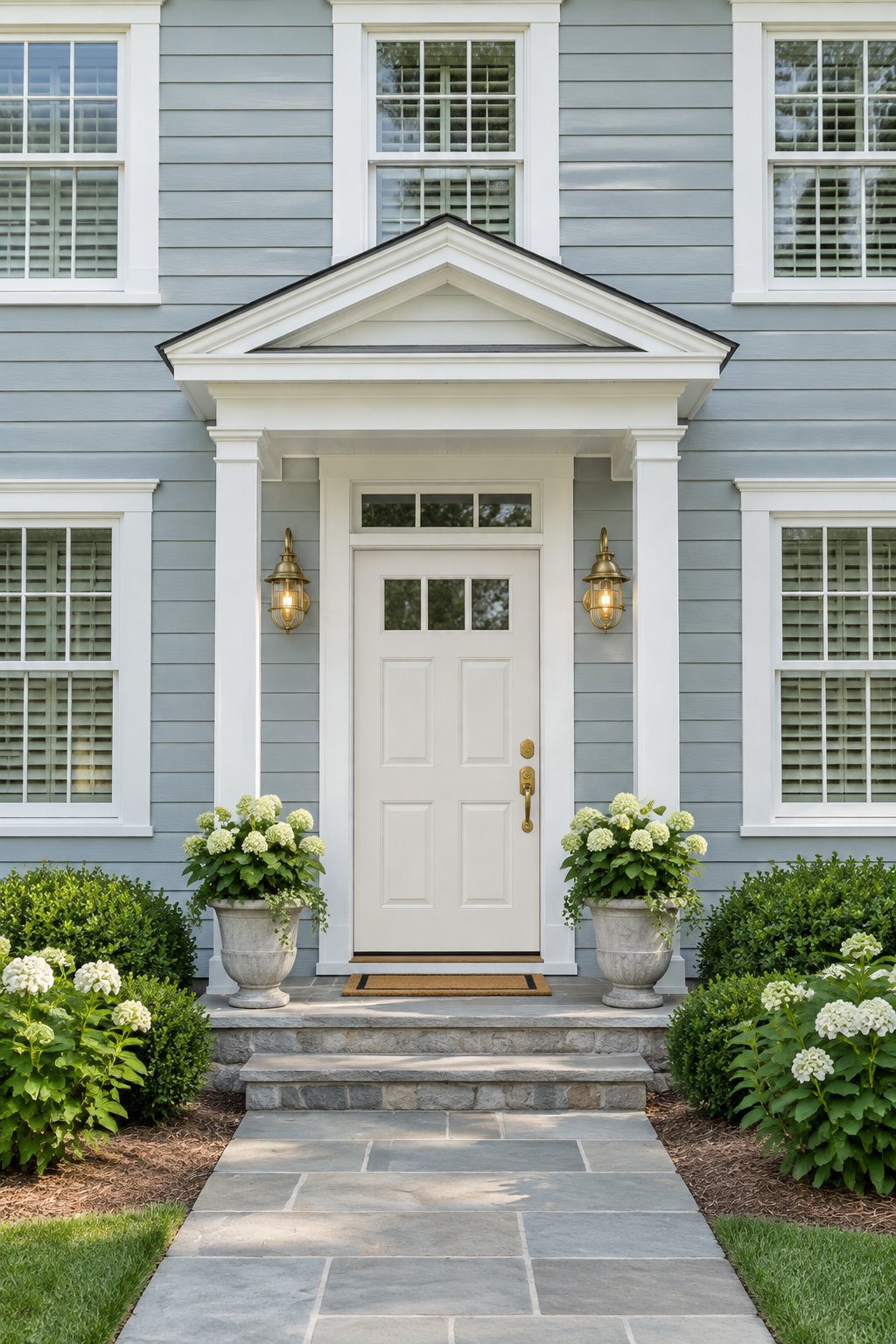
Soft grayish-blue siding gives a Snowbound front door a breezy coastal setting, while white trim and brass lighting keep the entry fresh and polished.
Use a smooth or lightly paneled door in an exterior-grade Snowbound finish. Frame it with crisp white casing, then carry that white onto porch columns, fascia, and window trim. The blue siding supplies gentle color without overwhelming the door’s quiet warmth.
Nautical-inspired brass sconces add a warm metallic note. Look for ribbed glass, cage details, or compact gooseneck forms, and choose aged brass when you want a softer finish. A brass knocker and matching house numbers tie the hardware together.
Style the porch with a woven bench cushion, a striped outdoor runner, and planters in white ceramic or weathered zinc. Blue-gray pots echo the siding, while rosemary, ornamental grasses, or trailing greenery bring a salt-air feeling. Test Snowbound beside the blue siding in shade, where its gray cast may become more noticeable.
Moody Earthy Green Backdrop
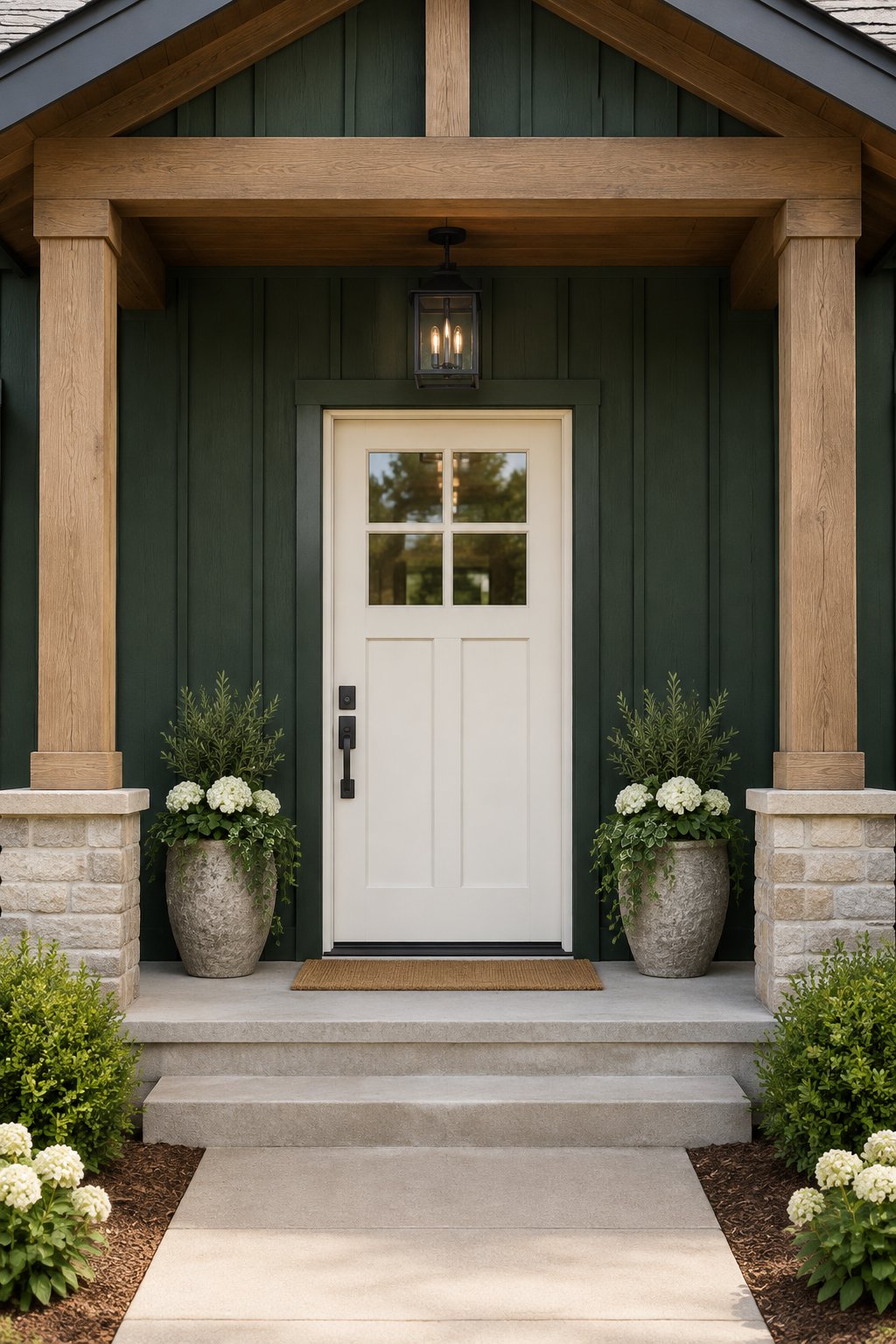
Deep forest green board-and-batten siding makes a Snowbound door luminous and gives the entry a rich woodland character.
Choose a classic paneled or partially glazed door and coat it with an exterior product suited to frequent handling and weather exposure. The vertical siding creates a strong backdrop, while white or muted taupe trim can outline the opening without interrupting the green field.
Blackened bronze hardware feels grounded against both colors. Use a substantial lever, a matching deadbolt, and simple rectangular numbers. Lanterns with bronze or matte black frames and warm bulbs add depth to the facade after sunset.
Bring in natural materials through a cedar bench, a slate step, or a pair of aged stone planters. Ferns, hellebores, dwarf conifers, and mossy greens connect the entry to its landscape. Keep the accessories restrained so the contrast between the pale door and forest backdrop carries the design.
Graceful Traditional Brick Pavers
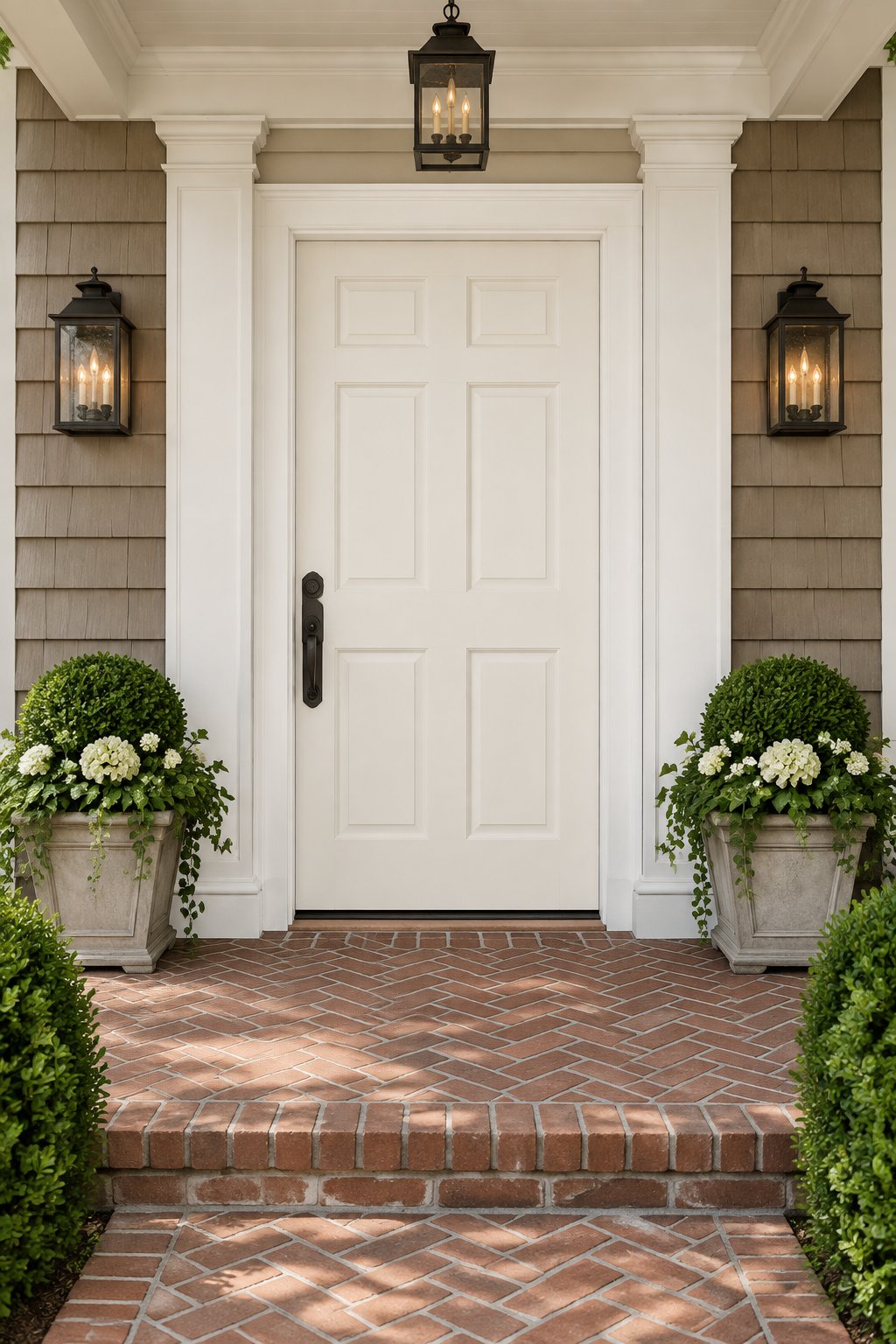
A paneled Snowbound door, warm taupe siding, white pilasters, and a herringbone brick porch create a composed traditional entrance with layered texture.
Use a six-panel door in a satin exterior finish, then surround it with white pilasters and a broad matching casing. Warm taupe siding supports the soft off-white door and prevents the facade from feeling too stark. A herringbone brick floor in russet and clay tones leads guests toward the threshold with a pattern that feels established and architectural.
Aged brass or polished nickel hardware both suit the traditional profile. Select a curved lever, a classic knocker, and lantern sconces with clear or seeded glass. Keep the light warm enough to bring out the brick’s earthy tones without shifting Snowbound too yellow.
Add a pair of clipped boxwoods in stone urns and a dark woven mat at the door. If the brick includes several color variations, sample Snowbound beside the pavers and taupe siding before painting so the door’s gray, pink, or violet notes sit comfortably with the fixed materials.