
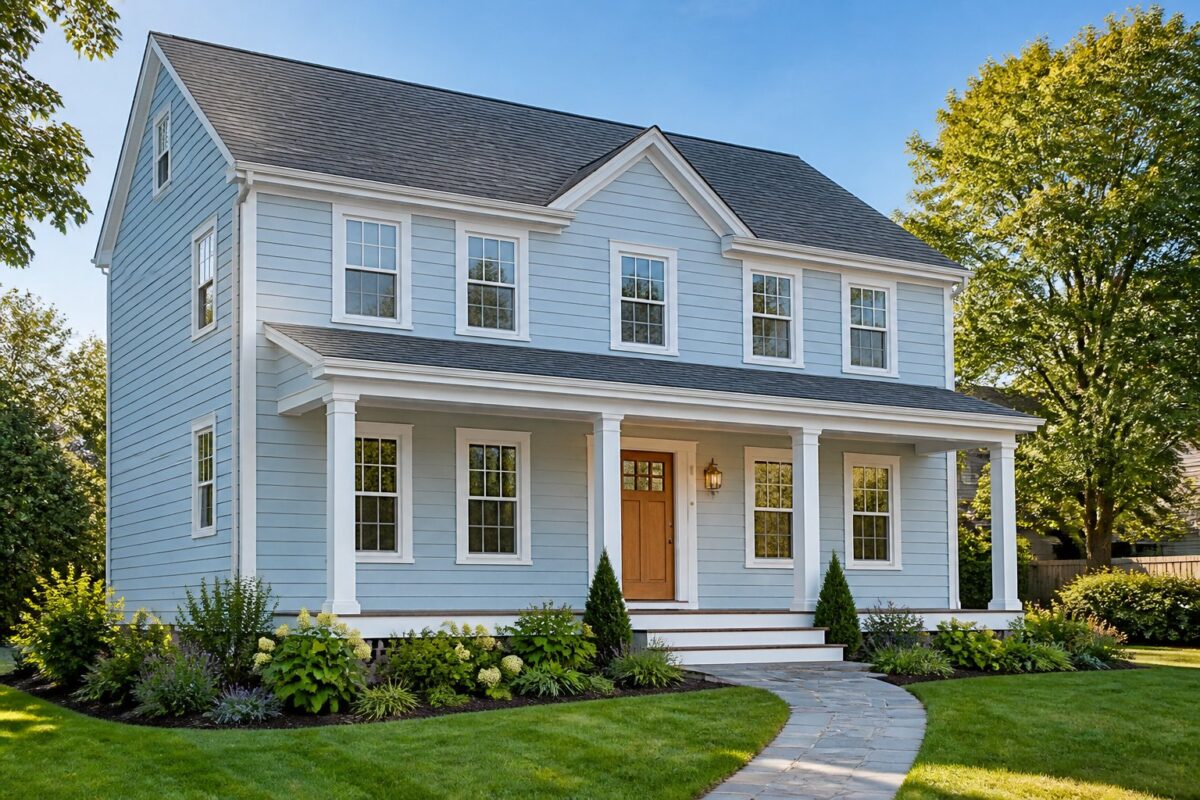
Sherwin-Williams Upward (SW 6239, #BFC9D0) gives you a soft blue-gray that feels airy, settled, and easy to live with. Its muted gray-lavender undertone keeps the color from looking overly bright, so you can use it on siding, trim, doors, connected interiors, or a small backyard structure.
The best Sherwin-Williams Upward house ideas pair this calm blue with warm wood, aged metal, soft white, and natural landscaping so your rooms and exterior feel balanced rather than cold. Test a sample on several surfaces first, since daylight, shade, and nearby finishes can shift the color throughout the day.
Upward Exterior Siding with Crisp White Trim
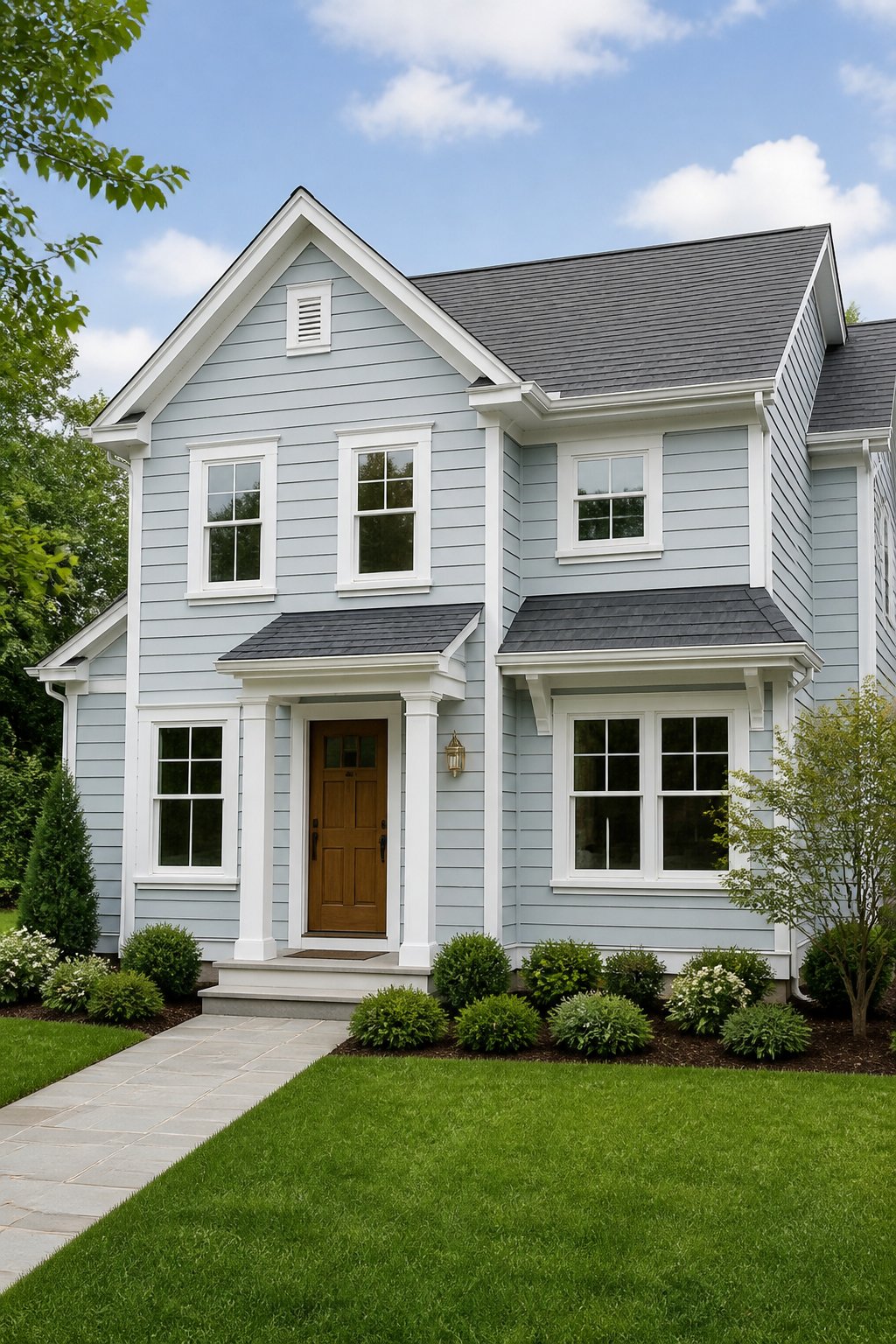
Use Sherwin-Williams Upward on the full exterior body when you want a gentle blue-gray facade with a quiet presence from the curb. The color works on traditional lap siding, crisp board-and-batten, or textured shingles, and its gray-lavender undertone keeps a full-body blue from feeling toy-like.
Pair the siding with bright white trim around windows, corner boards, porch posts, and eaves. A warm white can soften the contrast, while a crisp white gives the home a fresher, more tailored outline. Upward sits comfortably beside a gray or slate roof, especially when the roof has charcoal or blue-gray variation.
Choose a stained wood door in oak, cedar, or walnut for warmth, or use a deep black door for a sharper modern edge. Black window hardware and bronze lanterns create definition, while aged brass gives the entry a more welcoming glow.
Keep the landscaping warm and simple. Ornamental grasses, evergreen shrubs, terracotta pots, and natural stone prevent the blue-gray exterior from feeling chilly. Use a low-sheen exterior satin for the siding and a glossier finish on the door so each surface has its own subtle depth.
Soft Blue Front Door and Porch Ceiling
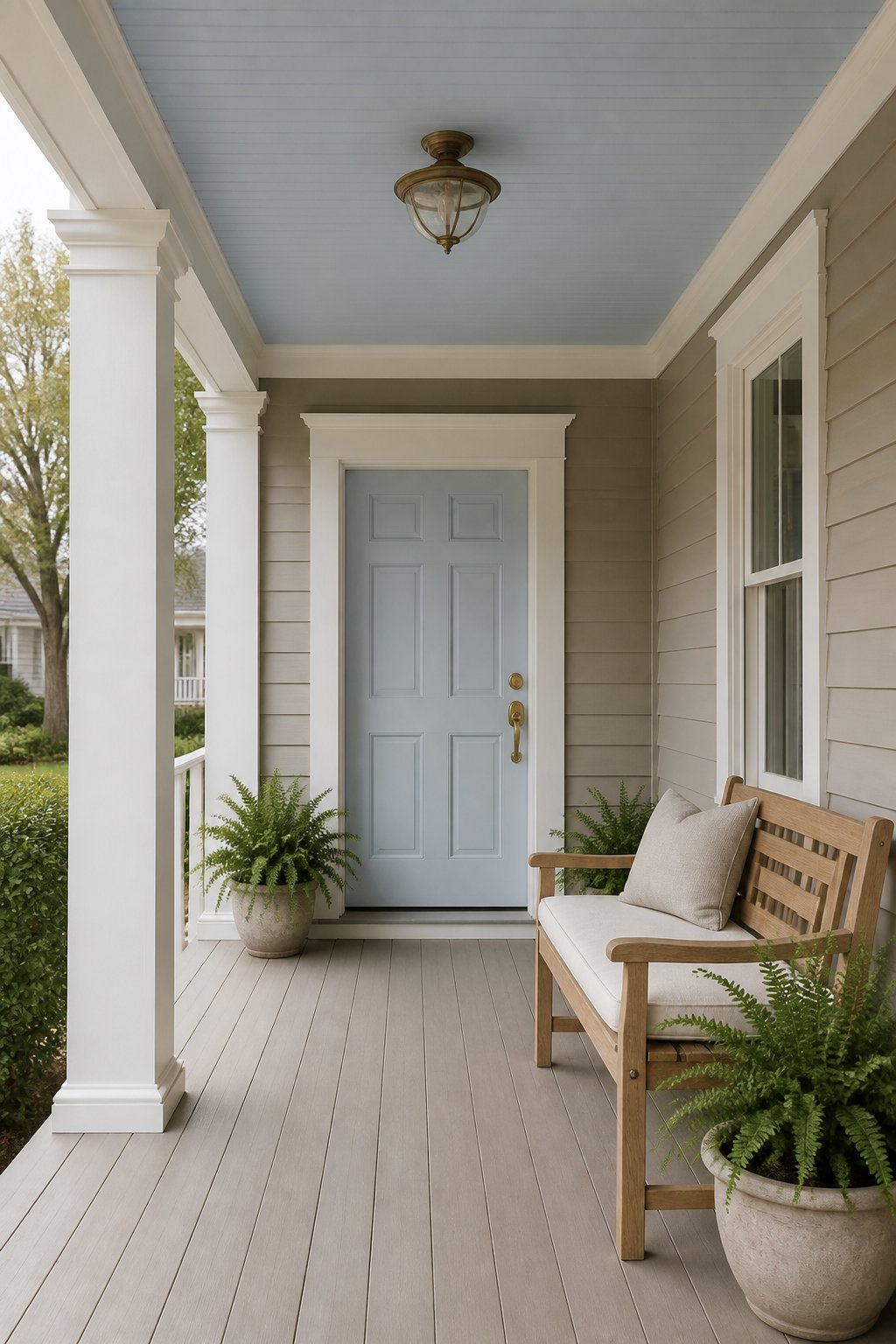
Leave the main house body neutral, then use Upward on the front door and porch ceiling for a restrained touch of color. A warm white, light greige, or soft taupe exterior gives the blue-gray paint room to stand out without making the entry feel busy.
Paint the porch ceiling in a durable exterior finish, carrying the same color down onto the door for a composed connection. The ceiling nods to the traditional haint-blue porch while giving the entry a serene, open feeling. Upward looks especially gentle beneath a covered porch, where reflected daylight softens its blue character.
Keep the door trim and porch posts white. Add a teak bench, woven seat cushions, or a small cedar table to bring natural warmth close to the entry. Aged-brass house numbers, an antique brass knocker, and bronze or brass sconces complete the palette without appearing too polished.
This is one of the easiest Sherwin-Williams Upward house ideas to test before committing to a full exterior repaint. Watch the sample in morning sun, afternoon shade, and evening light before choosing the final sheen.
Whole-Home Interior Flow Color
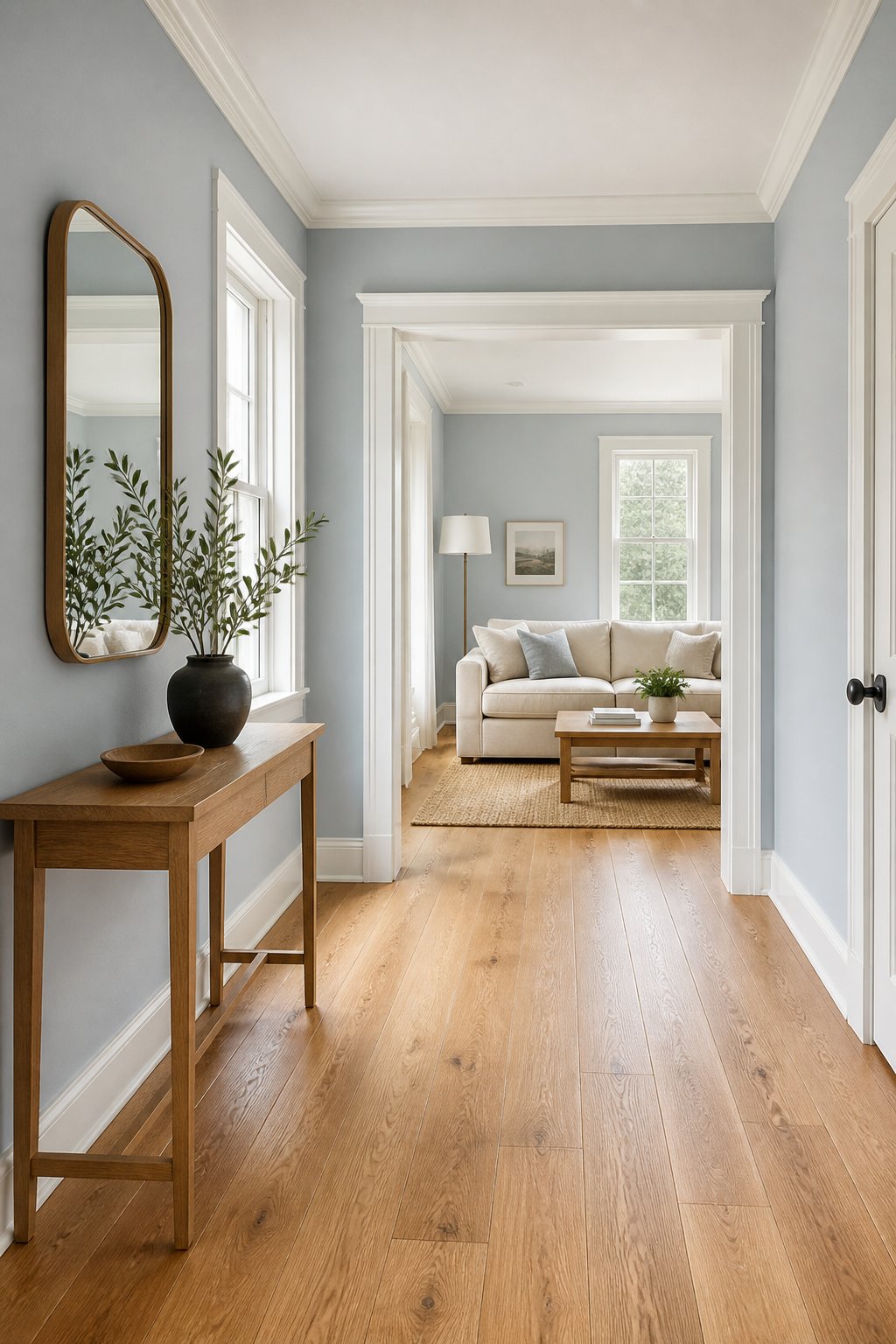
Carry Upward through the entry, connected halls, stair, and part of the living room when you want the ground floor to feel calm and cohesive. Extending the same color across sightlines makes separate spaces feel intentionally related, especially in an open or partially open floor plan.
Because Upward is light and gently grayed, it can work in bright rooms as well as north-facing spaces without turning sharply icy. Test it near windows and in shadowed corners, since cool daylight may emphasize the blue while warm lamps can bring out its softer gray side.
Use a warm white on ceilings, doors, and trim to keep the color airy. Matte or eggshell walls create a quiet backdrop, while satin trim adds a clean edge and protects high-touch surfaces. Varying sheen keeps the repeated color from feeling flat or monotonous.
Let the furnishings provide warmth through white oak floors, walnut tables, rattan, linen, and camel leather. A charcoal rug, black metal console, or deep gray artwork adds structure without competing with the walls. Warm 2700K to 3000K lamps help Upward feel relaxed after sunset.
Detached Garage or Studio Accent Structure
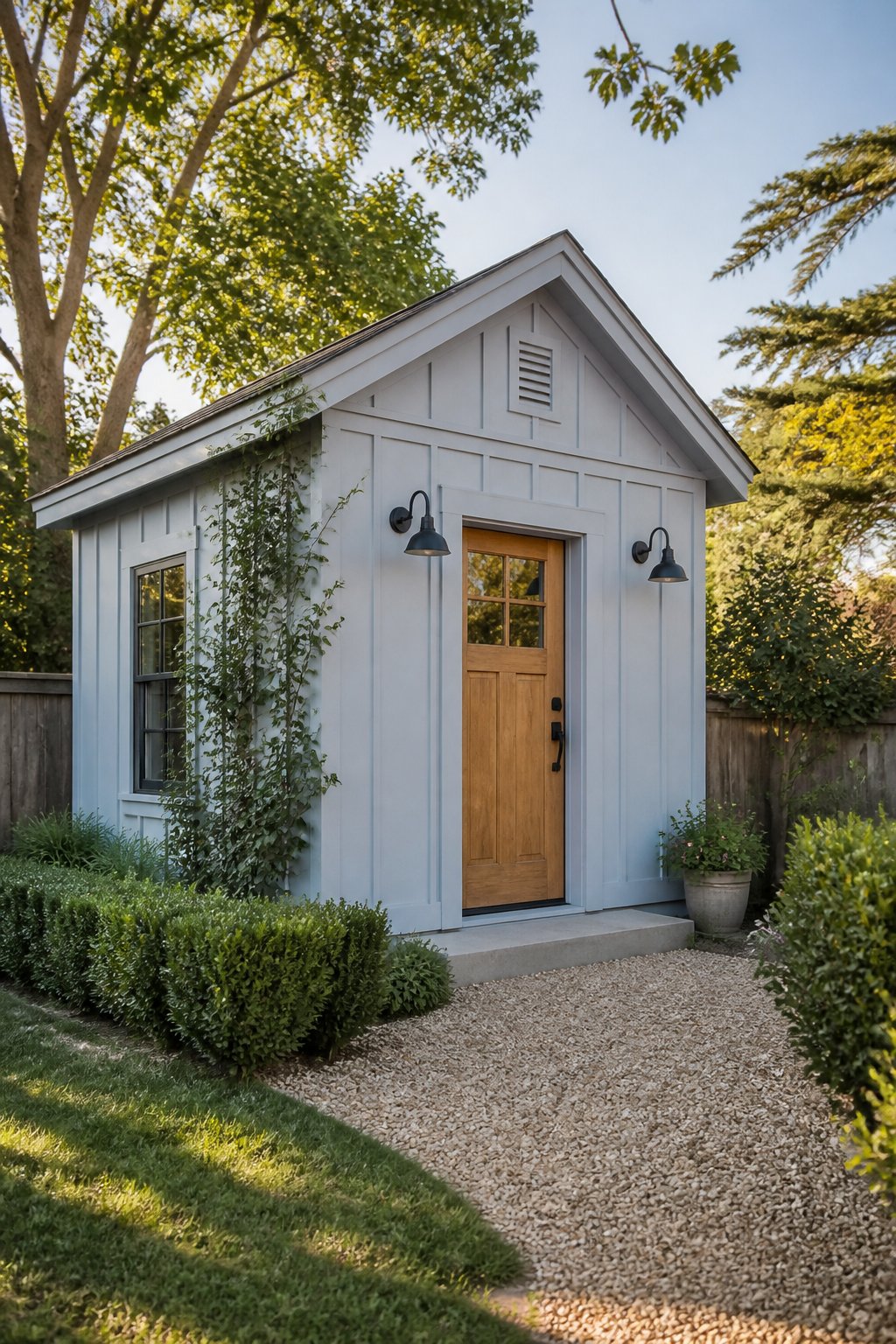
Paint a detached garage, pool house, or backyard studio entirely in Upward so it reads as a soft pavilion rather than a leftover utility building. Using the same color on the body and trim simplifies the shape and gives a small structure a more intentional, architectural character.
Apply a low-sheen exterior satin to lap siding, board-and-batten, or shingles. A monochromatic treatment works especially well when the building has simple lines, a gabled roof, or large doors. If the roof is gray, charcoal, or weathered metal, Upward creates a natural bridge between the structure and the garden.
Add a warm wood door or garage door in cedar, fir, or stained oak. Black hinges, pulls, and latches sharpen the blue-gray backdrop, while simple gooseneck lights in blackened steel provide practical illumination. Choose clear bulbs with a warm color temperature so the structure glows gently at night.
Soften the walls with climbing greenery, espaliered vines, or tall grasses. Inside, continue the palette with a wood worktable, woven baskets, and durable flooring so the studio feels useful and comfortable rather than overly decorated.
Dining Room Color Drench with Ceiling
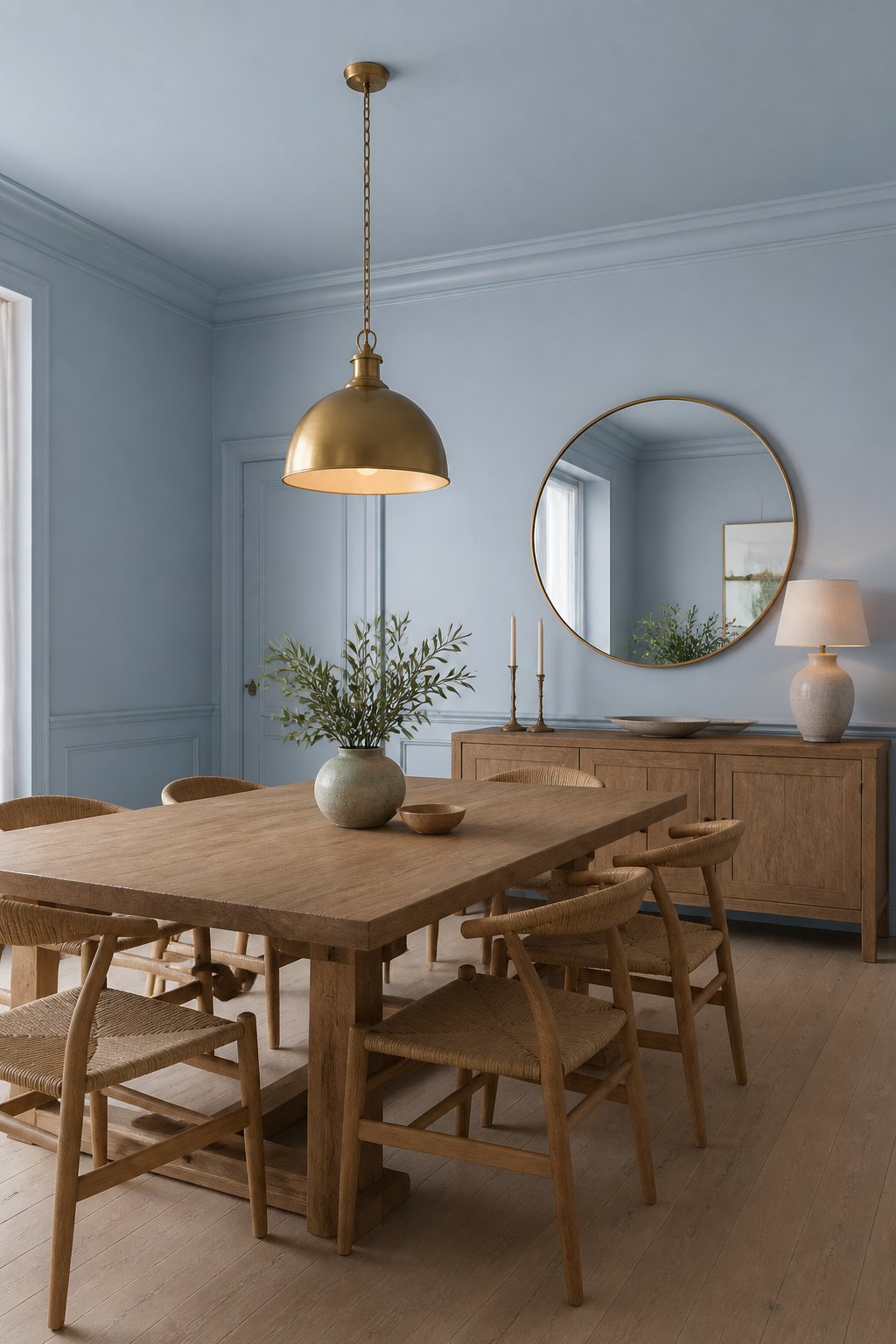
Give the dining room a wrapped, color-drenched finish by painting the walls, trim, and ceiling in Upward. This approach creates a gracious room with a calm sense of enclosure, especially when the rest of your home uses lighter neutrals.
Use a flat or matte finish on the ceiling and an eggshell finish on the walls. Painting the baseboards, window trim, and door casing in the same color keeps the edges quiet and lets the architecture recede. If you have wainscoting, carry Upward across it for a tailored, continuous effect.
Warm wood is the natural partner. Try a walnut dining table, oak chairs, or a vintage sideboard with visible grain. Aged-brass hardware and a brass chandelier add a soft glimmer that feels inviting in candlelight, while linen curtains keep the room from becoming too formal.
Place a large mirror opposite a window or chandelier to reflect light and preserve an open feeling. Cream dinnerware, woven placemats, and artwork with clay, ochre, or charcoal notes add gentle contrast. Sample the ceiling separately before painting, since reduced light can make Upward appear deeper overhead.
Exterior Body Plus Interior Mudroom Continuity
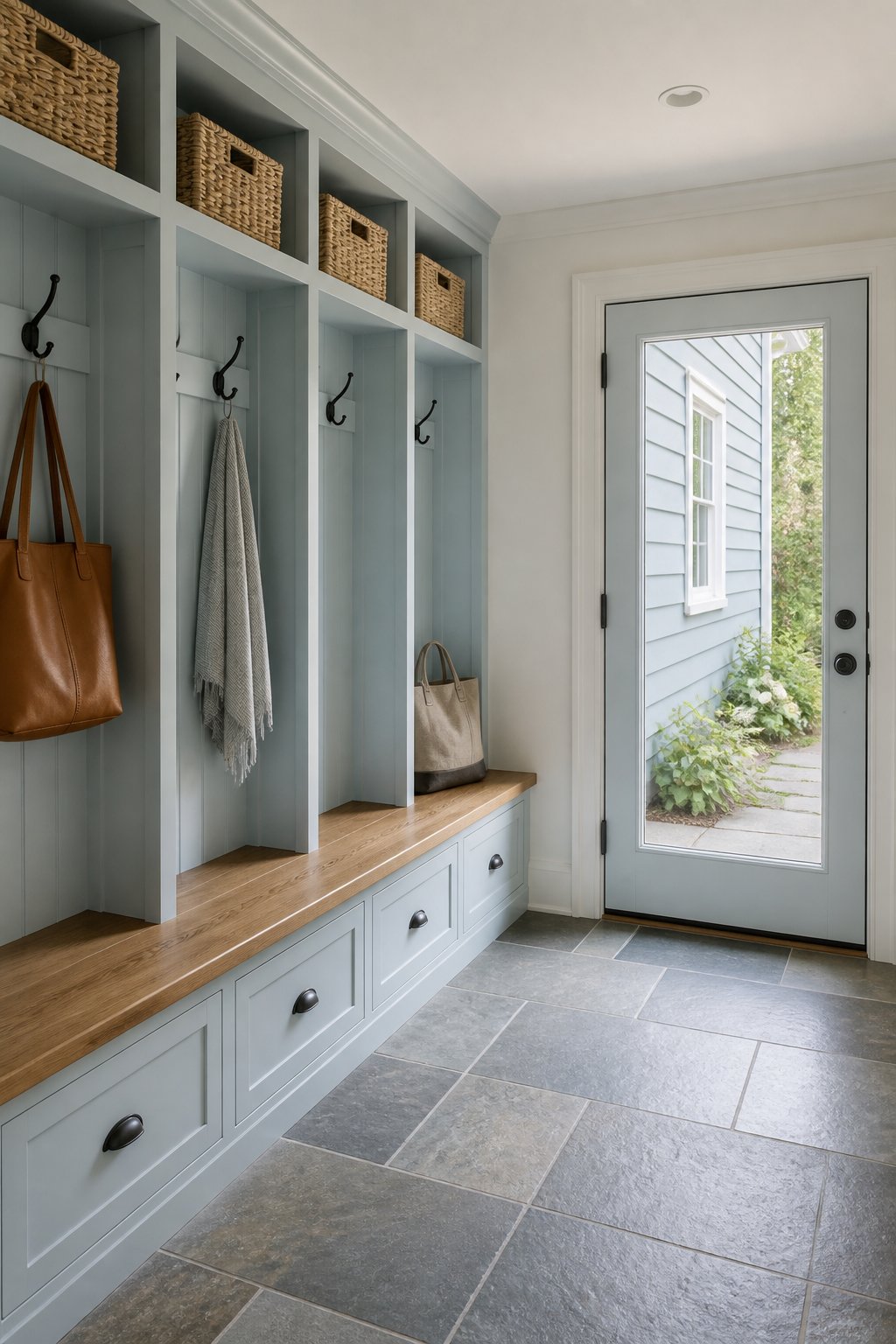
Use Upward on the exterior siding, then carry it inside onto the mudroom or back-entry built-ins. Seeing the same blue-gray at the door, lockers, and bench makes the transition feel considered and gives a hardworking space a clear design connection to the yard.
Keep the mudroom walls a shade lighter, such as a warm white or pale greige, while using Upward on cabinetry, cubbies, or a full-height locker wall. A satin cabinet finish handles scuffs and fingerprints better than a flat finish. Paint the bench base to match, then add a thick wood seat for contrast.
Choose a durable porcelain tile, slate, or tumbled stone floor in warm gray and brown tones. Black hooks, label pulls, and a simple rail provide crisp structure. Woven baskets, canvas totes, and a washable runner bring practical texture without making the room feel cluttered.
Use a flush mount or schoolhouse fixture with warm light, and add a small brass picture light if the mudroom includes artwork. A cedar door, oak shelf, or rattan stool repeats the warmth of the exterior and keeps the blue-gray palette grounded.
Stairwell and Upstairs Hall Accent
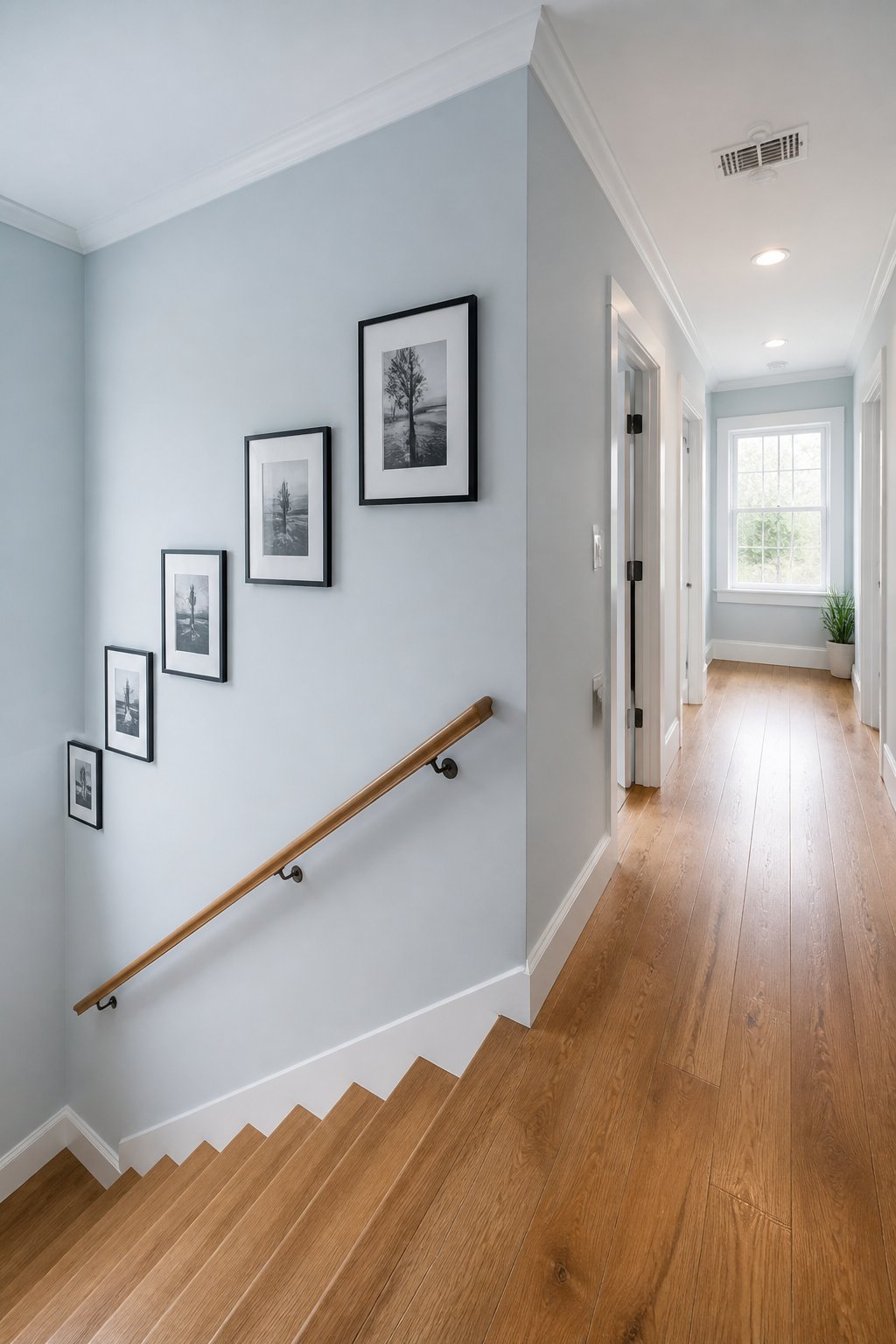
Paint the stairwell and upstairs hall in Upward to give circulation spaces their own quiet identity. This is a low-risk place to use more color because the shade can connect several rooms without competing with the furniture and textiles inside them.
The soft blue-gray helps a windowless hall feel brighter and gives a tall stairwell a calm, balanced presence. Use a matte or eggshell wall finish, then keep the ceiling and trim warm white for gentle contrast. If the hall receives strong daylight, check the sample near the top and bottom of the stairs before proceeding.
A warm wood handrail is essential for balance. Oak, walnut, or stained maple adds tactile warmth against the cool paint, while black or aged-brass stair hardware gives the space a tailored finish. Hang a simple run of framed art up the stair, keeping the frames consistent while varying the artwork slightly.
Add a slim runner in oatmeal, faded charcoal, or muted rust if the stairs allow it. A small pendant or wall sconces with warm bulbs will make the blue-gray color feel softer at night. Keep decorations edited, so the stairwell remains airy and easy to move through.