
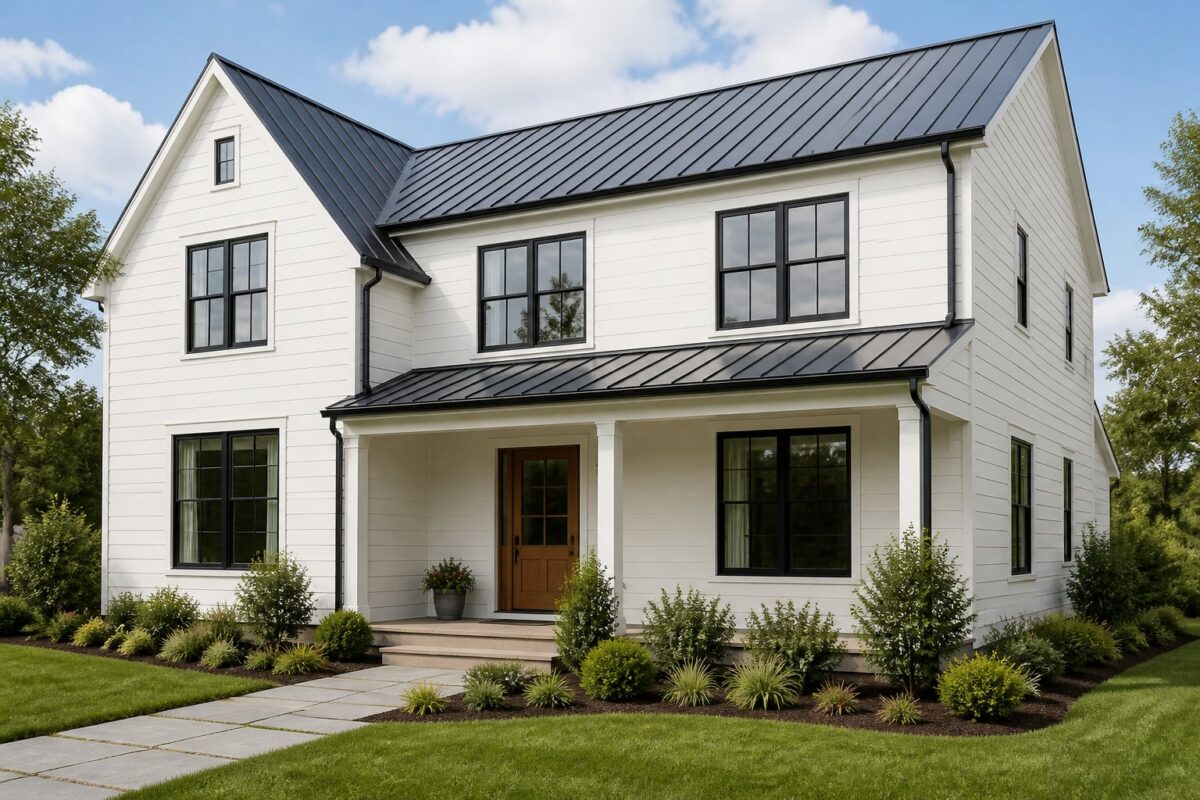
Sherwin-Williams Pure White (SW 7005), shown as #EDECE6, gives you a bright backdrop with a soft, warm edge. Its light-reflective finish feels crisp in sunlight, while its subtle warmth keeps white siding, trim, walls, and ceilings from looking icy in shaded spaces.
The best Sherwin-Williams Pure White house ideas pair SW 7005 with natural wood, dark hardware, textured masonry, or layered interior finishes so your home feels fresh without feeling stark. Test a sample on several sides of your home first, since changing daylight and nearby materials can shift the way this white reads.
All-White Exterior with Black Windows and Roof
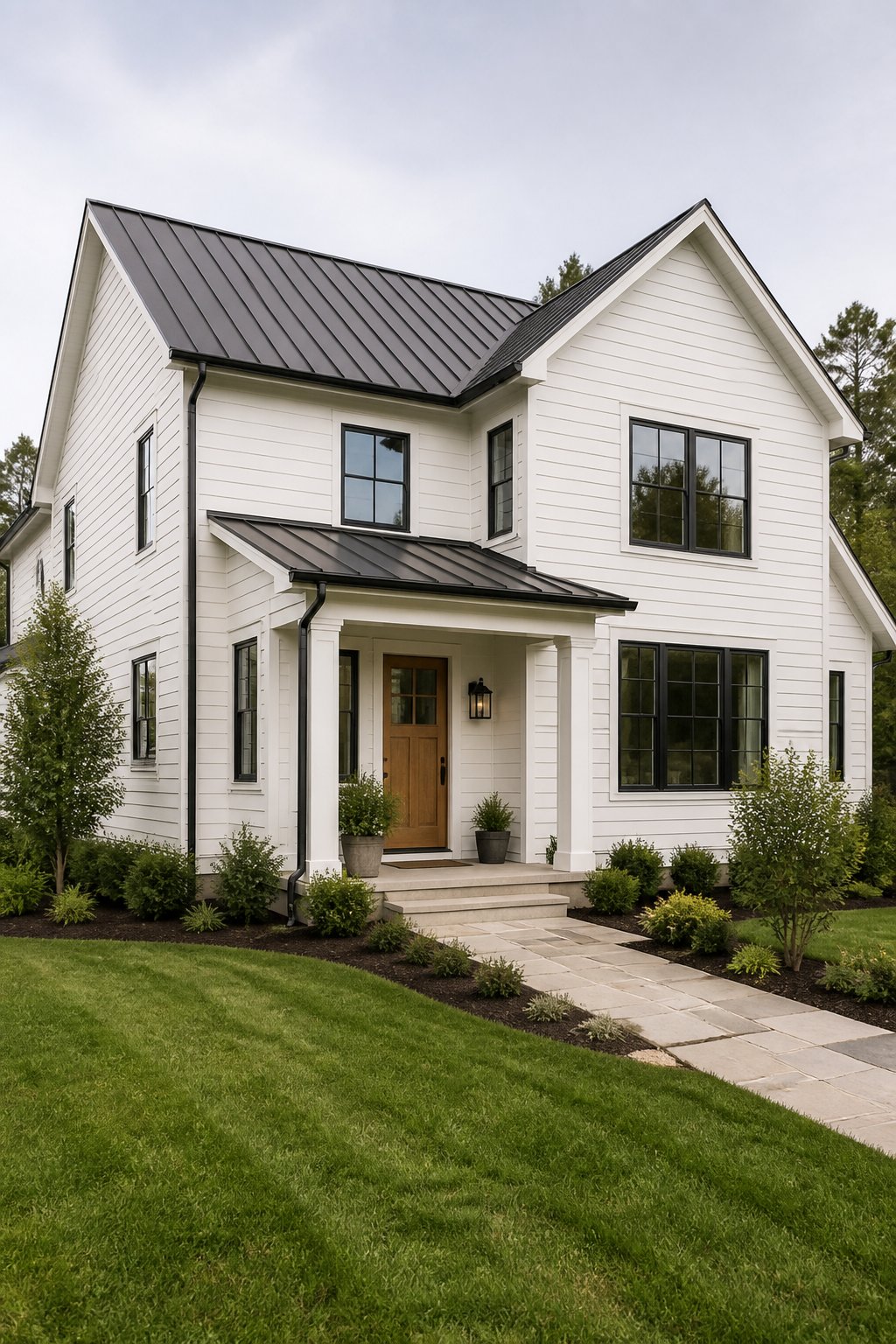
For a tailored modern-farmhouse exterior, paint the siding and trim in Pure White, then frame the composition with black windows, gutters, and a charcoal or black roof. The faint warmth in SW 7005 helps the large white surfaces stay inviting in shade instead of turning flat gray.
Use the color on smooth lap siding, board-and-batten panels, or cedar-style shingles. A low-sheen exterior finish hides minor surface texture, while satin or semi-gloss trim gives fascia, corner boards, and window casings a clean edge. Black-framed windows create strong graphic lines, especially when you repeat the same tone on downspouts and porch lighting.
Choose a solid black door for a sharper look, or add a stained oak door to soften the contrast. Simple landscaping keeps the palette composed: clipped grasses, olive-green shrubs, pale gravel, and a restrained concrete or bluestone walk work beautifully.
Before committing, view your sample in morning shade and afternoon sun. Pure White can look warmer near wood and cooler beside black, so the surrounding materials matter as much as the paint itself.
White Body with a Warm Wood Door and Accents
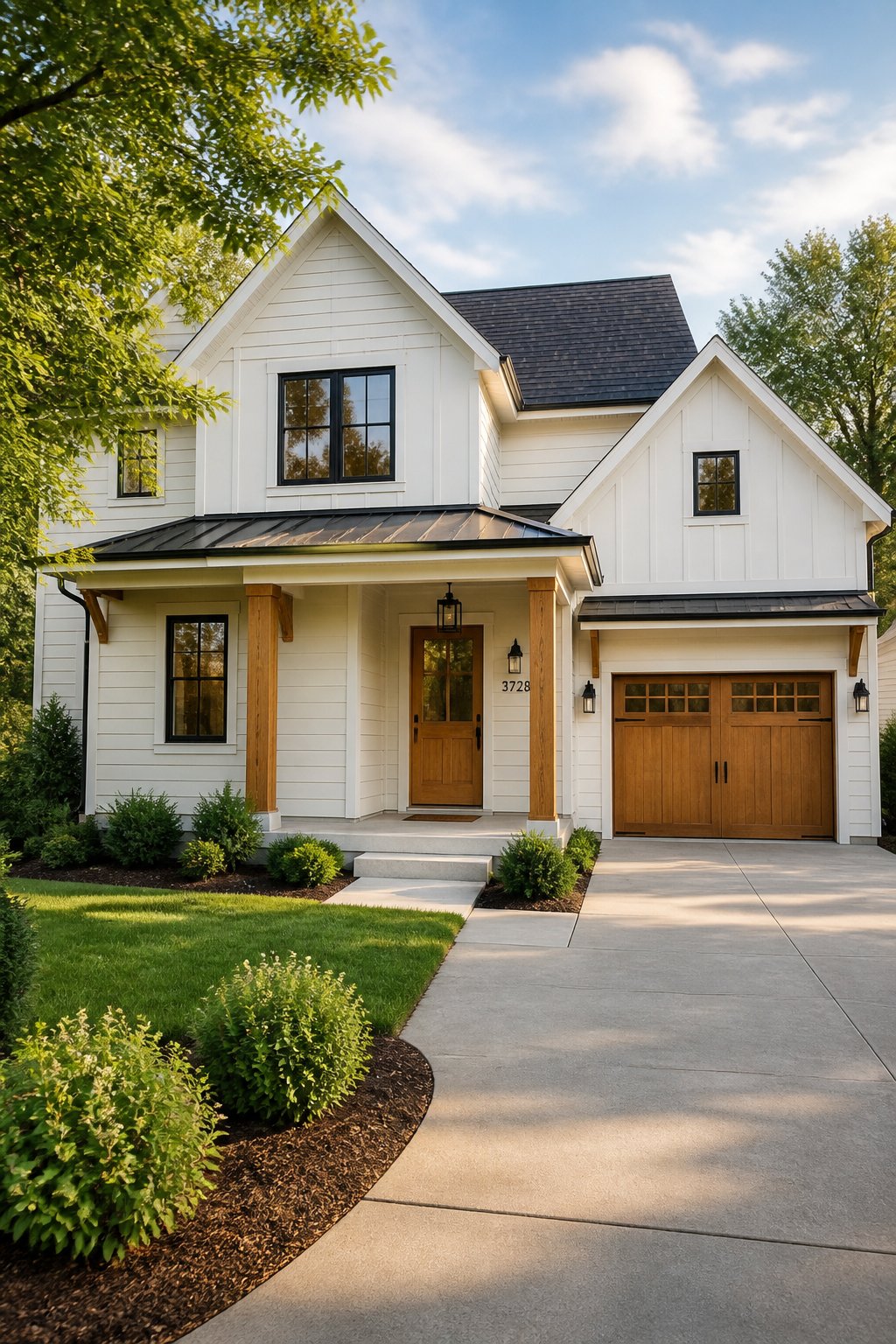
Keep the siding, trim, and garage surround in Pure White, then let natural wood supply the warmth. A clear or medium oak stain on the front door brings out the creamy softness in SW 7005, while matching garage doors or porch beams make the entry feel connected.
Use a satin exterior finish on the door so the grain remains visible without looking glossy. For porch posts, brackets, and beams, select a durable stain or exterior-rated paint rather than an interior wood finish. Black lanterns, bronze sconces, and dark house numbers add definition against the light siding.
A woven doormat, simple teak bench, or pair of planters can make the porch feel finished without crowding it. For planting, use soft greens such as boxwood, olive-toned grasses, fern, or eucalyptus-like shrubs. Their muted color supports the white and wood palette more gracefully than bright flowers.
This combination works especially well when your roof is medium gray, brown, or weathered metal. The white keeps the exterior airy, while the wood prevents the façade from feeling too uniform.
Pure White Trim Everywhere on a Colored or Brick Body
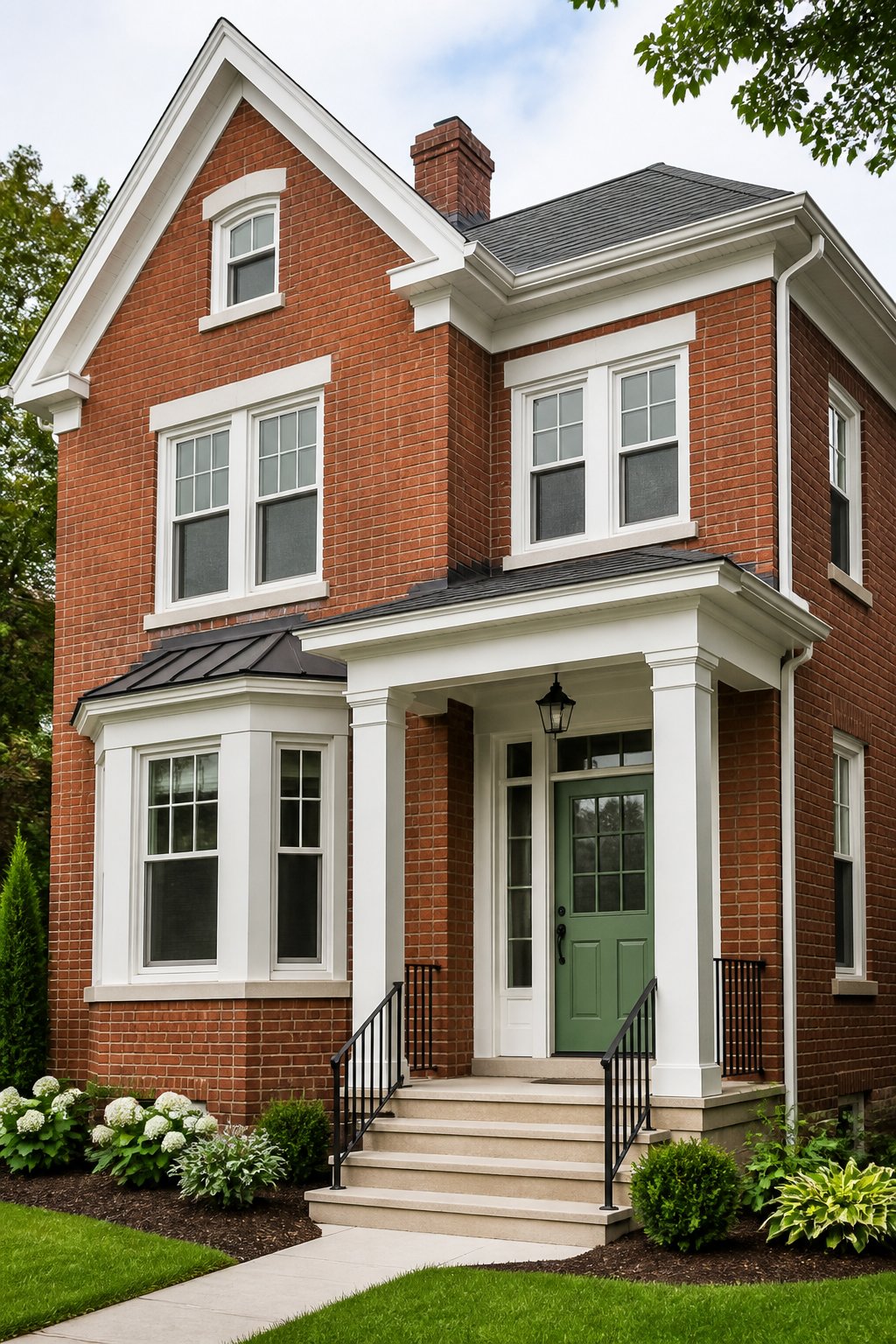
If you want a lower-risk way to use Pure White outside, keep the main body in brick, stucco, or a soft painted color and reserve SW 7005 for the trim. Paint the fascia, soffits, window casings, corner boards, railings, columns, and porch details in one consistent white.
This approach clarifies the architecture without asking you to cover the character of the existing exterior. Against red brick, Pure White feels crisp and traditional. Against taupe stucco or muted sage siding, it creates a quieter, tailored contrast.
Use a low-sheen finish on painted trim, with satin on doors and railings for added durability. Dark bronze or black hardware makes windows read clearly from the street. A coordinating door in deep green, muted navy, warm wood, or charcoal can anchor the entry.
Repeat the trim color around the garage and secondary doors so the house feels balanced. When you sample, place Pure White beside the actual brick or body color. The surrounding undertones can make the white appear brighter, warmer, or slightly cooler than it does on a separate paint card.
White-Painted Brick Exterior
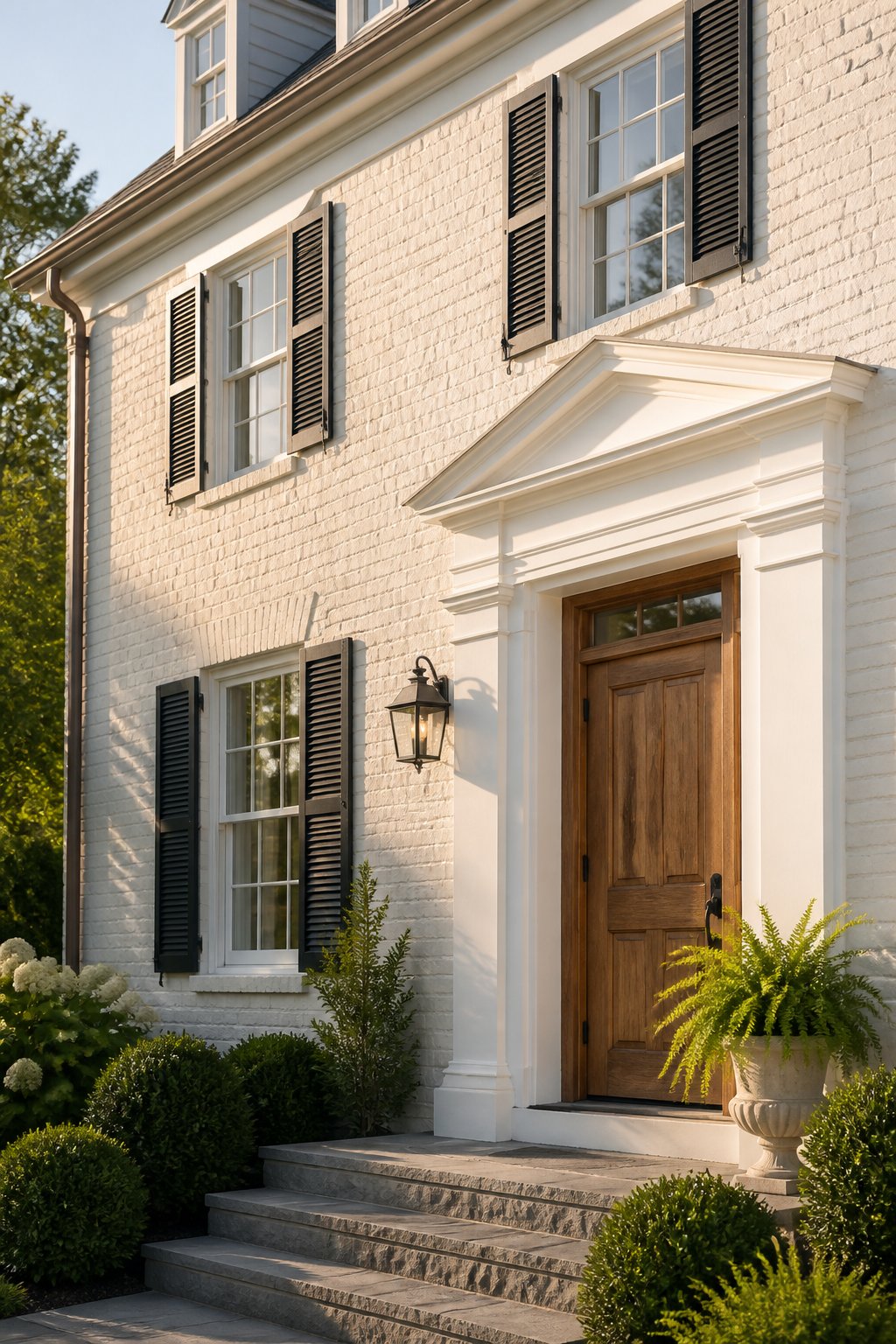
Painting or limewashing brick in Pure White softens dated masonry while preserving its texture, joints, and shifting shadows. The result feels bright and settled rather than flat because every brick still catches light differently across the façade.
For a solid painted finish, use a masonry-compatible system and repair damaged mortar before painting. A low-sheen finish gives the brick a calm, chalky appearance and reduces glare. Keep the trim in the same SW 7005 for a monolithic look, or add black shutters, dark lanterns, and a warm wood door for stronger definition.
Limewash creates a more weathered, breathable appearance. It allows some brick variation to show through, so the final surface feels naturally aged rather than perfectly uniform. Test a small area first, since the amount of water, brushwork, and brick color will affect the coverage.
A simple porch arrangement, such as a wood bench, woven basket, and terracotta pots, keeps the white masonry grounded. Soft green foundation plants add a quiet layer of color without competing with the brick texture.
Whole-Home Interior Trim and Wall Continuity
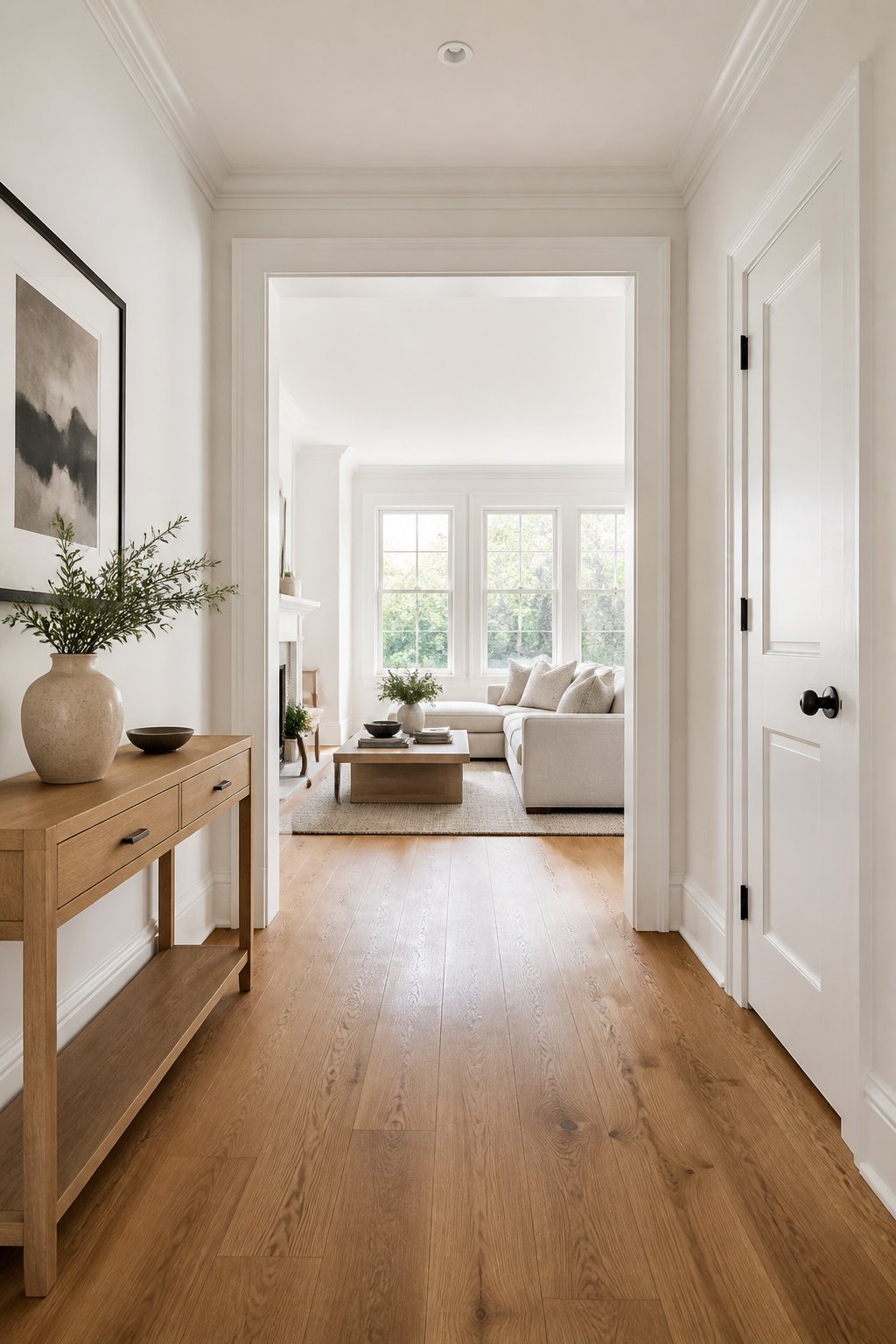
Use Pure White across your main-floor walls, trim, doors, and ceilings when you want a calm, continuous backdrop. SW 7005 reflects abundant light while keeping enough warmth to feel comfortable in sunny rooms and composed in cooler, north-facing spaces.
Choose a matte or washable low-sheen finish for walls, then use satin on doors and trim to create subtle tonal separation. A brighter sheen on baseboards, casings, and cabinetry catches light along the edges without forcing you to introduce another white.
Let natural materials provide contrast. Warm oak floors, rattan seating, linen upholstery, aged brass, and charcoal accents keep the rooms from feeling blank. In a living room, a textured wool rug and artwork with muted greens or clay tones can give the white backdrop a more grounded character.
Carry the color through connected spaces, then vary the furniture and lighting. Warm bulbs around 2700K to 3000K will support the soft undertone, while daylight keeps the rooms airy during the day. Sample Pure White beside your flooring and countertops before painting, since those fixed finishes strongly influence how the walls appear.
Detached Garage or Studio in Full White
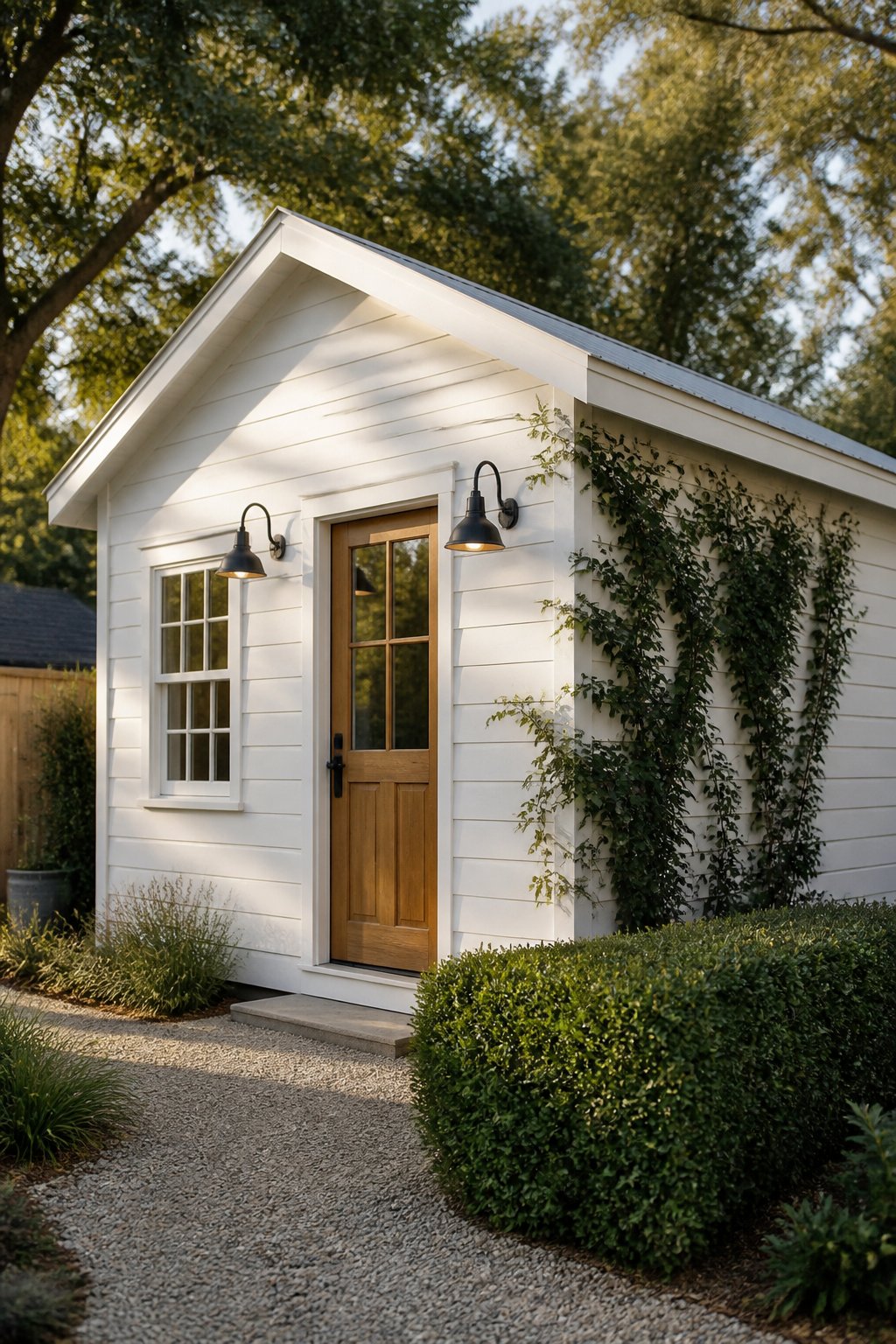
Paint a detached garage, pool house, or backyard studio in Pure White from body to trim so the structure feels intentional and architectural. Using one light color visually simplifies a small building and helps it sit neatly within the landscape.
Apply a durable low-sheen exterior finish to the siding, with satin on the door and trim for easier cleaning. A warm wood garage or studio door adds welcome contrast, while black hinges, handles, address numbers, and gooseneck lights give the simple form a tailored edge.
Inside, continue Pure White on the walls and ceiling if you use the building as a workshop, office, or guest space. Add rubber flooring, pale oak shelving, or a concrete worktop for practical texture. In a studio, a wood desk, woven chair, and linen curtain can make the white shell feel relaxed rather than utilitarian.
Soften the exterior with climbing greenery on a trellis, clipped shrubs, or grasses along the foundation. Keep the planting slightly loose and natural so the clean white structure feels connected to the garden.
White Porch Ceiling, Columns, and Rails
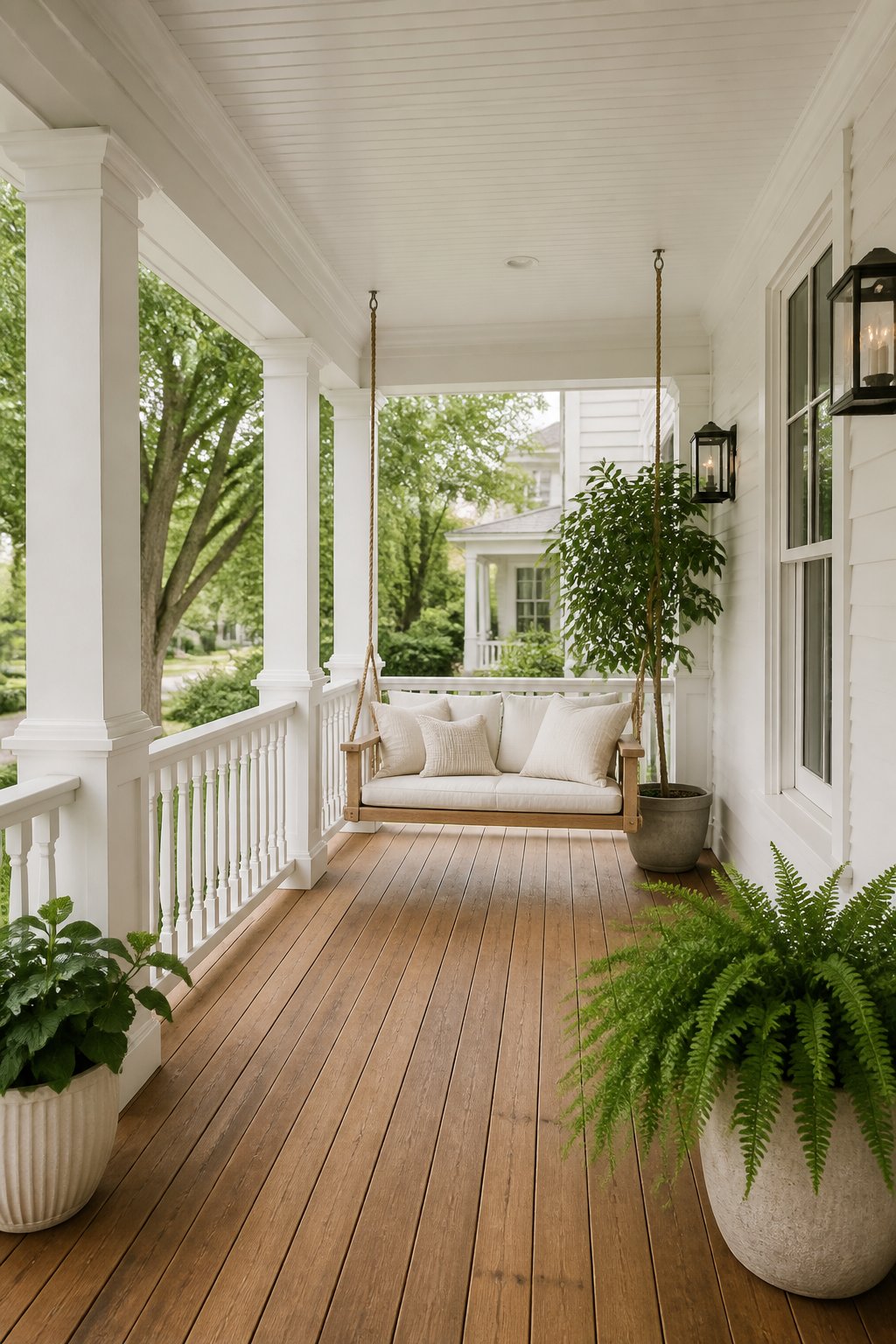
Even when your house body remains colored, Pure White on the porch ceiling, columns, railings, fascia, and trim creates a fresh, welcoming frame. The bright ceiling reflects daylight downward, making the porch feel more open and comfortable.
Use an exterior low-sheen finish on the ceiling and columns, with a more durable satin finish on railings and handrails. Keep the decking in warm stained wood, natural composite, or soft gray so the white has a grounded surface beneath it. A muted blue-gray ceiling can work in a traditional setting, while Pure White keeps the look simpler and more connected to the trim.
Furnish the porch with a swing, painted rockers, or a compact teak bench. Add cushions in oatmeal, faded sage, or navy, then repeat those tones in outdoor pottery and a woven rug. Black or aged-bronze sconces provide evening contrast without overwhelming the light architecture.
Finish with potted ferns, rosemary, or soft grasses. Their movement and muted greens bring a lived-in quality to the porch while allowing the clean lines of SW 7005 to remain the focus.