
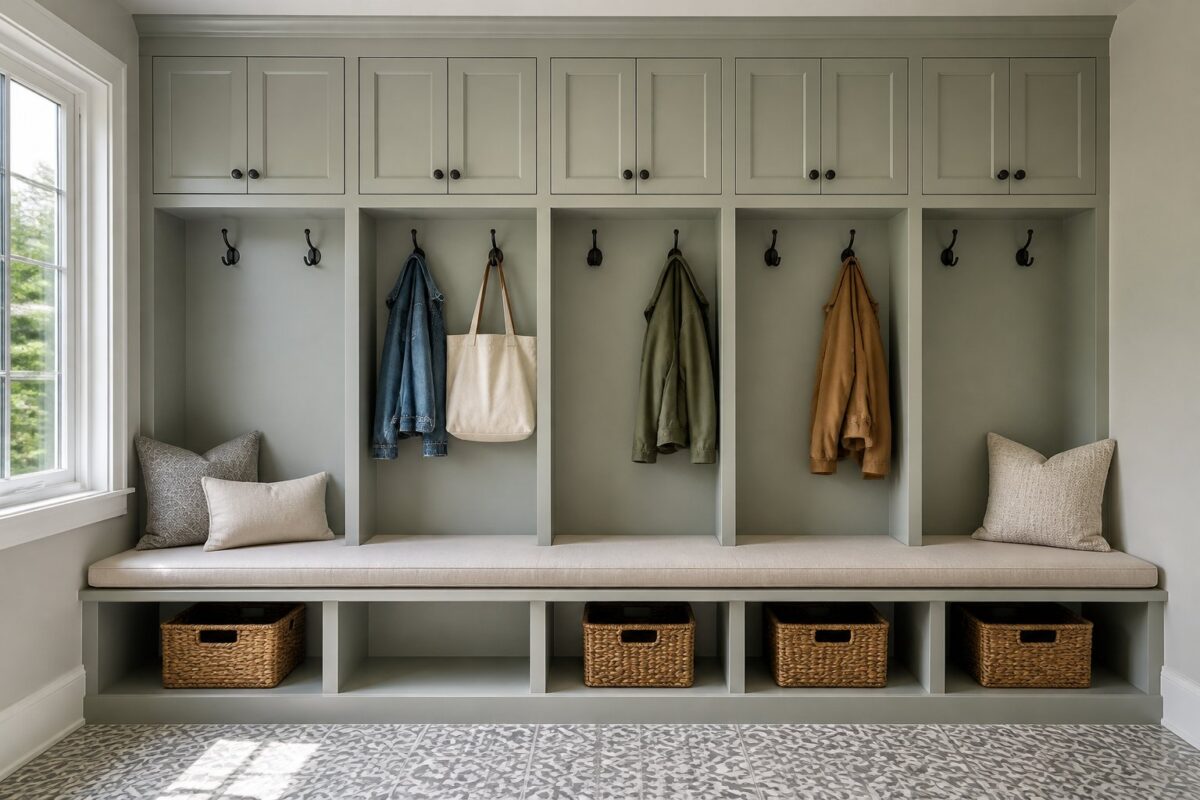
Sherwin-Williams Oyster Bay (SW 6206) is a soft, muted gray-green that brings calm character to a hardworking entry. Its subtle slate-blue undertone shifts with the light, feeling airy by day and more grounded in the evening. For a mudroom, Oyster Bay gives you the beauty of a refined sage with a practical finish that helps everyday dirt, scuffs, and fingerprints fade into the background.
You can use this versatile color on built-ins, architectural details, furniture, ceilings, or an entire laundry-mudroom combination. Pair it with warm woods, woven textures, aged metal, and durable surfaces to create a drop zone that feels organized without looking too precious.
Full Oyster Bay Locker Wall
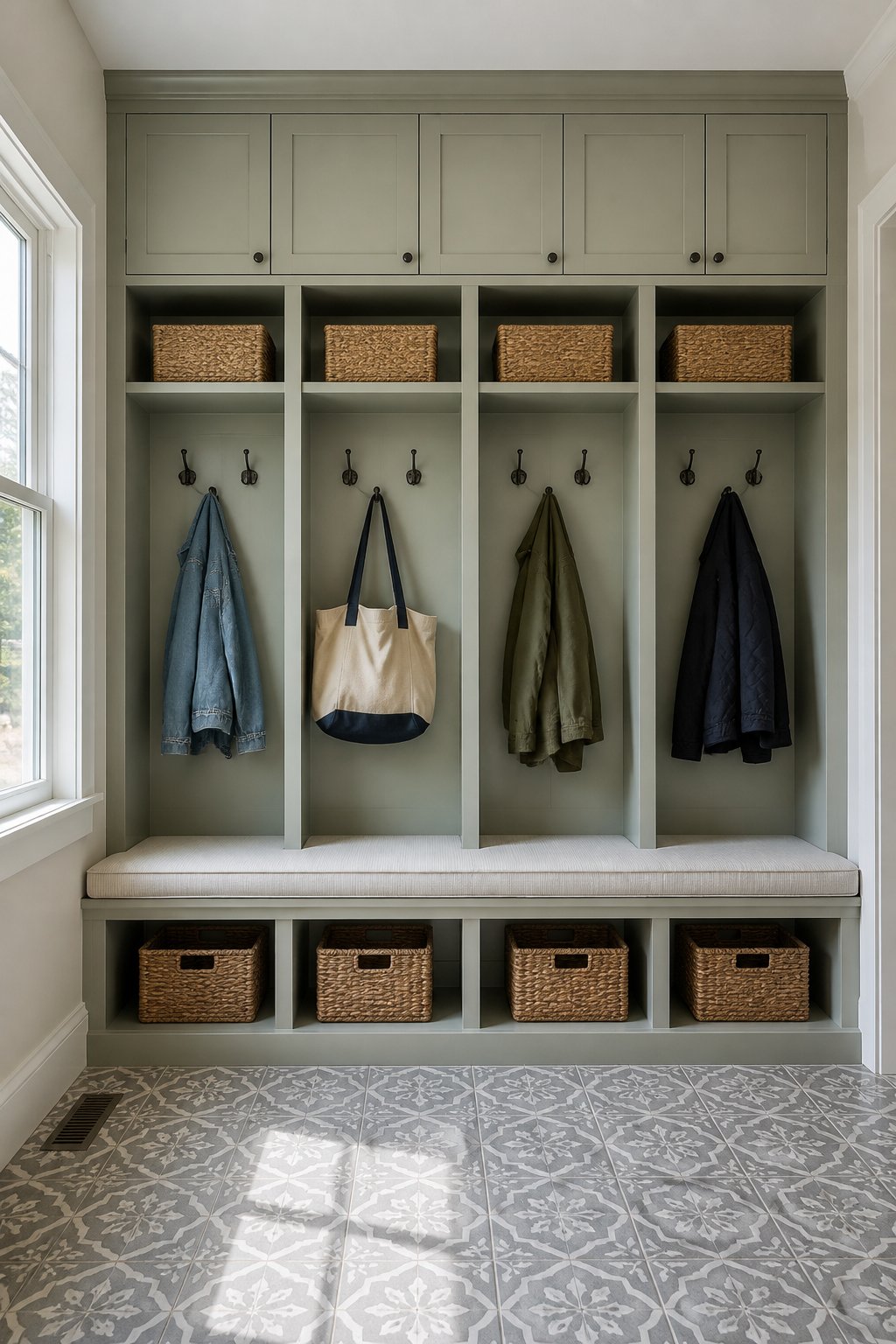
A wall of built-in lockers becomes a tailored focal point when you paint every surface in Sherwin-Williams Oyster Bay, including the cubbies, back panels, bench, and upper cabinets. The uninterrupted color makes the storage feel like one considered piece of architecture while adding a quiet, organic depth.
Choose a durable satin or semi-gloss enamel so you can wipe away muddy fingerprints, pet hair, and daily marks with ease. Oyster Bay is especially forgiving in a high-traffic zone, helping the locker wall look neat between cleanings. Paint the cubby interiors and back panels as carefully as the doors and face frames for a fully finished effect.
Install oil-rubbed bronze double hooks for a strong contrast against the soft gray-green. A cushioned bench seat covered in indoor-outdoor fabric gives you a comfortable place to change shoes without worrying about wet coats or muddy paws. Use woven baskets in each cubby to contain hats, gloves, and smaller gear.
Ground the composition with a patterned cement-tile floor. Its graphic pattern adds movement beneath the tonal cabinetry, while a warm flush-mount fixture or bronze lantern-style light keeps the room welcoming on darker mornings.
Sage Board and Batten with a Hook Rail
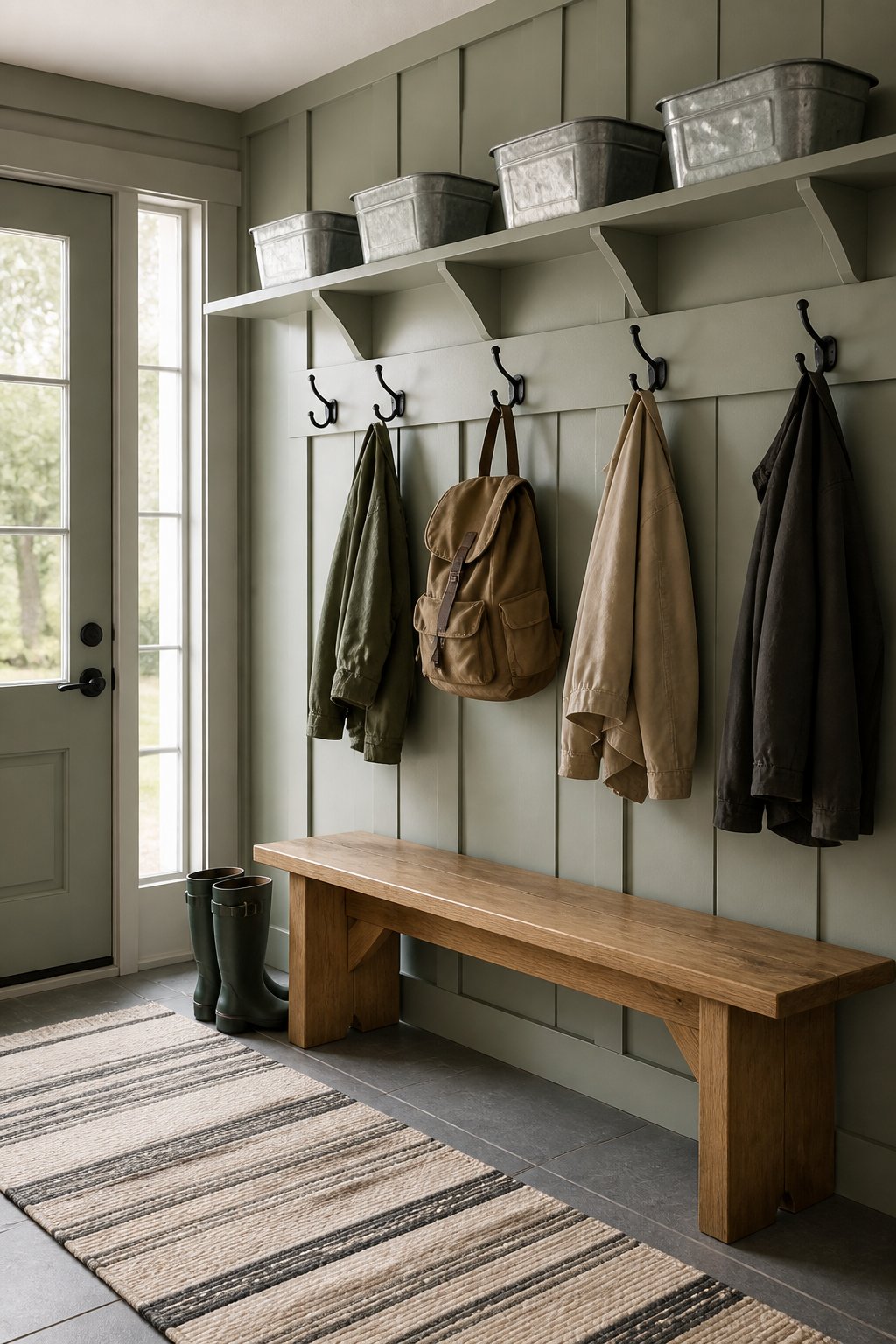
A floor-to-ceiling board-and-batten wall gives a plain hallway the structure of a true landing spot. Paint both the battens and the sturdy horizontal hook rail in Oyster Bay so the vertical rhythm and storage feel unified rather than added on.
This treatment works well as a budget-conscious project because it creates architectural character without requiring built-in cabinetry. Use primed pine or medium-density fiberboard for the battens, secure the rail into wall studs, and select a satin enamel that stands up to coats and bags. If you rent, consider a removable version made from a painted plywood panel or narrow furniture-grade boards.
Keep the ceiling and any wall space above the treatment crisp white to preserve an airy feel. A simple oak bench beneath the hooks adds warmth and gives you a place to sit. Add a narrow runner in a washable wool blend or polypropylene, then place galvanized bins on a shelf above the hooks for seasonal accessories.
A simple opal-glass flush mount or small black sconce will highlight the texture without competing with the sage-gray paint.
Two-Tone Mudroom: Sage Below, White Above
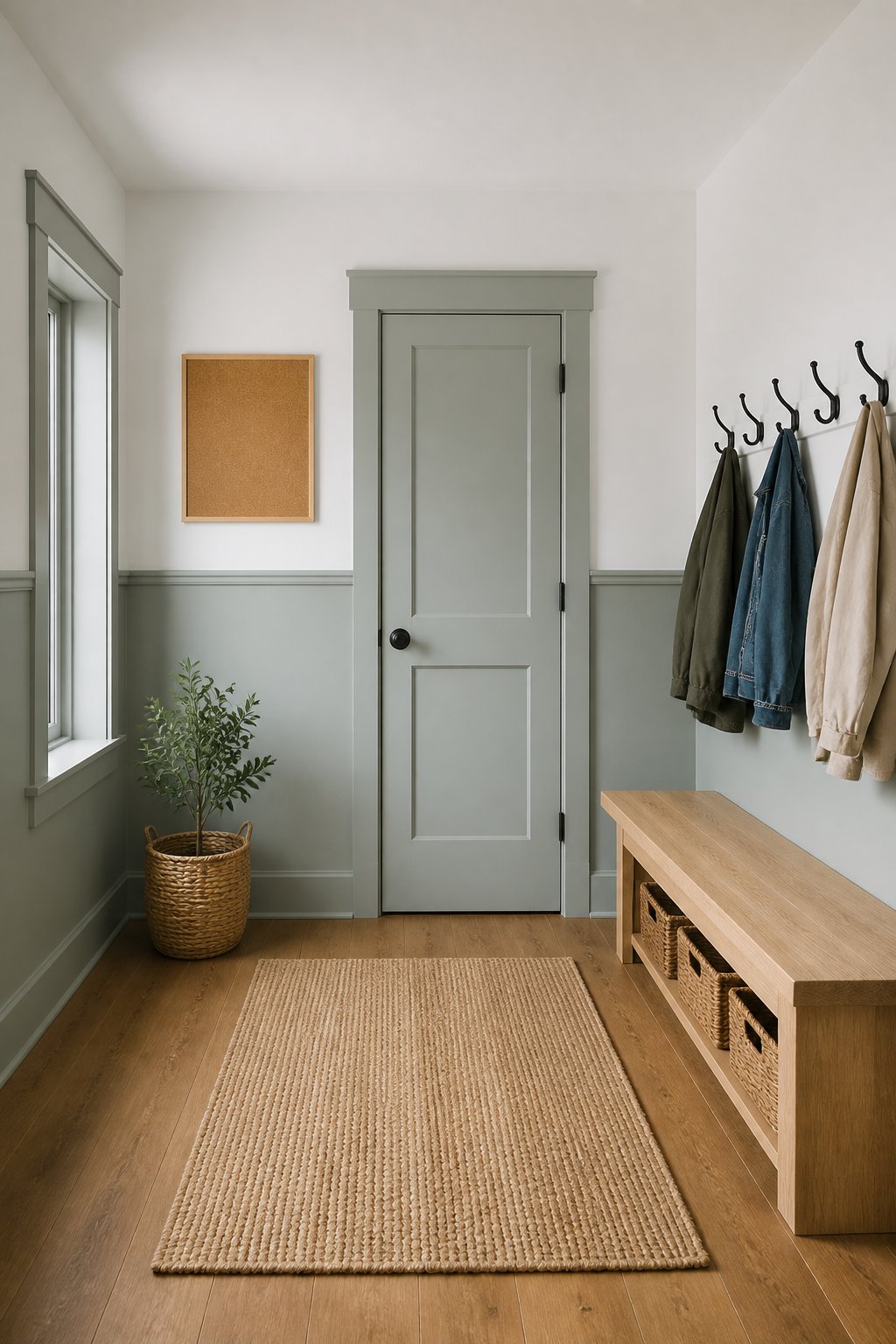
Paint the lower half of the walls and all the trim in Oyster Bay, then cap the color with a simple wood chair rail. Keep the upper wall and ceiling crisp white so the room stays bright while the most vulnerable surfaces gain practical protection.
The sage-gray band sits where boots, backpacks, and enthusiastic dog tails tend to leave marks. A satin finish makes touch-ups and cleaning straightforward, and the white upper zone keeps the mudroom visually open from standing height.
Pair the painted walls with a white oak bench in a clear matte finish. Its pale grain softens the contrast and brings natural warmth to the space. Black iron hooks add definition, while a chalkboard or pinboard in the white zone gives you a useful place for reminders, school notes, or a weekly calendar.
Choose a tightly woven sisal-style rug for a dry entry, or use polypropylene if wet shoes and muddy paws are part of the routine. A simple black or aged-brass ceiling fixture can tie the hooks and bench hardware together without adding visual clutter.
Oyster Bay Dutch Door and Trim
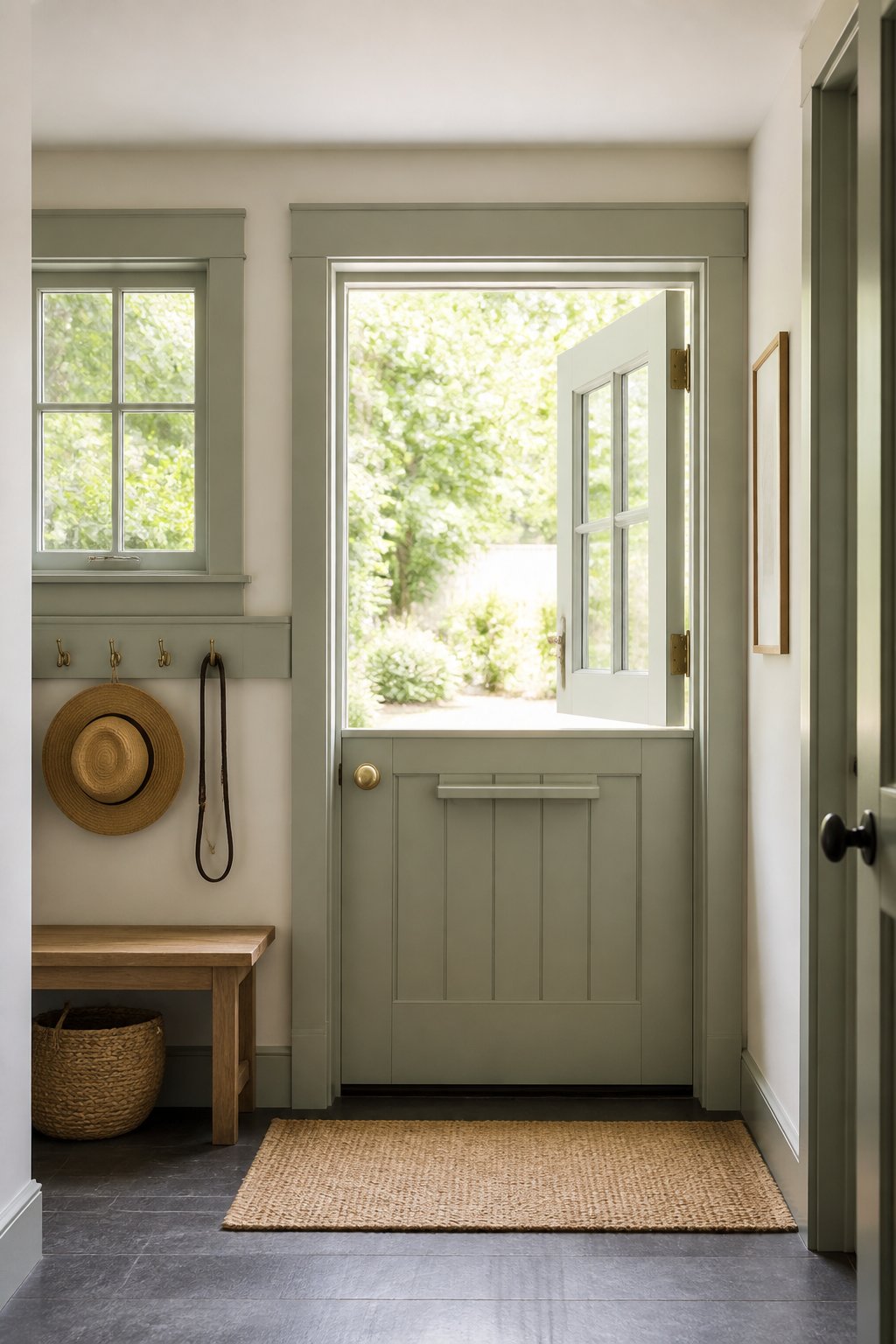
Make the entrance the accent by painting the exterior-facing Dutch door, its casing, and the adjacent window trim in Oyster Bay against white or pale walls. The soft gray-green welcomes you from outside and gives the mudroom a finished architectural detail from inside.
Use an exterior-rated satin paint on the door and trim, with careful surface preparation for the best result. The split door lets in light and fresh air while keeping pets contained, making it especially useful when you want ventilation without opening the room fully.
An unlacquered brass knob brings a warm, slightly lived-in note to the cool-green color. Add a slim brass or stained-wood shelf to the lower door for outgoing mail, keys, or a small potted herb. Beneath the window, place a compact bench with a sealed wood top or a washable cushion.
Finish the entry with a flat-weave jute mat or a rubber-backed indoor-outdoor mat. Install a row of sturdy hooks above the bench, and use a lantern-style wall light or a small ceiling fixture to bring out Oyster Bay’s changing blue-green character as daylight fades.
Sage Ceiling and Beam Canopy
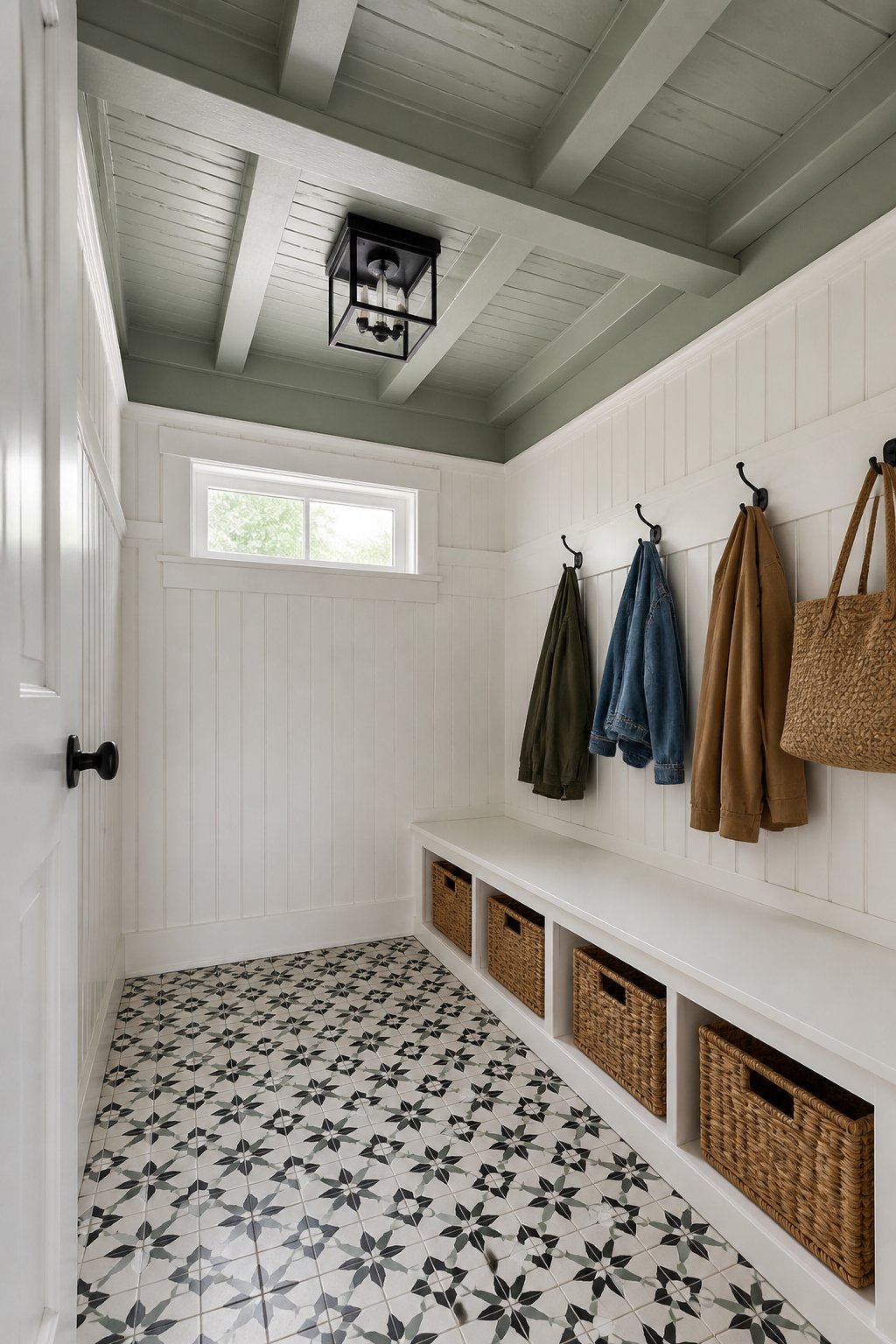
Keep the walls white when your mudroom lacks windows, then bring Oyster Bay overhead on the ceiling, exposed beams, or a wood-plank canopy. The color adds a finished, enveloping note without competing with coats, hooks, and bags at eye level.
Use a flat ceiling finish to reduce glare and let the muted gray-green read softly across the overhead plane. If you have beams, paint them in the same color for a seamless canopy, or use Oyster Bay on the planks with white beams for a more structured look. Test a sample in both morning and evening light because the shade can appear more blue or more green as illumination changes.
White beadboard walls keep the room bright and provide a clean backdrop for a built-in bench. Choose a lantern-style flush mount in aged brass or matte black, then repeat that finish on the hooks. A bold graphic floor tile can echo the ceiling tone through small gray-green accents, creating a subtle connection between the two planes.
Add a woven basket beneath the bench and a narrow washable runner to keep the room practical and warm underfoot.
Freestanding Sage Storage Bench and Hutch
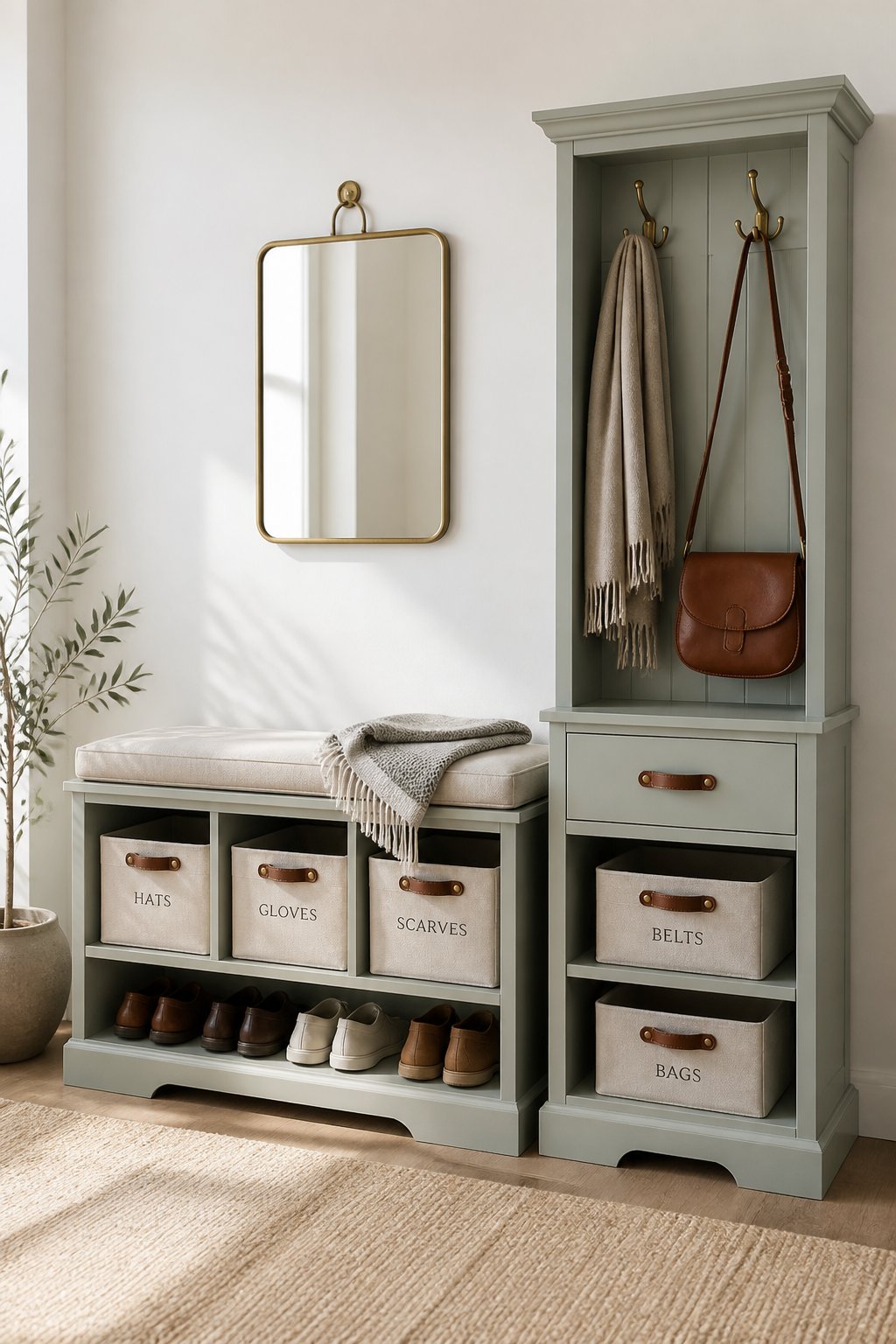
When you cannot renovate, paint a freestanding cubby bench, hall tree, or repurposed hutch in Oyster Bay to create an instant drop zone. The furniture-like piece looks intentional against white walls, and you can move it to another entry or take it with you later.
Clean, sand, and prime the piece before applying a tough cabinet enamel in a satin finish. Paint the shelves and cubby interiors too, since those surfaces receive plenty of contact. Labeled canvas bins make it easy to assign a place for shoes, scarves, pet gear, or children’s belongings.
Aged-brass pulls bring warmth to the muted gray-green, while leather handles add a softer, more casual note. Place a small framed mirror above the bench so the arrangement functions as a proper landing station rather than simple storage. A slim picture light or nearby sconce can illuminate the mirror and provide a gentle glow near the door.
Finish with a washable cushion, a lidded basket for loose items, and a small tray for keys. The result feels collected and useful without requiring permanent millwork.
Utility-Chic Laundry and Mudroom Combo
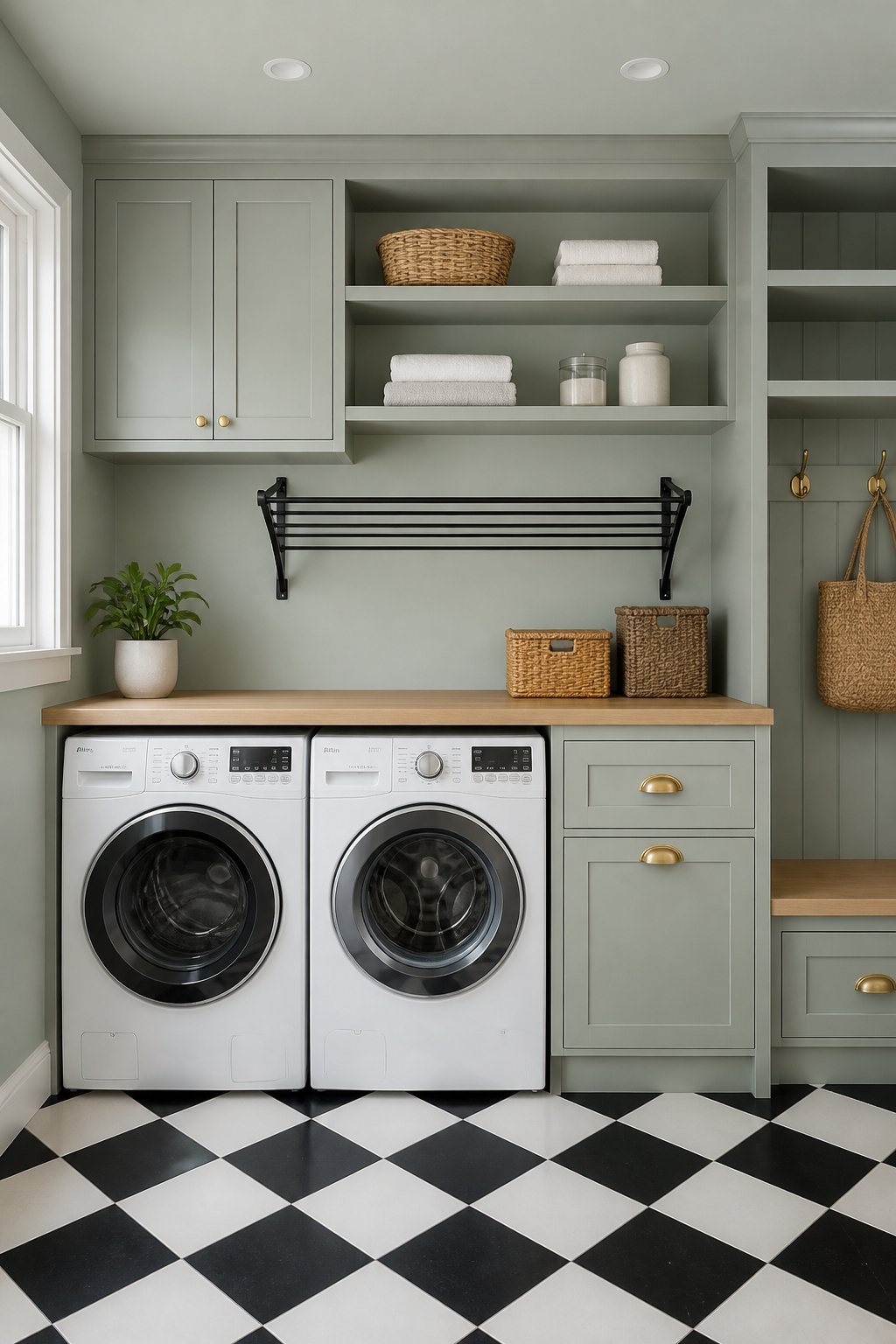
In a shared laundry-mudroom, use Oyster Bay on the cabinetry, open shelving, and wall behind the washer and dryer to unify both functions. The continuous color helps appliances, storage, and work surfaces read as one calm composition instead of separate utility zones.
Choose a moisture-resistant cabinet enamel in satin or semi-gloss, and use a washable eggshell or satin finish on the wall. The green-gray helps disguise lint dust and small detergent splashes while bringing a more settled character to the machines.
Install a butcher-block folding counter above the appliances for warmth and useful work space. A wall-mounted black drying rack adds function without taking up floor area, while woven hampers keep laundry contained. Brass bin pulls introduce a refined contrast against Oyster Bay, especially when paired with light oak or natural maple accents.
Use open shelves for daily supplies, placing detergent in lidded glass or metal containers for a tidy appearance. A checkerboard vinyl or tile floor adds a practical graphic layer and can echo the room’s sage, cream, and charcoal palette. Finish with a bright ceiling fixture, such as a simple opal globe or flush mount, so the room remains clear and comfortable during laundry tasks.