
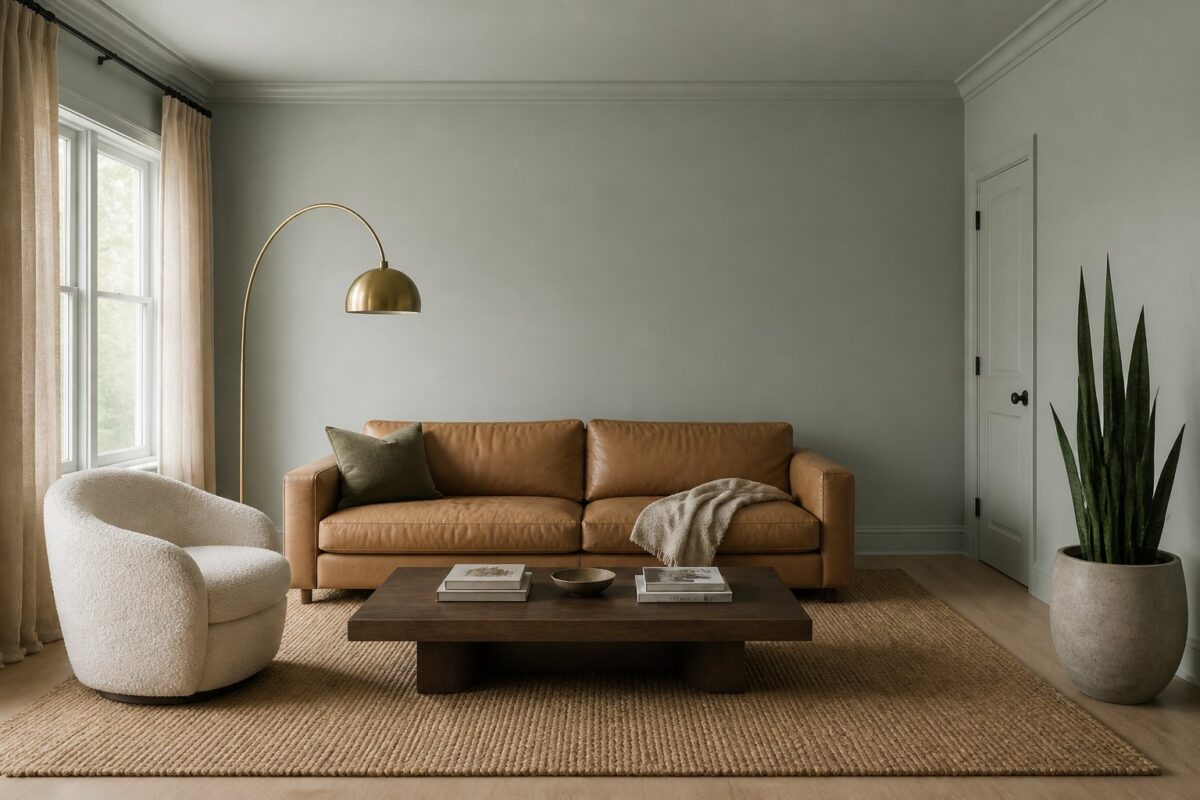
Sherwin-Williams Oyster Bay (SW 6206) is a soft, muted gray-green with subtle slate-blue undertones. In changing light, it can feel airy and fresh by day, then warmer and more intimate after sunset, making it a thoughtful choice for a living room that needs calm without looking plain.
The most successful Sherwin-Williams Oyster Bay living room ideas balance the paint’s cool, natural character with warm woods, creamy upholstery, aged metal, and woven texture. Use it across walls, millwork, ceilings, or carefully chosen accents to create a room that feels layered, tailored, and quietly luxurious.
Color-Drenched Sage Sanctuary
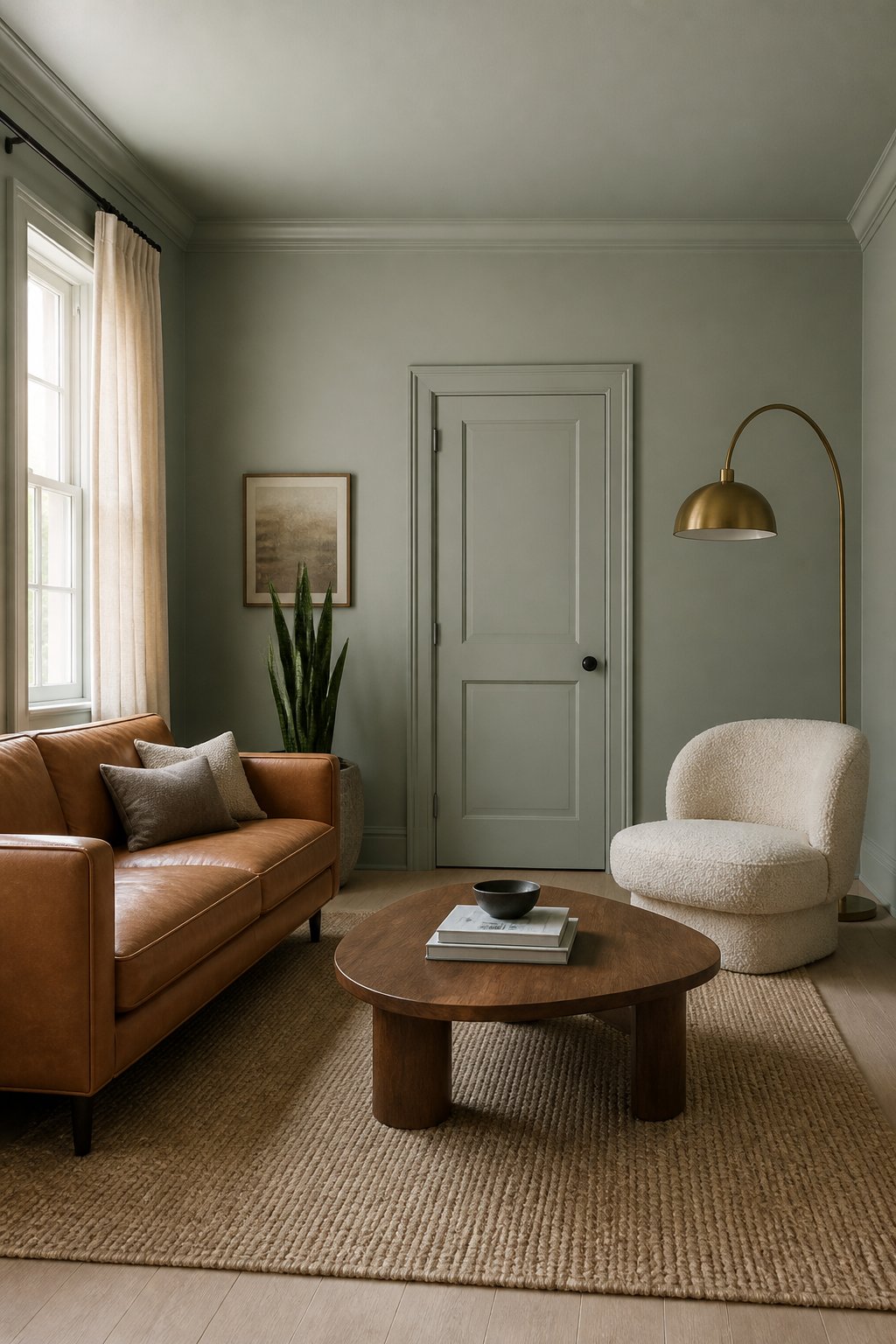
For a deeply enveloping room, paint all four walls, the ceiling, trim, and interior doors in Oyster Bay. Carrying one color across every architectural break makes molding and doors recede, so the room feels calmer and more continuous. In a smaller living room, this uninterrupted treatment can even make the boundaries feel less pronounced.
Vary the sheen so the color has gentle dimension rather than appearing flat. Choose a matte finish for the walls, eggshell for the trim, and satin for the doors. Test the paint beside windows and lamps first, since Oyster Bay shifts from gray-green in cool light to a softer sage in warm evening light.
Keep the furnishings tactile and warm. A camel leather sofa adds depth, while an oatmeal boucle chair softens the tailored backdrop. Place both on a natural jute rug, then add an aged-brass floor lamp, a matching picture light, and warm wood tables. Cream linen pillows, a ceramic lamp, and a few charcoal accents keep the palette grounded without interrupting its quiet mood.
Oyster Bay Fireplace Wall Feature
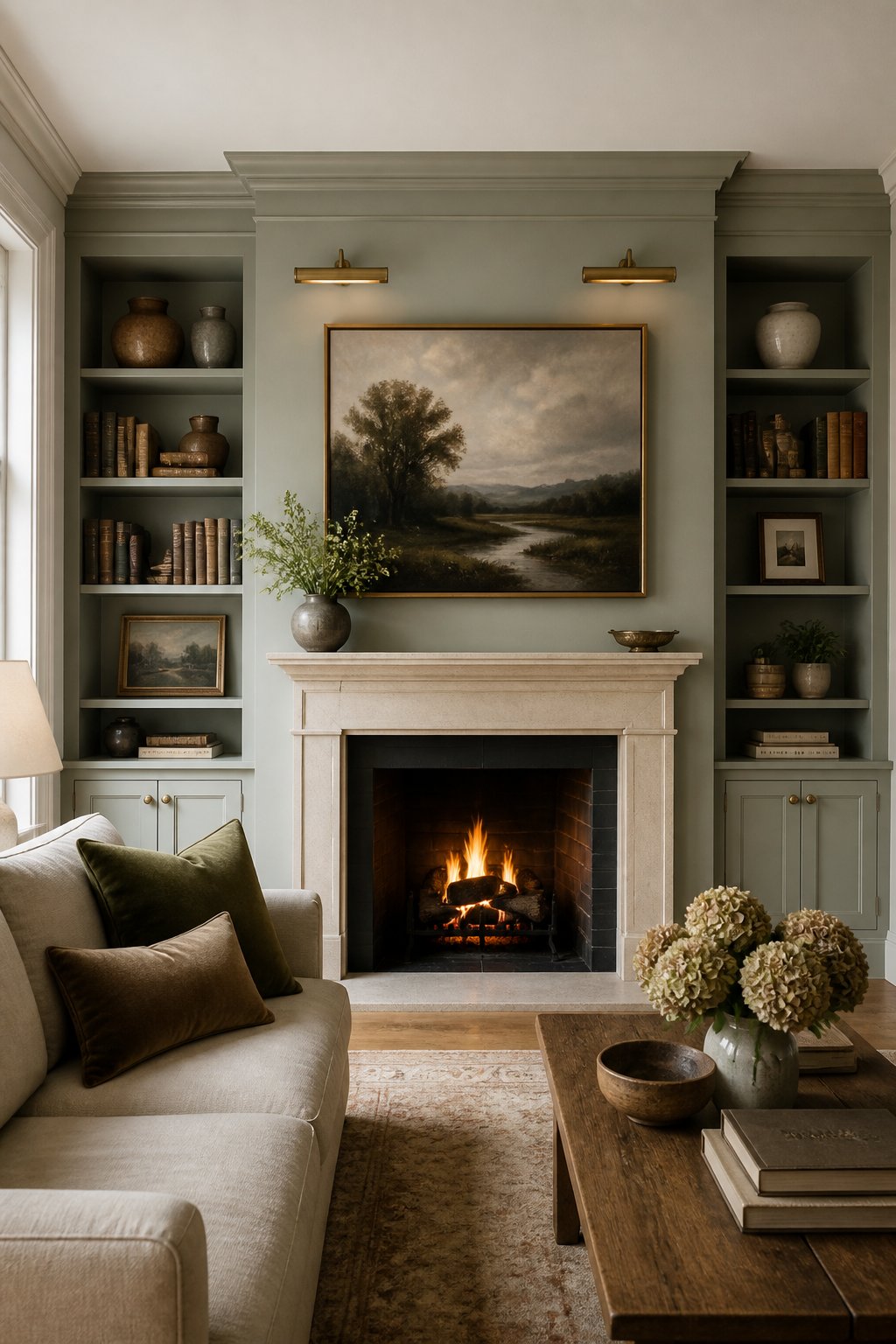
Make the fireplace wall the room’s anchor by painting the surround, flanking built-in bookcases, and wall behind them in Oyster Bay. Leave the other three walls a soft warm white, such as a creamy, chalky shade that keeps the room bright while allowing the gray-green focal plane to hold attention.
For a seamless built-in effect, paint the bookcase backs in the same Oyster Bay finish as the cabinetry. If you prefer more contrast, keep the backs warm white and let the sage-painted shelves frame books, pale ceramics, and woven boxes.
A honed limestone mantel adds a quiet, mineral texture, while a smooth plaster surround gives the wall a softer, handmade feel. Install aged or brushed brass picture lights above the shelves, using dimmers to control the glow at night. Finish the mantel with a large landscape painting, a stone bowl, and one restrained branch rather than a crowded collection.
Sage Wainscoting with an Airy Upper Wall
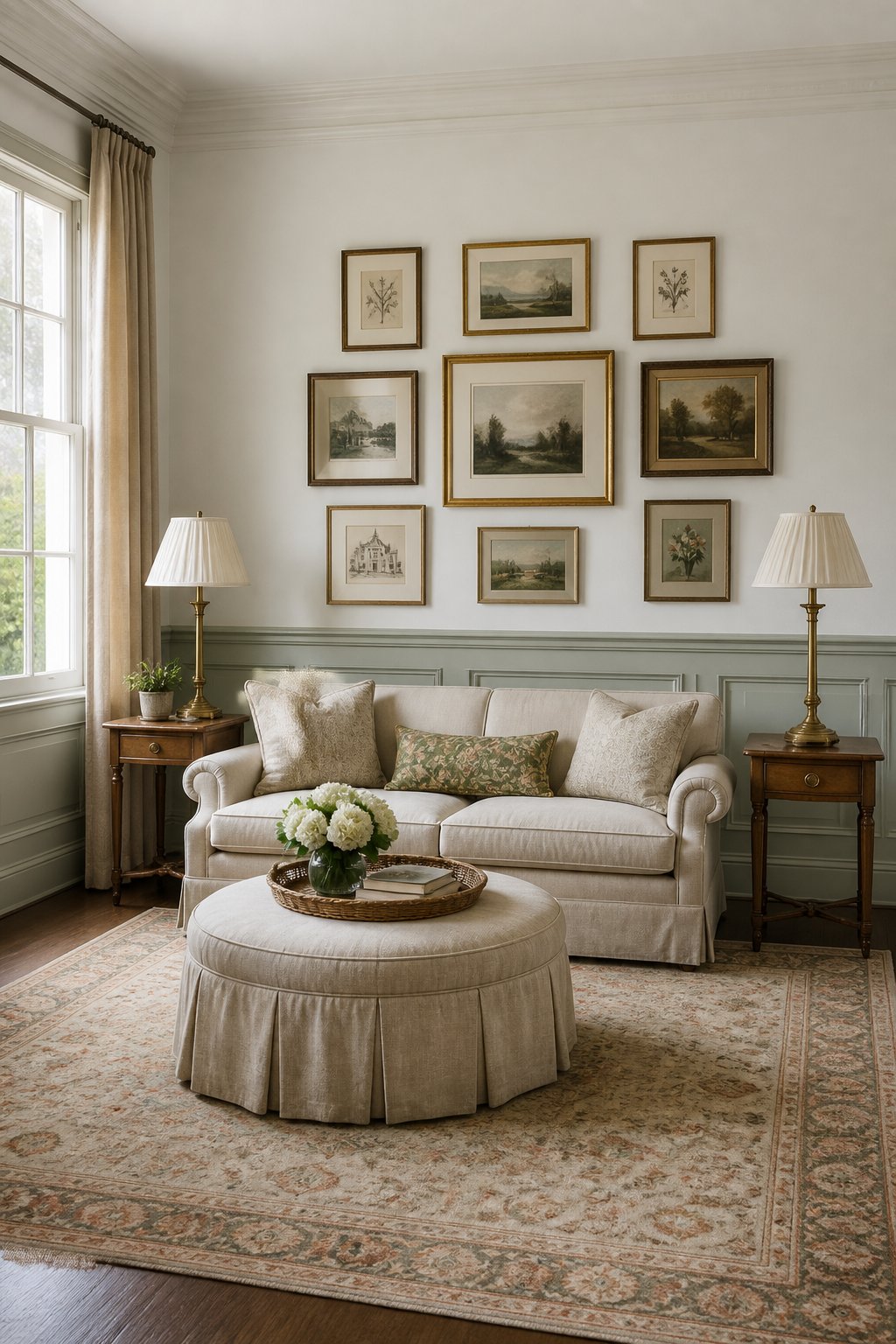
Add traditional structure with a chair-rail-height panel-mold or board-and-batten wainscot painted in Oyster Bay. Carry the color onto the baseboards for a finished edge, then keep the upper wall and ceiling a bright chalky white. The lower color zone protects the wall from everyday scuffs while giving the room a stable visual base.
This treatment suits a period home, formal sitting room, or living room with tall windows and detailed trim. Hang artwork salon-style across the white upper wall, mixing small oil paintings, framed sketches, and one larger piece so the arrangement feels collected rather than overly matched.
A linen roll-arm sofa keeps the room relaxed, while a skirted ottoman introduces softness and traditional comfort. Add antique wood side tables with brass hardware, a faded Persian-style rug, and pleated lampshades in natural linen. Oyster Bay will look especially composed beside warm oak, walnut, and aged bronze.
The Fifth Wall: Oyster Bay Ceiling
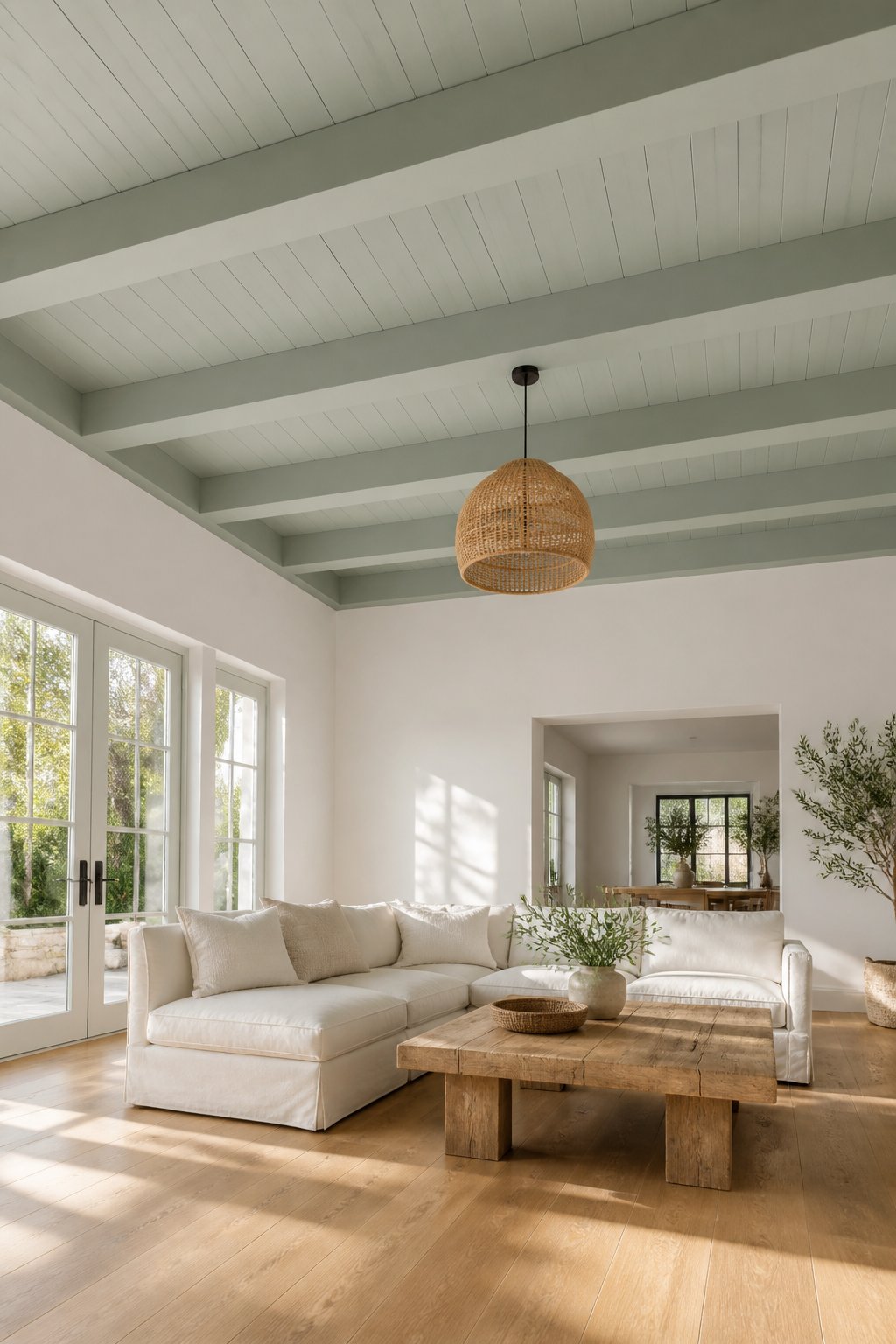
Leave the walls clean white and take Oyster Bay overhead onto the ceiling, coffers, or exposed beams. A soft gray-green canopy gently draws the eye upward while making a large or double-height living room feel more intimate. In strong afternoon light, the ceiling can cast a subtle sage reflection onto nearby white walls.
Use a flat or matte ceiling finish to reduce glare and keep the color quiet. If the room has beams or coffers, paint the entire ceiling assembly in Oyster Bay for a unified effect, or reserve the color for the recessed panels while keeping the beams white for definition.
Keep the walls simply dressed so the ceiling remains the unexpected feature. White oak flooring, creamy upholstery, and a woven pendant create a warm foundation. A plaster chandelier works well in a more classic room, while a linen or rattan pendant gives the same idea a relaxed coastal feel. Add brass hardware sparingly through curtain rods, cabinet pulls, or a slim floor lamp.
Built-In Media Wall in Sage
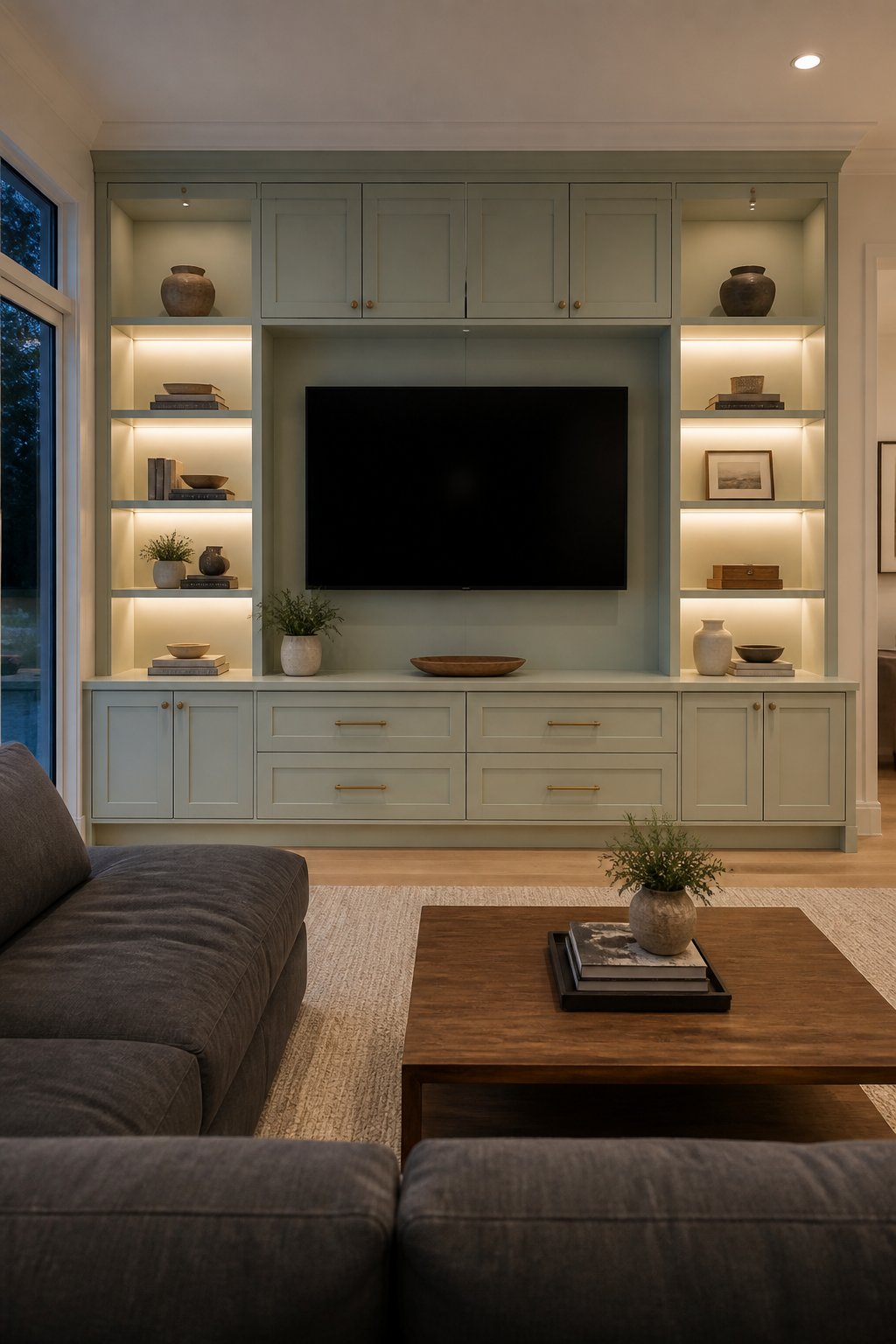
Paint a full wall of built-in cabinetry, floating shelves, and the media console in Oyster Bay. The muted green-gray gives the television a quieter setting and makes the entire installation read more like furniture than equipment. It also disguises fingerprints, cords, and small marks more gracefully than a stark white finish.
Choose flat-front doors for a clean modern look or Shaker fronts for a transitional room. Use a durable satin or low-sheen enamel on the cabinetry, and select unlacquered brass, aged brass, or cognac leather pulls for a warm point of contrast. Add integrated LED strips inside open cubbies, placing them toward the front edge so the light washes the shelves instead of shining directly into the room.
Surround the installation with warm white walls and keep the styling edited. Stack a few books, add stoneware vessels, and leave breathing room around framed art. A low-profile sectional, walnut coffee table, and textured ivory rug complete the comfortable, furniture-forward arrangement.
Sage and Terracotta Earth-Tone Lounge
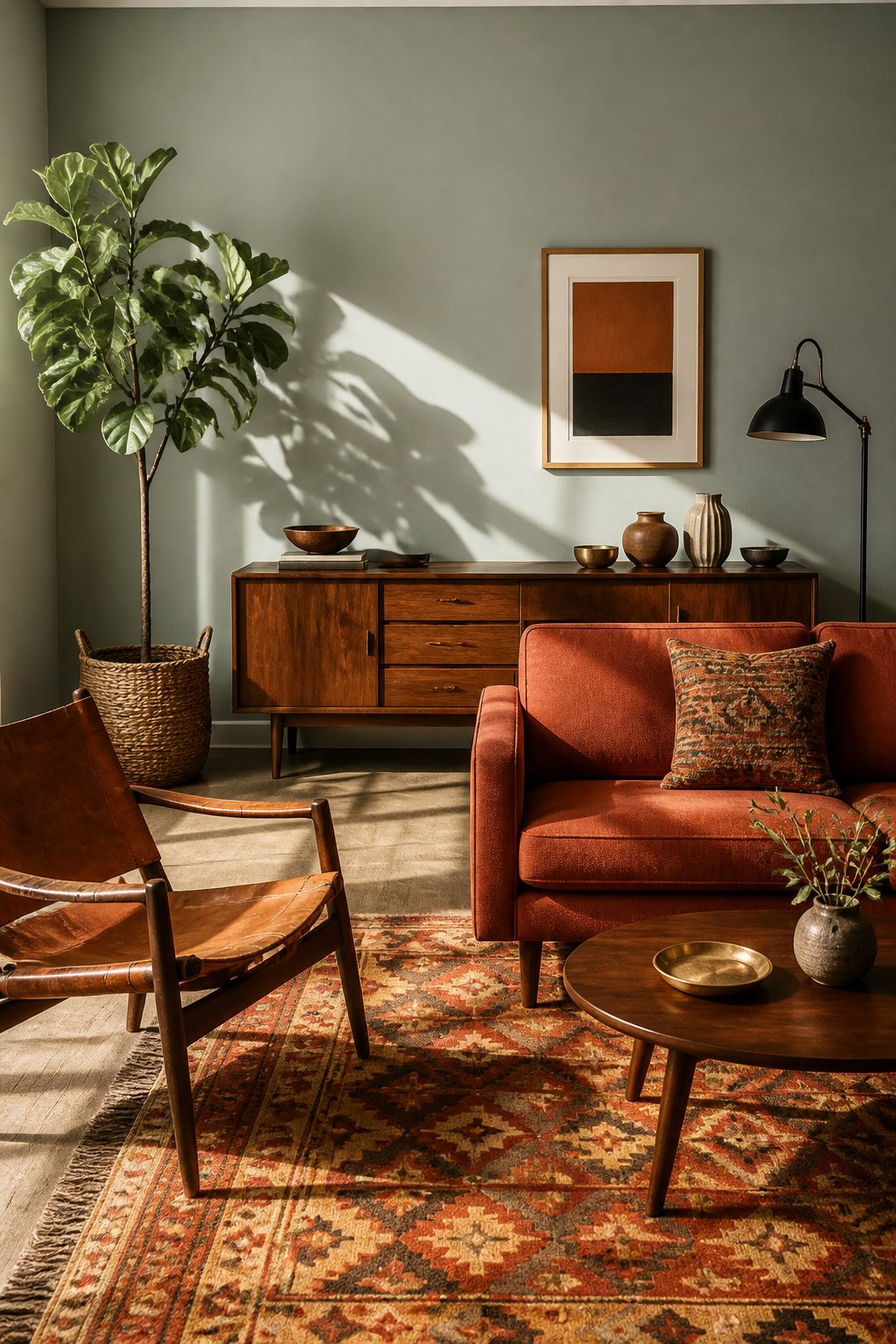
Pair Oyster Bay walls with terracotta, rust, and ochre textiles for a warm, collected living room with a mid-century influence. The muted gray-green tempers clay tones, allowing a burnt-orange sofa, rust throw, or patterned kilim to feel intentional rather than overpowering.
Use walnut furniture to deepen the palette, then add a cognac leather sling chair for an easy, worn-in note. Black metal legs on a coffee table or lighting fixture sharpen the softer colors, while ochre pillows and a terracotta ceramic lamp bring warmth at eye level. A large fiddle-leaf fig adds height and reinforces the room’s natural character.
This palette is especially effective in strong afternoon sun, when the paint takes on more depth and the warm accents glow. Balance the richer elements with creamy curtains, a pale wool rug, or an ivory boucle ottoman. Keep the hardware simple, choosing blackened bronze or aged brass rather than adding several competing metals.
Two-Tone Split Wall for a Low-Ceiling Room
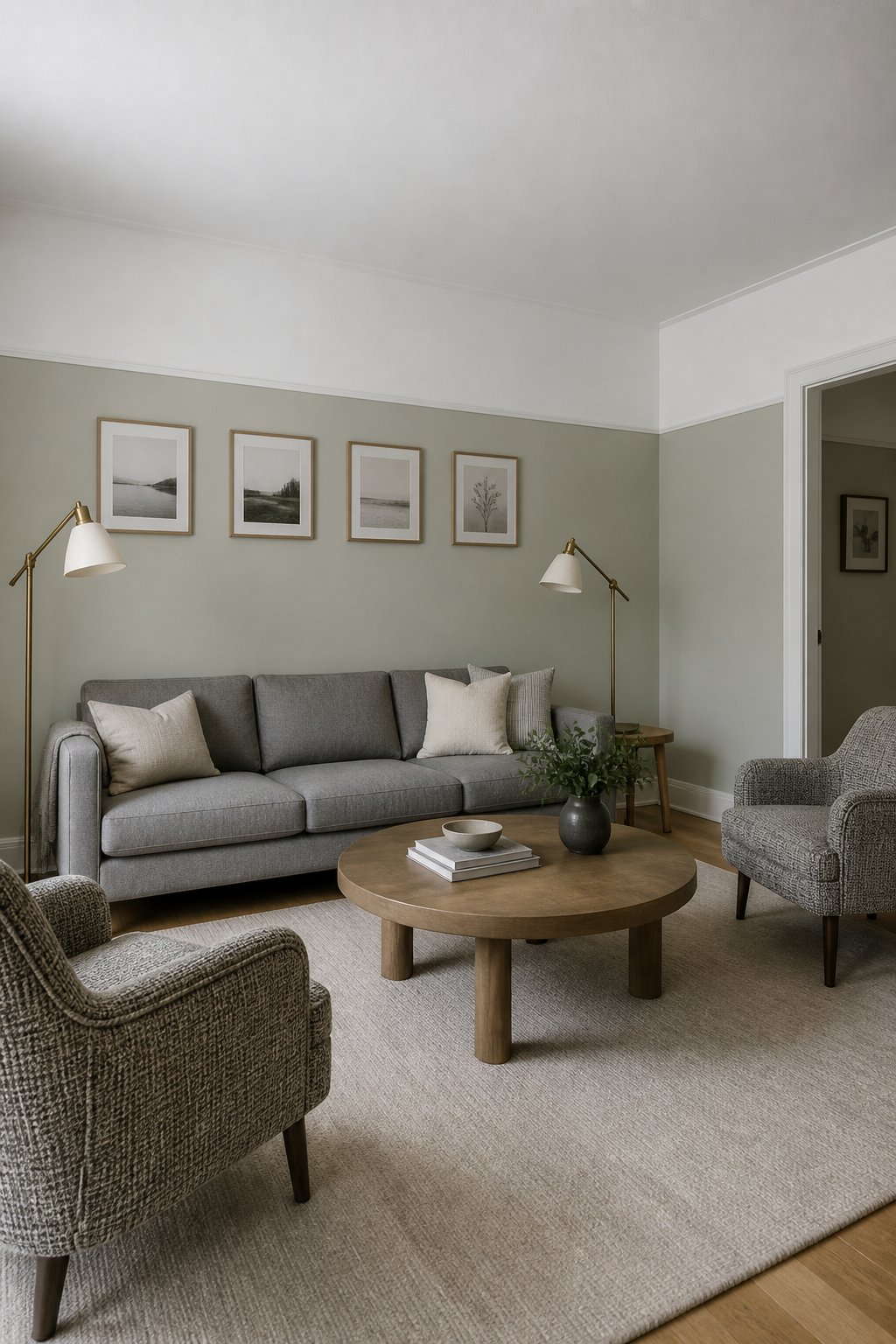
Run Oyster Bay from the floor to roughly two-thirds of the wall height, then switch to a bright white for the upper band and ceiling. Mark the transition with a slim painted rail or a narrow wood molding. Setting the color line higher than a standard chair rail encourages the eye to travel upward, helping a low ceiling feel more open.
Use an eggshell finish on the Oyster Bay portion for practical durability, especially behind seating, and a washable matte or eggshell white above. Paint the baseboards to match the lower zone for a tailored, built-in feel. A natural wood rail can add warmth, while a painted rail keeps the look more seamless.
Furnish the room with a streamlined sofa and a pair of tweed chairs in warm taupe or oatmeal. Add warm-metal floor lamps with linen shades, a compact walnut coffee table, and a rug that repeats the sage and cream tones. Keep artwork mainly in the upper white band so the wall remains airy and the elevated color line stays clear.