
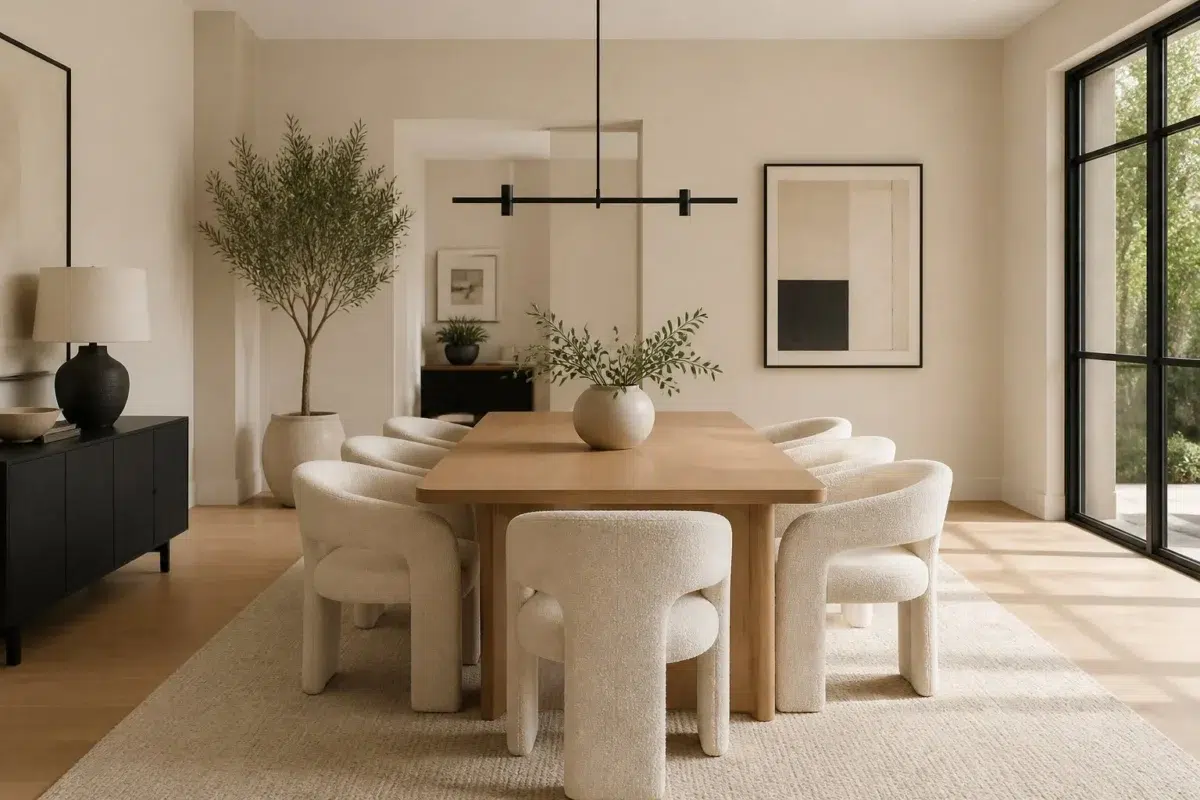
You can make your dining room feel warm and lived-in without heavy color or fuss. Use the Behr Aged Beige color page as a resource to check full specs like LRV, undertone, and coordinating shades: Behr Aged Beige. That knowledge helps you pick complementary textiles, trim contrasts, and lighting that highlight the paint’s subtle depth.
Bold the key sentence: Aged beige creates a soft, versatile backdrop that lets you craft a cozy, refined dining space by pairing layered neutrals, texture, and focused contrast.
This post walks you through practical styling routes that suit different tastes and room layouts. You’ll get clear, usable tips on balance, materials, and placement so you can apply Aged Beige with confidence.
Warm Modern Minimalist Dining
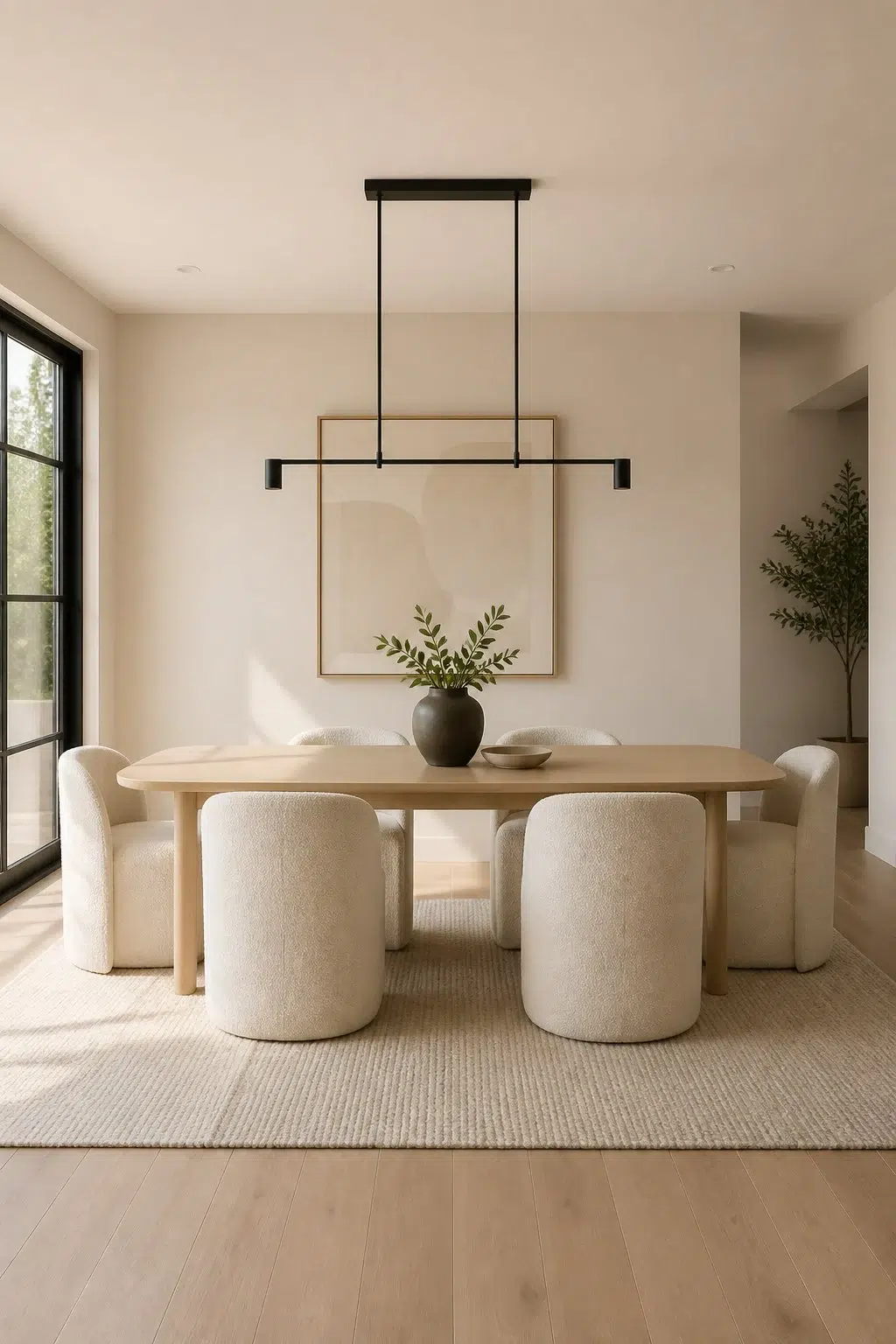
Create a calm, modern dining space using warm beige as your base. Choose a matte beige wall color and a simple light-wood or matte stone table to keep lines clean and materials natural.
Limit furniture to a streamlined table and 4–6 sculpted chairs in a slightly darker beige or soft gray for contrast. Add texture with a low-pile neutral rug and linen seat cushions rather than bold patterns.
Use one statement light fixture in black or warm brass to anchor the room and add a modern edge. Keep tabletop styling minimal: a single ceramic vase, two tapered candles, or a textured serving bowl.
Bring warmth with layered lighting — dimmable overhead light plus a floor lamp or wall sconce — to make beige feel cozy at night. Stick to natural materials (wood, linen, stone) and a tight color palette for a polished, lived-in look.
Classic Wainscoted Elegance
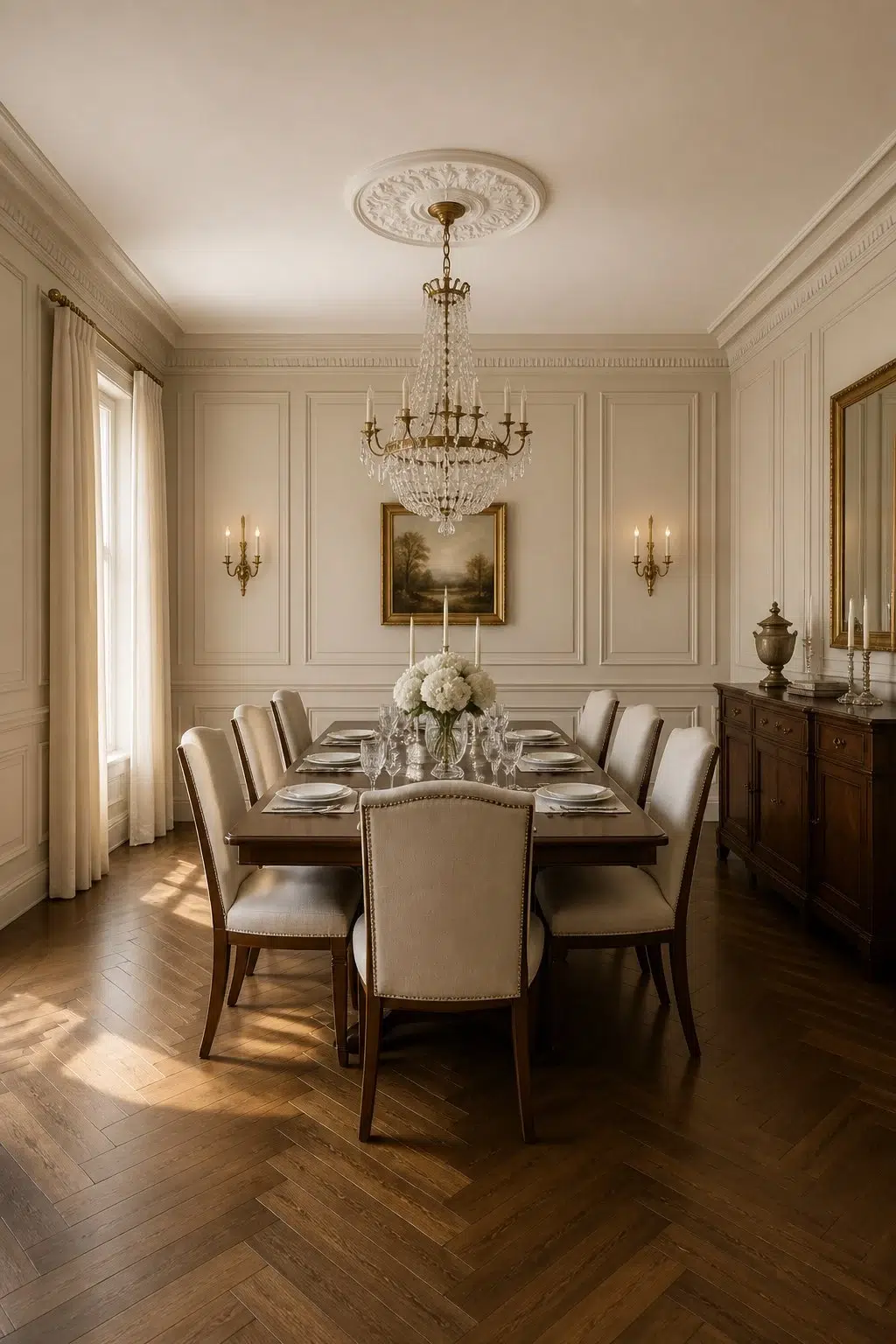
Wainscoting adds depth to an aged beige dining room and anchors the space with classic detail. Paint the lower panels a slightly darker beige or warm gray to create contrast while keeping the upper walls soft beige for warmth.
Choose raised-panel or beadboard styles depending on formality; raised panels feel more formal, beadboard feels cozy. Keep chair rail height around 32–36 inches so it aligns with most dining chairs and protects walls from scuffs.
Pair the wainscoting with simple moldings and a neutral hardwood floor or painted floor in a muted tone. Use a statement chandelier in aged brass or matte black to add character without clashing with the beige palette.
Add texture with linen drapes and natural-fiber rugs in ivory or sand tones. Balance the look with mixed finishes—wood dining table, upholstered chairs, and subtle metallic accents—to keep the room layered but calm.
Rustic Farmhouse Glow
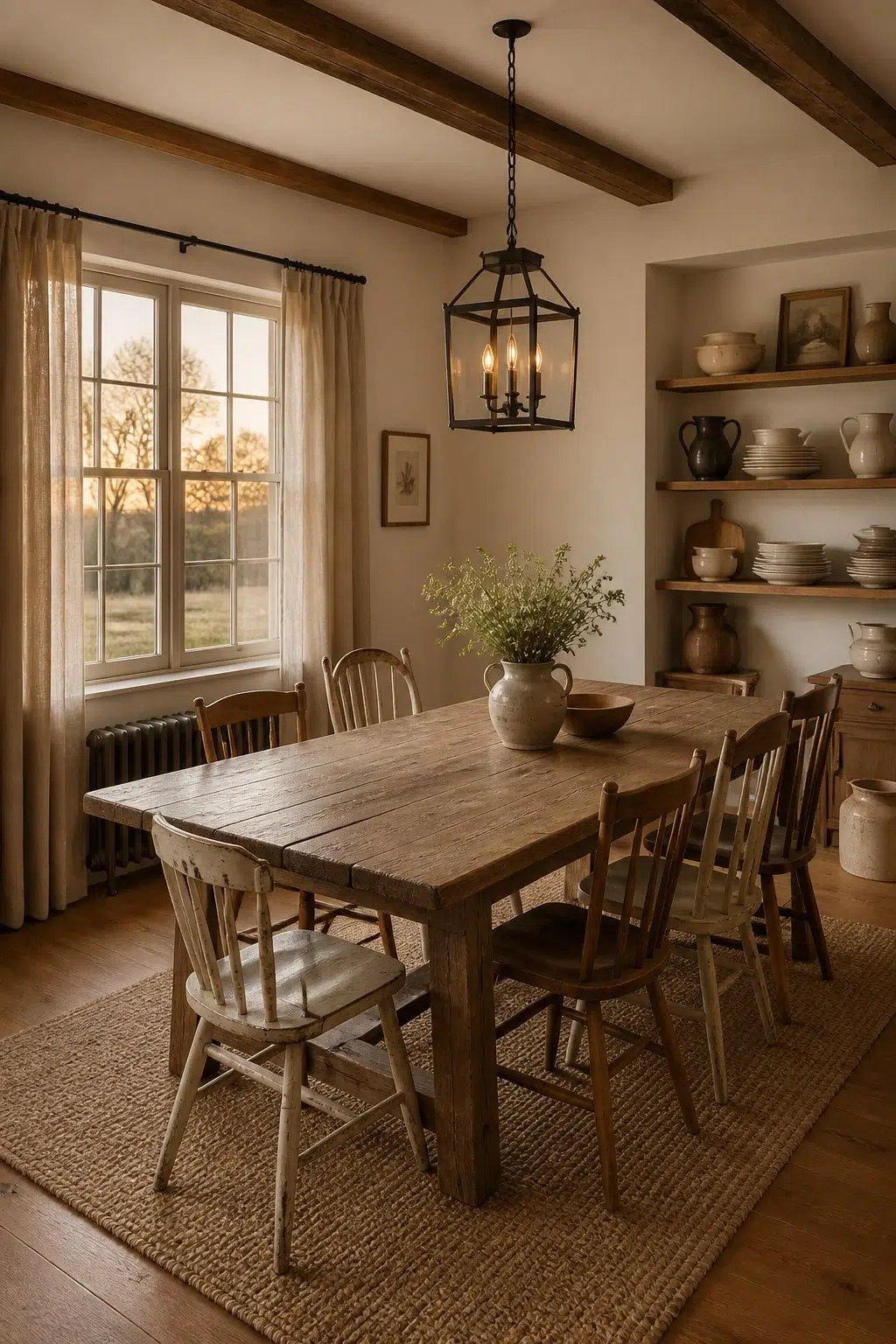
Layer warm beige walls with aged wood trims to create a soft, lived-in base that feels cozy and calm. Add a reclaimed wood table or buffet in honey or weathered gray to ground the room and echo farmhouse character.
Choose lighting that gives a warm glow—think woven pendants, aged-brass chandeliers, or a lantern-style fixture with dimmable bulbs. Place a soft jute runner or natural-fiber rug underfoot to add texture and absorb sound.
Mix seating: a slipcovered bench or linen-upholstered chairs with a couple of painted Windsor or X-back chairs adds contrast and comfort. Accessorize with linen napkins, a simple earthenware pitcher, and a bowl of seasonal fruit for an authentic, everyday vignette.
Use open shelving or a small hutch to show a few well-worn dishes and woven baskets. Keep the palette mostly beige with touches of warm white and muted sage for a restrained, rustic look.
Scandinavian Soft Neutral Retreat
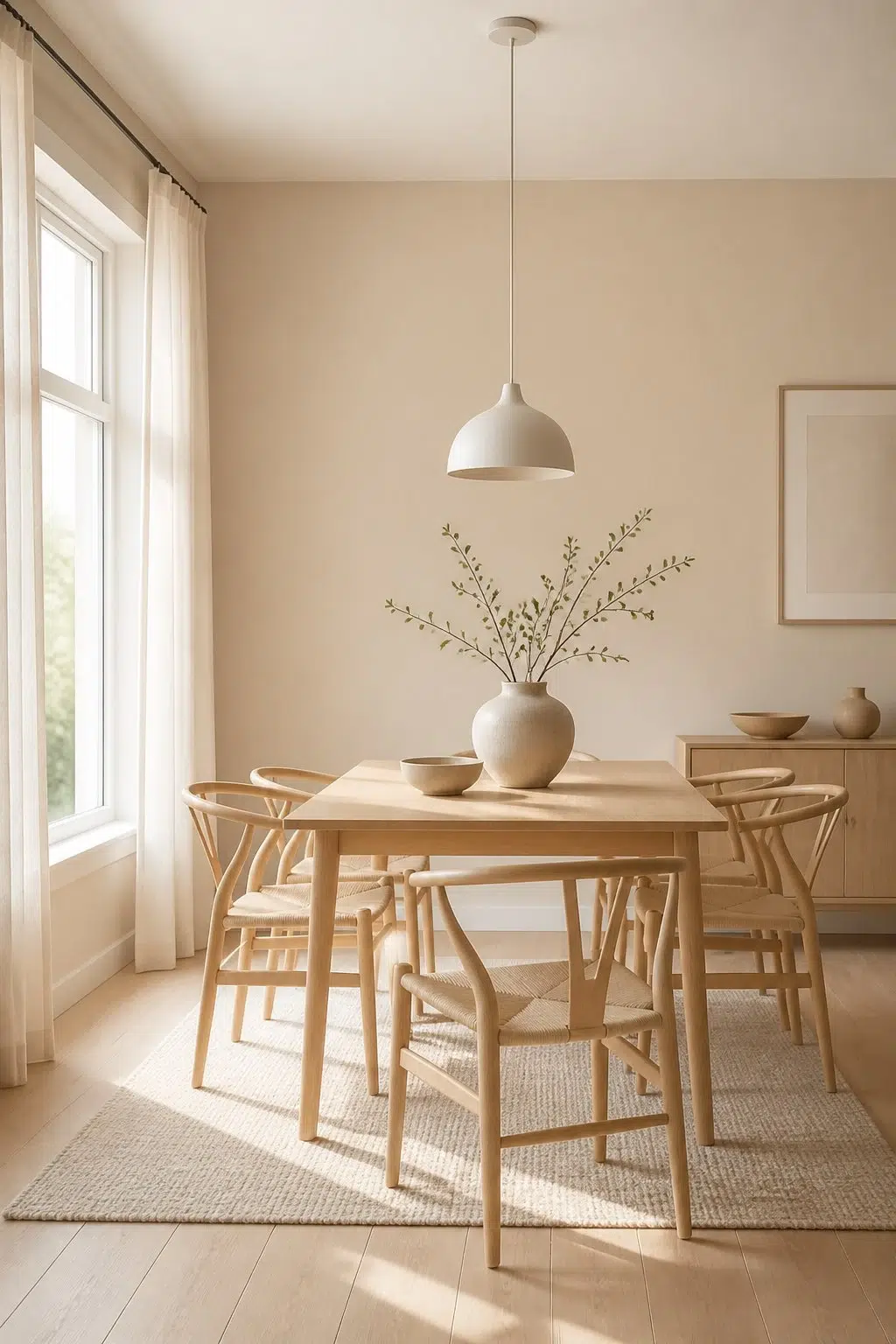
Choose a warm beige as your base and layer it with soft white and pale gray for a calm, airy feel. Use light oak or birch furniture with simple lines to keep the room minimal but warm; pick a table and chairs with tapered legs for a classic Scandinavian look.
Add texture with a wool rug, linen curtains, and a few knit or sheepskin cushions to make the space cozy without clutter. Keep accessories few: one ceramic vase, a simple pendant light, and a slim sideboard for tidy storage.
Place seating to face each other to encourage conversation and leave clear walkways for flow. Use matte finishes and natural materials only — avoid high-gloss paint or heavy patterns — and bring in a small potted plant for a touch of green that brightens the beige palette.
Moody Contrast With Beige Trim
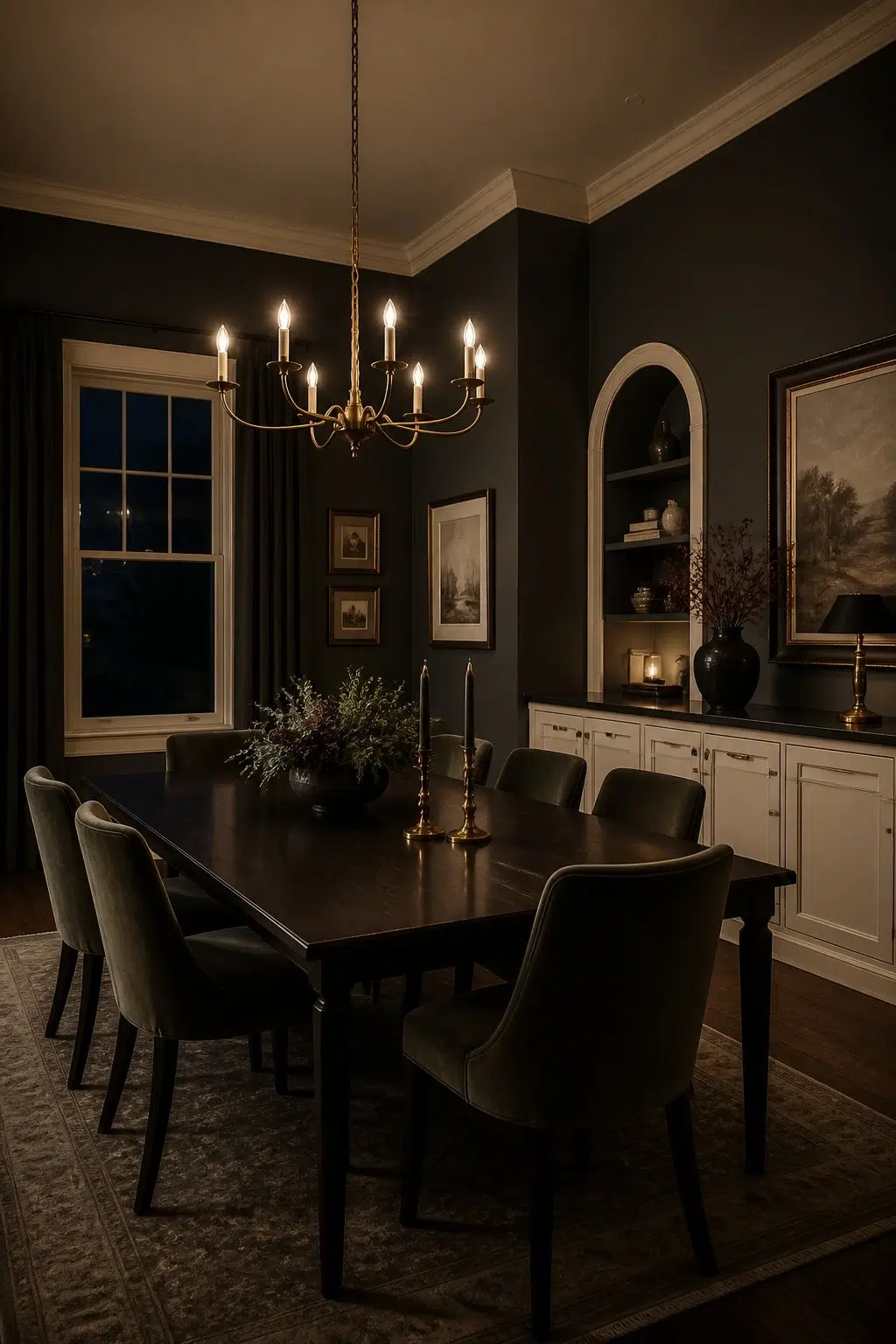
Use deep, moody wall paint like charcoal, navy, or forest green to make beige trim stand out. The beige trim will soften the room’s edge and keep the mood from feeling heavy while adding a vintage, lived-in appeal.
Keep trim matte or eggshell to avoid glare and to match aged finishes. Paint baseboards, window frames, and crown molding in a warm beige that has a hint of clay or yellow to complement darker tones.
Balance the contrast with lighter textiles—linen napkins, a beige runner, or woven seat cushions—to tie the trim into the room. Add warm metallics like aged brass or bronze in lighting and hardware to echo the beige and bring warmth.
Anchor the look with a mid-toned wood table or a rug that mixes beige and dark hues. These elements connect the trim to the whole room and make the contrast feel intentional, not accidental.
French Country Beige Sophistication
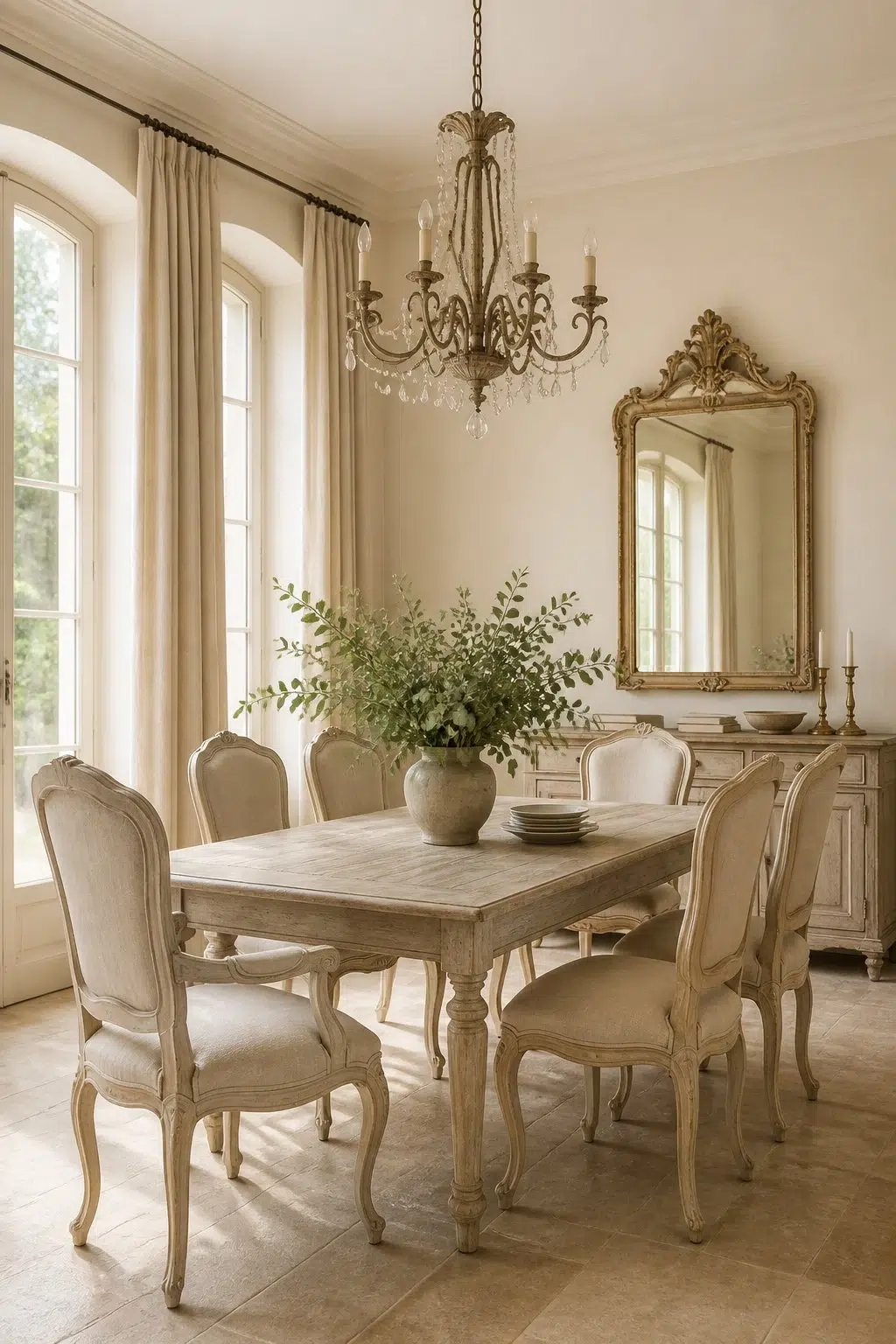
Use warm, aged beige on walls to set a soft, lived-in backdrop that feels both cozy and refined. Pair it with natural wood furniture—an oak or distressed pine table anchors the room and adds rustic weight without darkening the palette.
Add texture with linen curtains, a sisal rug, and a mix of plaster or ceramic vases to keep the look tactile. Choose chairs with cane or woven seats and slipcovers in off-white or light taupe for comfort and easy care.
Introduce subtle contrast through muted blues or sage in cushions, table linens, or a painted sideboard. Keep metal accents antique brass or matte iron to maintain a vintage feel without flashy shine.
Layer lighting: a simple chandelier with soft bulbs plus wall sconces or a floor lamp creates warm, even light for meals and conversation. Finish with a small cluster of dried flowers or olive branches for an authentic countryside touch.
Transitional Dining With Painted Built-Ins
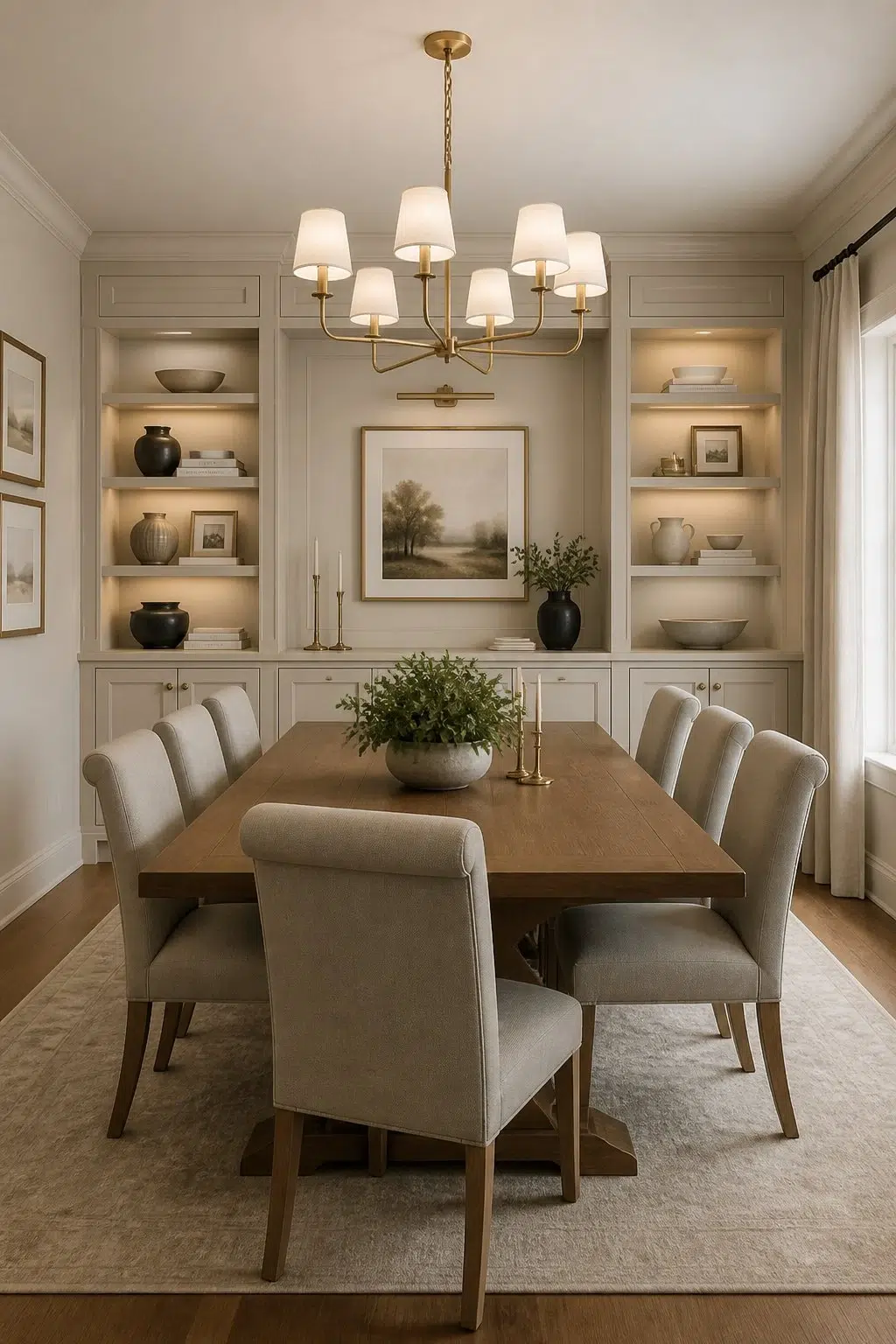
Painted built-ins bring calm structure to a transitional dining room. Choose a warm aged beige for the millwork to blend with both modern and traditional pieces, and paint the back panel a slightly lighter or darker tone to add depth.
Keep hardware simple and matte — brass or black looks clean against beige without fighting the room’s softness. Add a mix of open shelves and closed cabinets so you can display ceramics and hide table linens; balance symmetry by centering the dining table with the cabinetry.
Layer textures: pair linen-upholstered chairs, a sisal or low-pile rug, and a wood table with a soft distressed finish. For lighting, use a geometric aged-brass fixture to tie classic lines to contemporary edges and keep window treatments light and airy to maintain a bright, calm feel.