
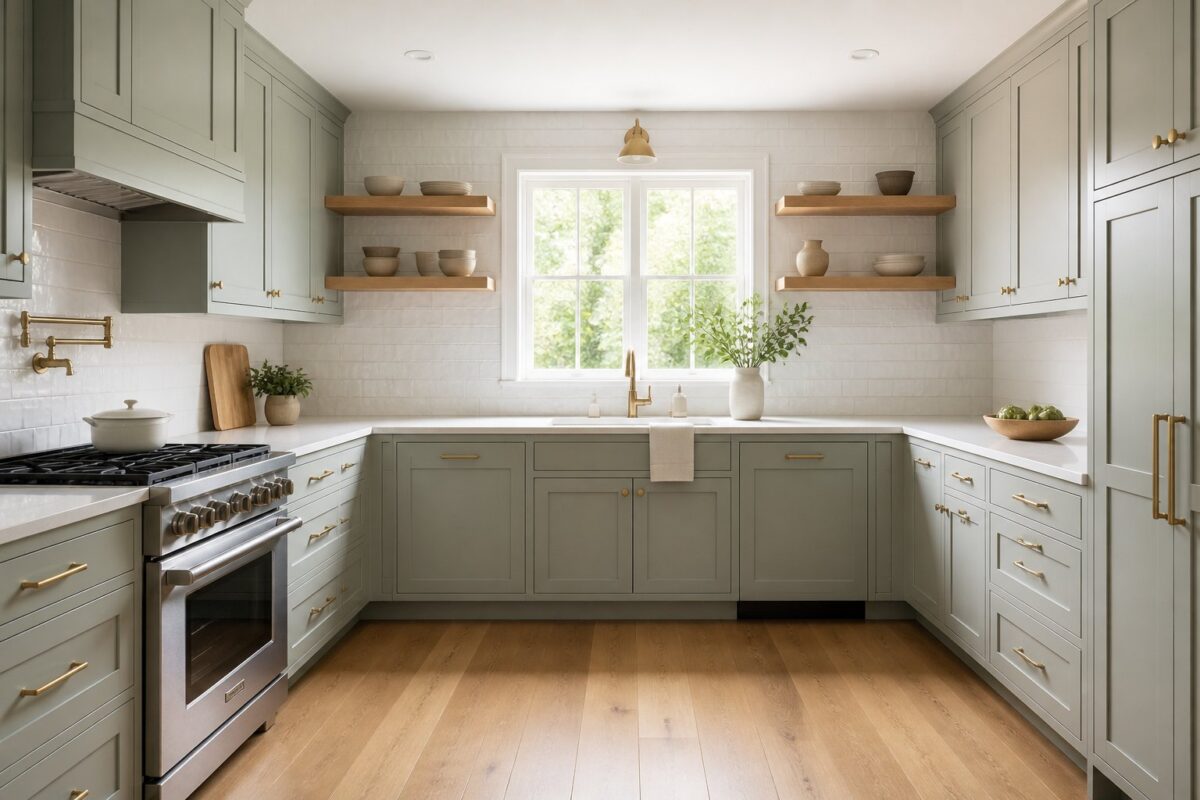
Sherwin-Williams Oyster Bay (SW 6206) gives you a soft, muted gray-green that can read almost like a warm neutral in changing light. Its quiet depth moves your kitchen away from stark white while staying lighter and more approachable than a deep green or charcoal.
The best Sherwin-Williams Oyster Bay kitchen cabinet ideas balance the color with pale stone, warm wood, and finishes that add gentle contrast rather than visual noise. You can use Oyster Bay across the entire kitchen, limit it to an island or pantry wall, or layer it with natural wood for a tailored, lived-in look.
Full Perimeter Cabinets in Oyster Bay
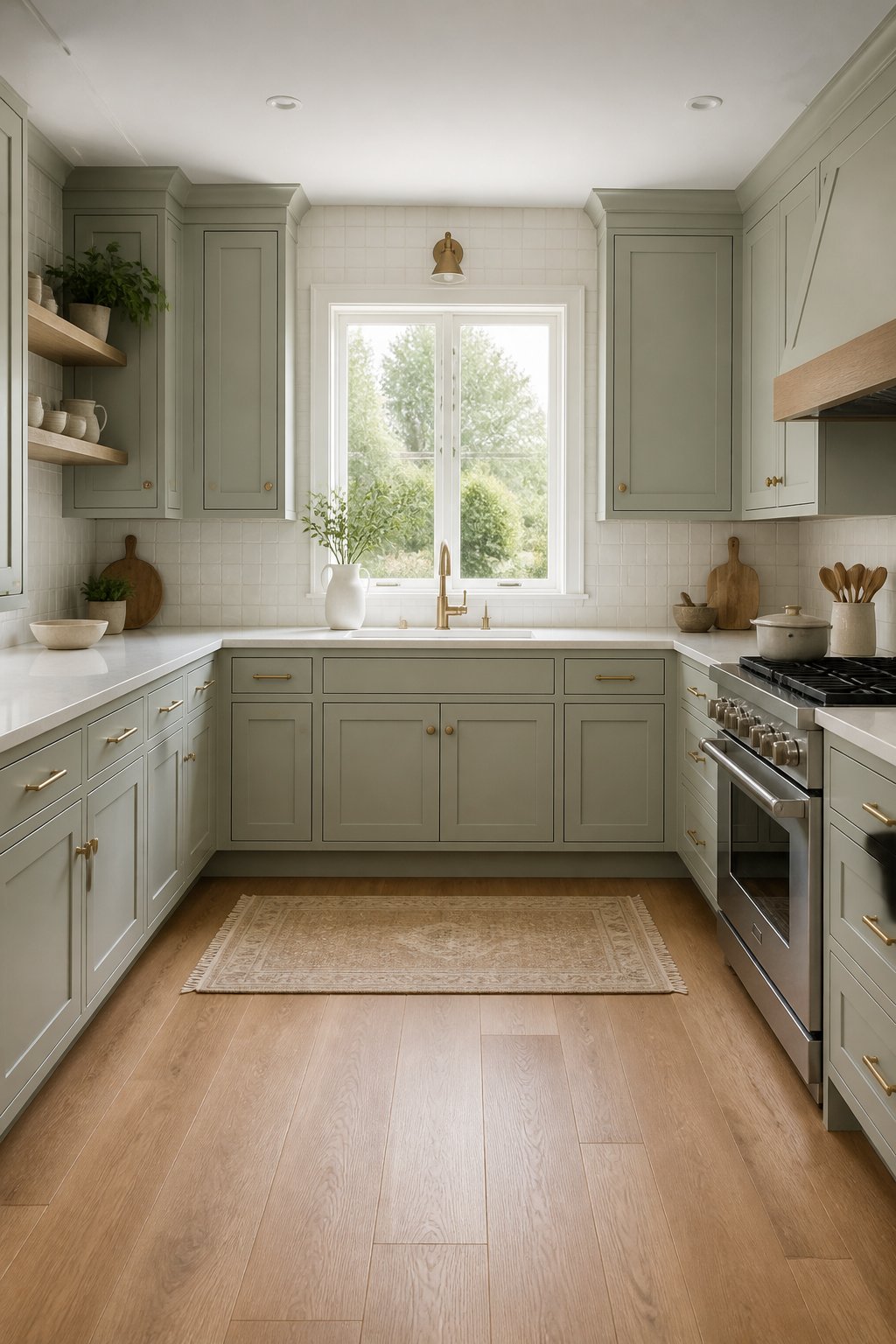
Paint your base cabinets, wall cabinets, and drawer banks in Oyster Bay for a calm, cohesive kitchen. The color feels settled and dimensional, yet its gray balance keeps the green from becoming a bold statement. A durable satin or low-sheen cabinet finish gives the doors a refined look and makes daily splashes easier to wipe clean.
Pair the cabinetry with white quartz or pale marble-look quartz to keep the work surfaces bright. A simple white subway tile adds crisp structure, while handmade zellige tile brings softer variation through its uneven edges and gentle sheen. Choose unlacquered brass for warmth and character, or use brushed nickel for a fresher, quieter effect.
Warm oak flooring, a walnut cutting board, or open shelves in white oak keeps Oyster Bay from feeling cool. Add woven baskets, pottery in cream tones, and a linen runner to make the palette feel collected rather than staged. This full-perimeter approach is a safe, timeless choice when you want color with the ease of a soft neutral.
Two-Tone: Oyster Bay Lowers, White Uppers
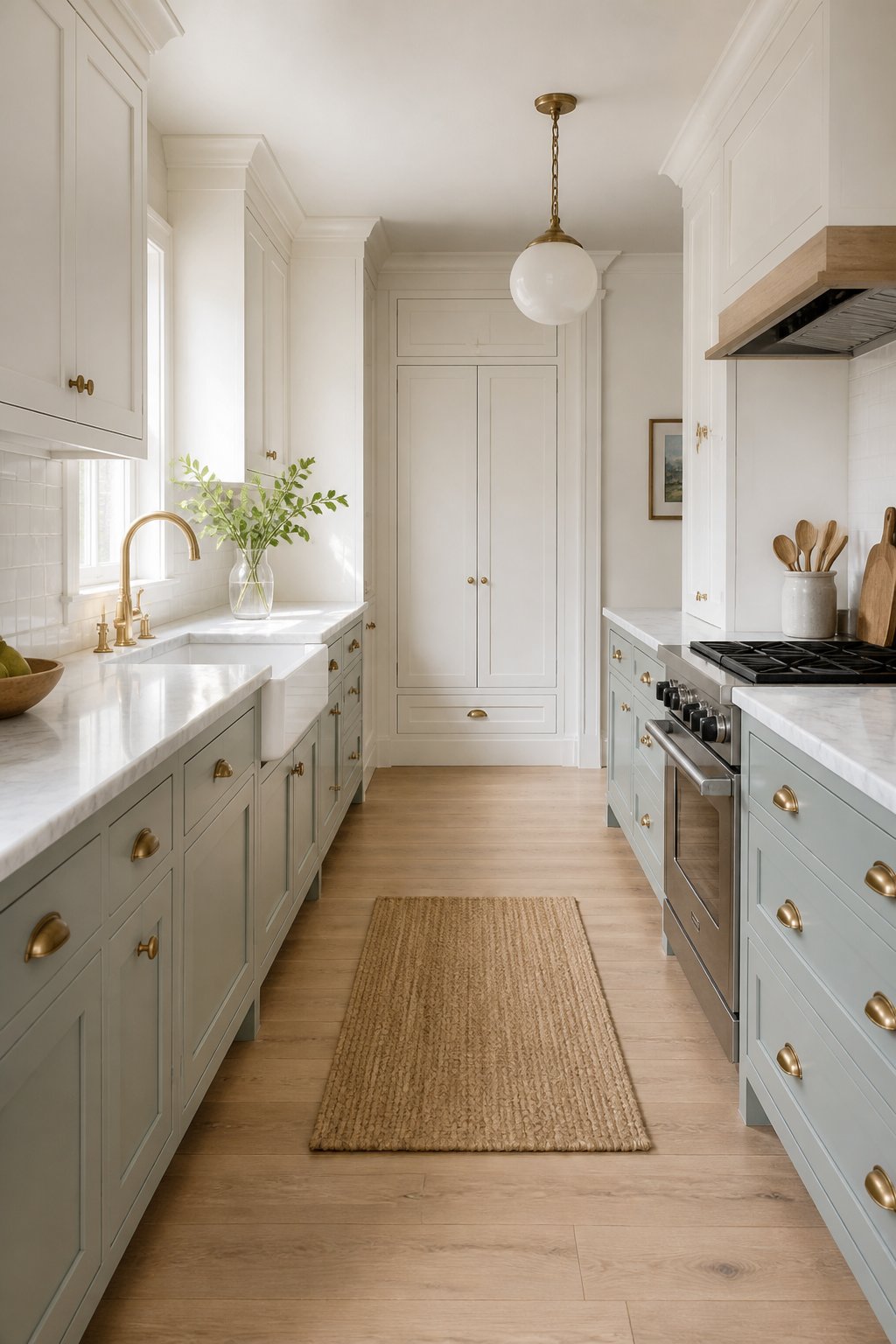
Use Oyster Bay on every lower cabinet and surrounding drawer bank, then keep the uppers and tall pantry fronts in a warm white such as Alabaster or Shoji White. The darker visual weight at the base grounds the room, while the lighter upper cabinets reflect more light and help a small kitchen feel taller.
A honed marble or soft-white quartz counter creates an easy bridge between the two cabinet colors. Select a backsplash with a quiet pattern, such as narrow white subway tile, lightly veined marble, or creamy handmade tile, so the transition feels intentional.
Aged-brass cup pulls on the lowers add a traditional note, especially with Shaker doors. Use simple brass knobs or slim pulls above to keep the upper half visually light. In a galley or L-shaped kitchen, add under-cabinet lighting with a warm color temperature and choose a pale oak floor to carry light through the narrow footprint.
Statement Island in Oyster Bay
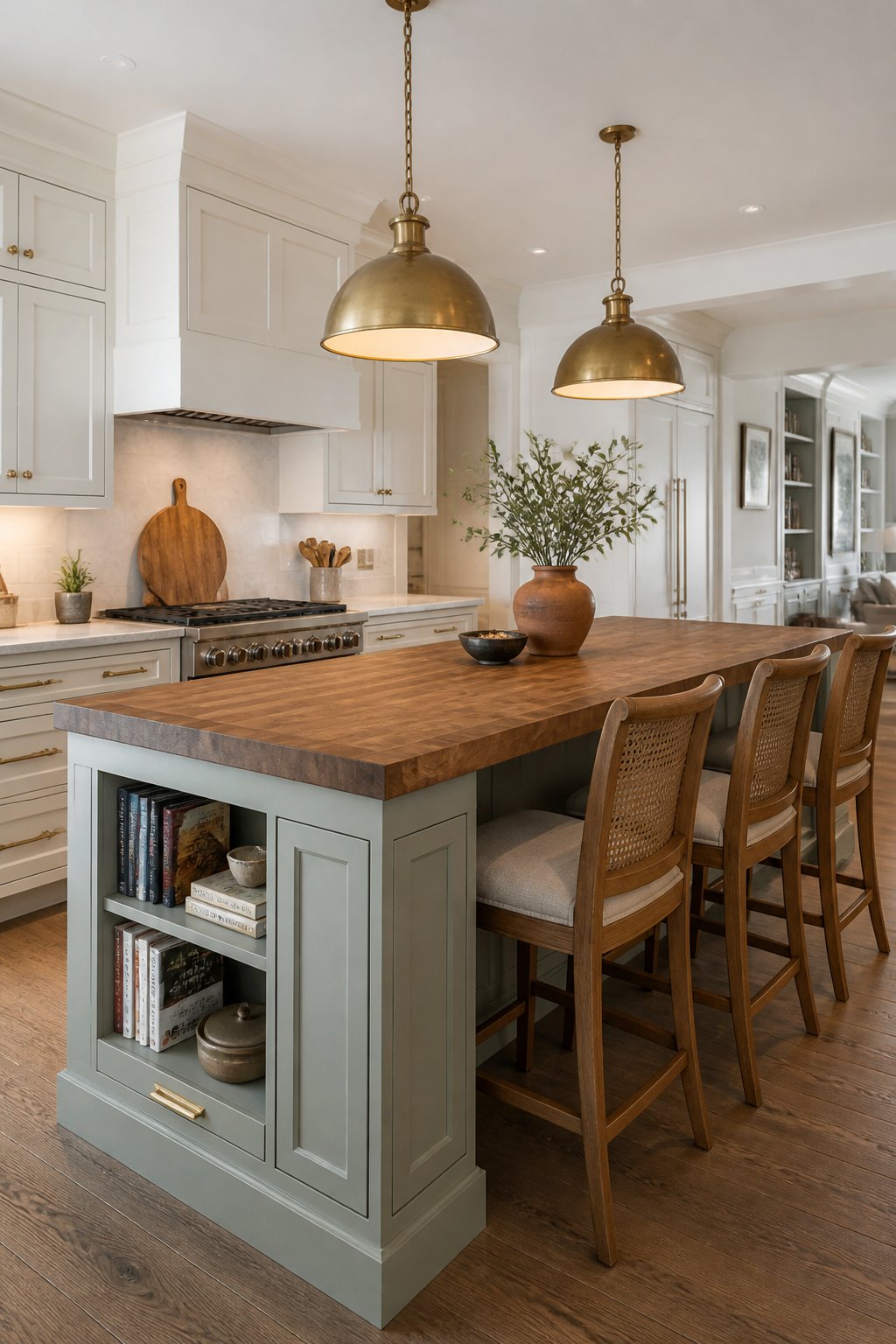
Keep the perimeter cabinets white or natural wood, then paint only the island in Oyster Bay. Treat the island as a freestanding piece by carrying the color across its end panels, legs, drawer fronts, and any open cookbook cubbies.
A thick butcher-block top gives the island a relaxed farmhouse feel and introduces a useful, tactile surface. For a more tailored kitchen, choose a waterfall edge in honed quartz or natural stone. The soft gray-green looks especially composed against white perimeter cabinetry and pale counters.
Hang two or three pendant lights in warm brass above the island, with opaque or opal glass shades for a gentle glow. Finish the seating area with cane stools for an airy look or caramel leather stools for richer contrast. Use one or two decorative boards, a ceramic bowl, and a small vase of greenery to complete the vignette without crowding the work surface.
Oyster Bay Pantry and Appliance Garage
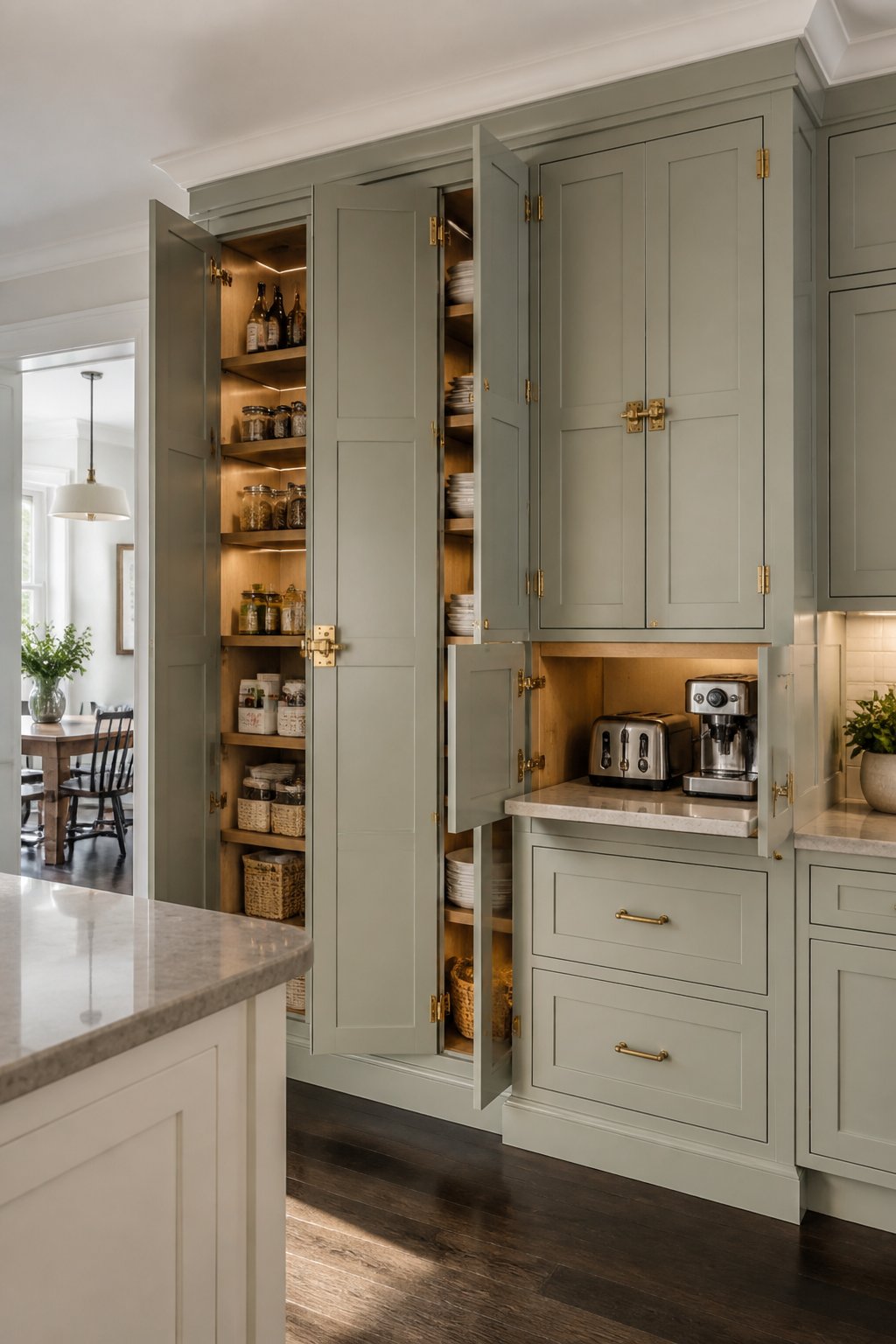
Reserve Oyster Bay for a tall pantry wall, built-in hutch, or appliance garage while keeping the working cabinets white, oak, or another quiet neutral. Painting a floor-to-ceiling storage block in this muted gray-green turns a practical zone into an intentional architectural feature and anchors one end of the kitchen.
Use brass latch hardware or small aged-brass knobs to make the pantry feel more like furniture. Inside an appliance garage, install adjustable shelves and a dedicated outlet so mixers, coffee makers, and chargers stay concealed but easy to reach. Interior LED lighting adds a useful glow when you open the doors.
This treatment works especially well when the pantry is visible from a dining room or living area. Echo Oyster Bay in a nearby painted hutch, framed artwork, or upholstered dining chair, then add oak or walnut shelves to soften the tall cabinet wall and connect it to the adjoining spaces.
Color-Drenched Kitchen: Cabinets, Walls, and Ceiling
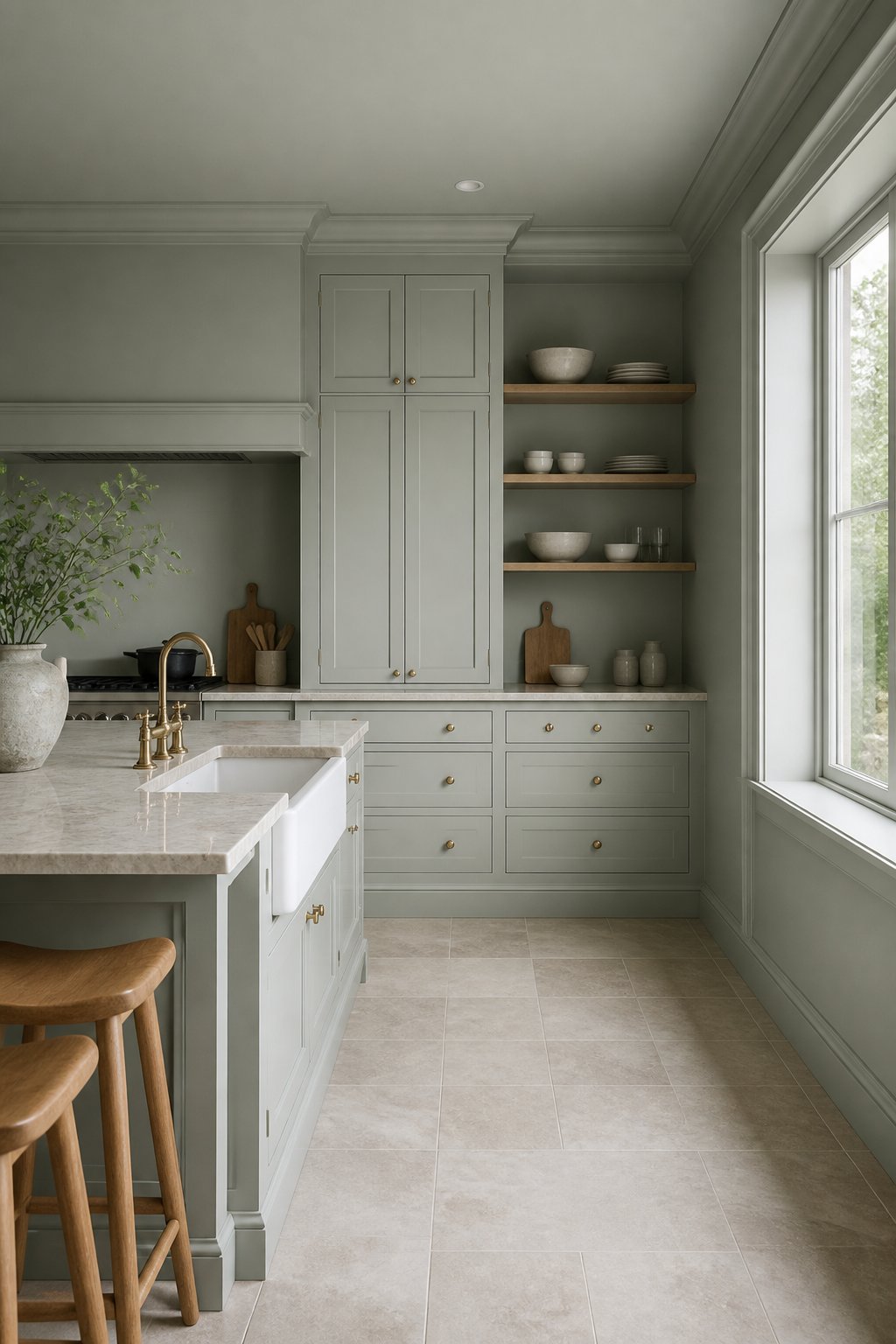
For an enveloped English-inspired look, carry Oyster Bay across the cabinets, walls, trim, and ceiling. The single-tone treatment blurs the line between cabinetry and architecture, making a busy kitchen feel quieter and more unified. Use a washable matte or eggshell finish on the walls and ceiling, with a durable satin finish on the cabinets for a subtle difference in texture.
Good natural light helps this approach feel serene rather than enclosed. Break up the monochrome palette with a honed limestone, marble, or soapstone counter, then add an unlacquered brass faucet that will develop a soft patina over time. A fireclay farmhouse sink provides a pale focal point beneath the cabinetry.
Warm wood bar stools, floating shelves, and a simple oak cutting board bring welcome contrast. Keep the lighting layered with shaded pendants, discreet ceiling fixtures, and under-cabinet illumination so the gray-green color retains depth after sunset.
Oyster Bay Cabinets with Natural Wood Accents
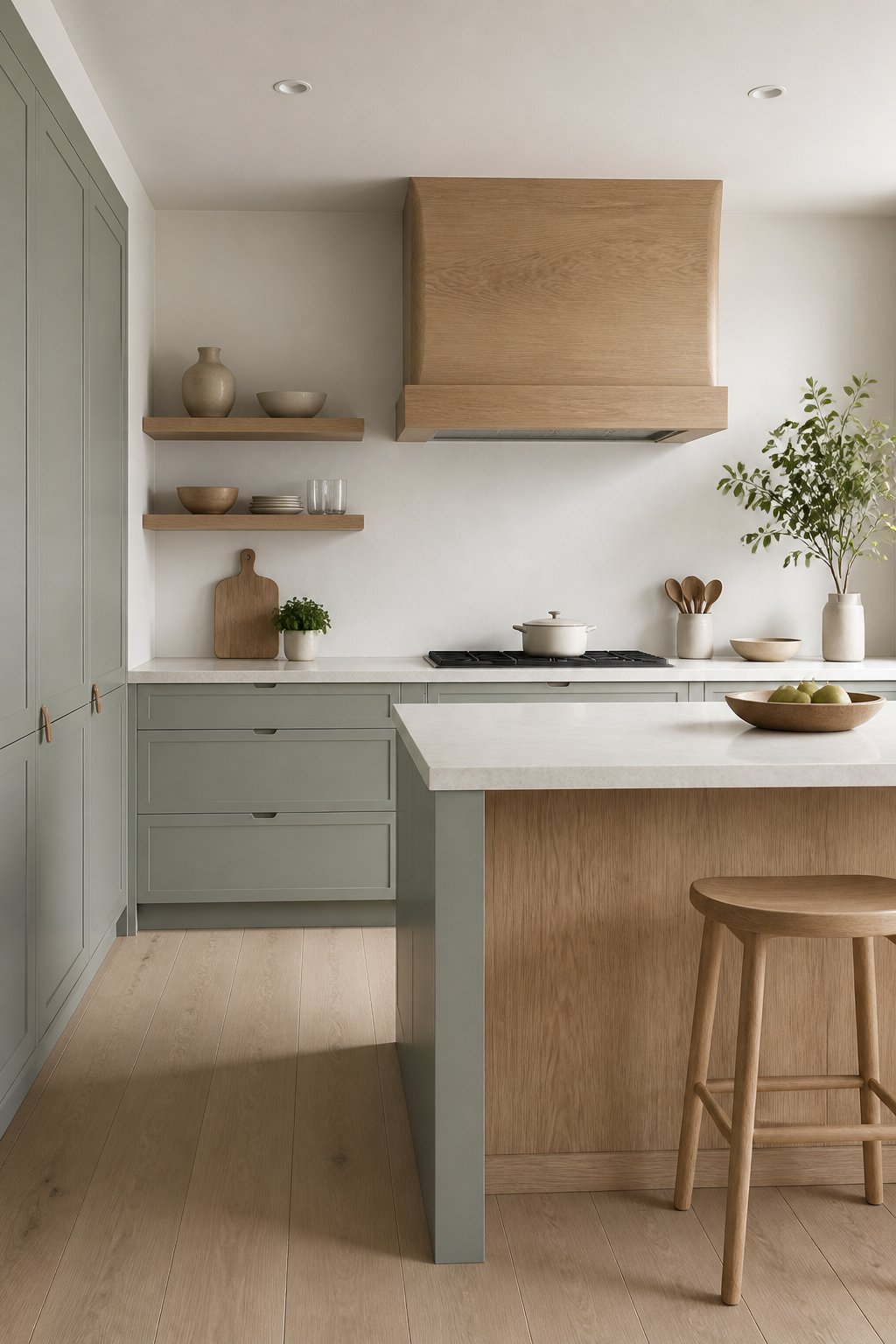
Pair Oyster Bay perimeter or island cabinets with sections of unpainted white oak or walnut. A wood range hood surround, floating shelves, plate rack, or island seating side can supply enough visible grain to make the painted cabinetry feel warmer and more organic.
White oak creates a lighter Scandinavian-meets-farmhouse mood, while walnut gives the kitchen a deeper, more tailored character. Keep the counters pale, using quartz, honed marble, or limestone-look porcelain, so the soft gray-green and natural wood remain the main visual layers.
Choose restrained hardware such as integrated finger pulls, slim bar pulls, or small leather tabs. Brushed nickel keeps the palette cool and clean, while aged brass adds a warmer note without competing with the grain. Add woven counter stools, handmade pottery, and a few open shelves styled with everyday dishes for a relaxed finish.
Inset Shaker Cabinets with Beadboard Detailing
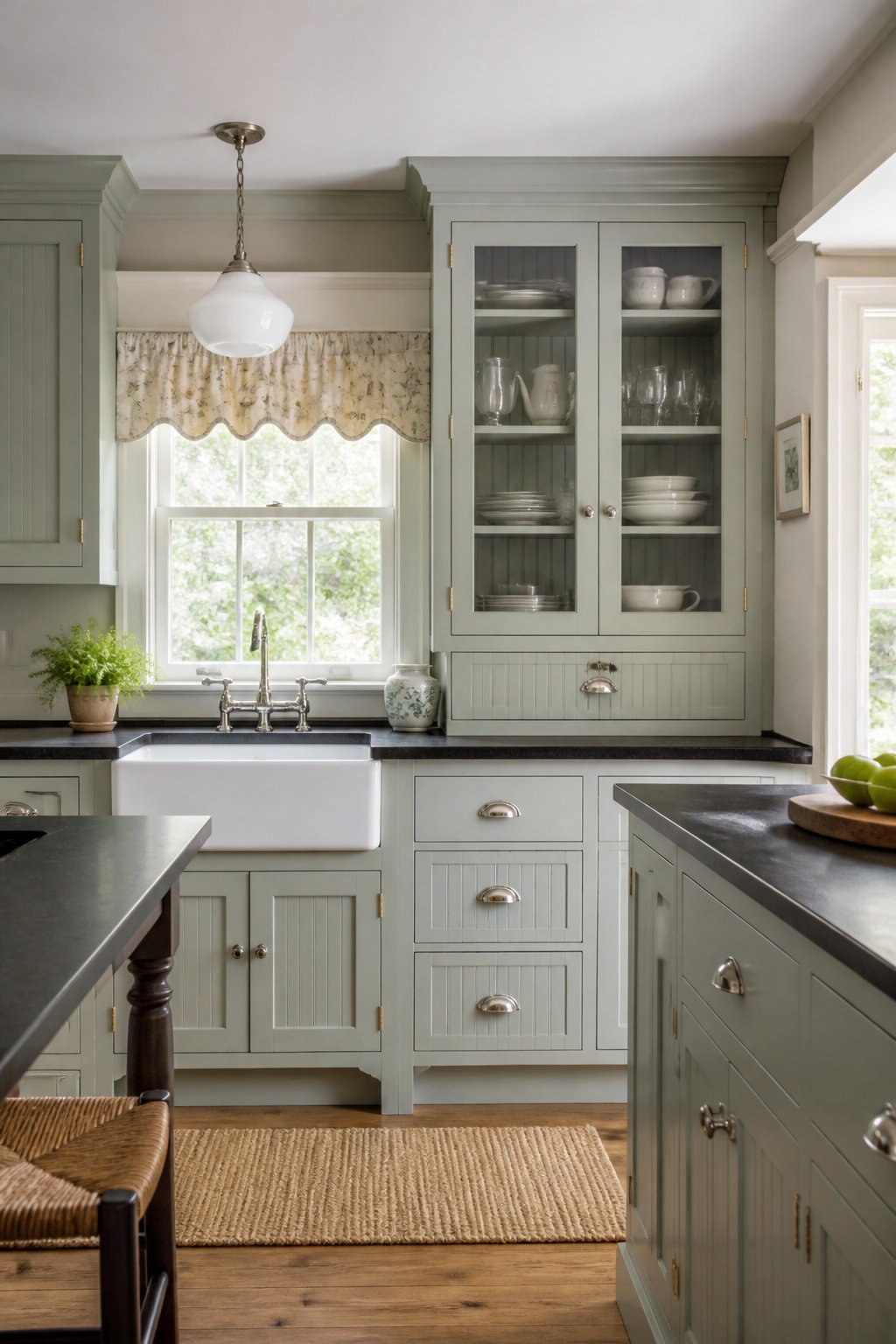
Choose inset Shaker doors in Oyster Bay for a built-in look, then add visible hinges and beadboard detailing to the cabinet end panels, sink base, or back of a glass-front hutch. The recessed doors and narrow bead lines catch changing light, giving the muted paint color more dimension.
A soapstone or honed-granite counter reinforces the cottage character with a soft, low-reflective surface. Polished-nickel bin pulls add a clean vintage touch, while a scalloped valance over the sink window brings a small architectural detail into view without making the room feel overly decorative.
Use simple schoolhouse pendants or opal-glass sconces for warm, even illumination. Style the glass-front hutch with creamware, clear glasses, and a few woven baskets so the beadboard remains visible. A stained oak floor and a linen café curtain complete the welcoming, crafted feel of this Oyster Bay kitchen.