

Sherwin-Williams Oyster Bay SW 6206 brings a soft, muted gray-green character to both classic and modern homes. Its subtle slate-blue undertone shifts with the light, feeling airy in bright rooms and more grounded as evening settles in.
The most successful Sherwin-Williams Oyster Bay house ideas pair this adaptable color with warm whites, natural wood, aged metal, and organic textures. You can use it across siding, entry details, connected interior spaces, and smaller architectural moments without making your home feel overly themed.
Oyster Bay Exterior Siding with Crisp White Trim
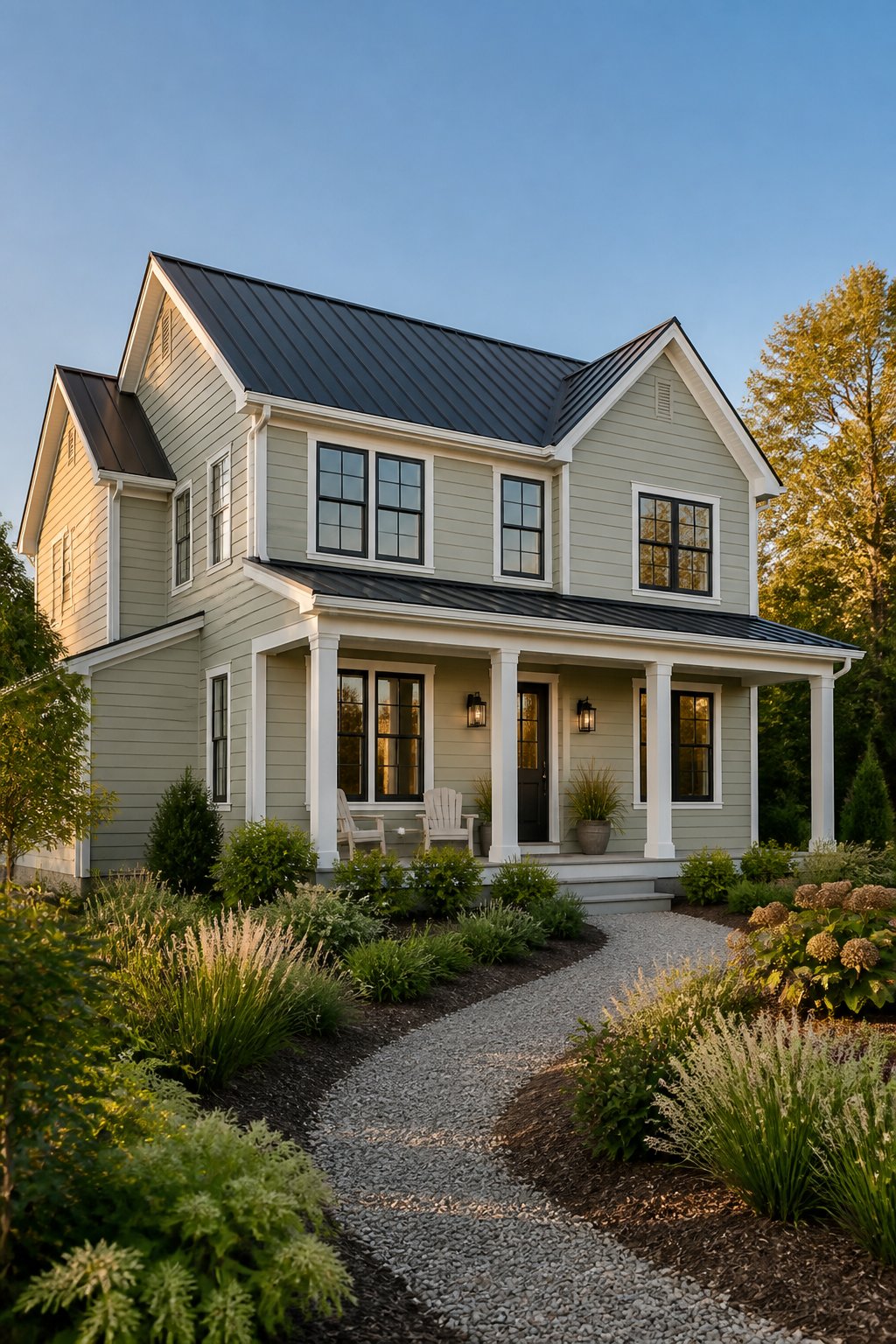
Use Oyster Bay across lap siding, cedar shingles, or board-and-batten panels for a weathered gray-green exterior that sits naturally beside trees, stone, and garden beds. Morning light may bring out its softer green side, while shaded elevations can read more slate-gray by late afternoon.
Warm-white trim on the fascia, corner boards, porch posts, and window casings gives the color a tailored edge without the sharp contrast of pure white. A charcoal roof creates a crisp, grounded finish, while bronze gutters and downspouts add a quieter, more traditional note.
Choose a low-sheen exterior finish that softens siding texture and helps disguise light dust and pollen between washes. Pair the color with a stained wood porch ceiling, natural stone steps, or a cedar front door for warmth. Black or bronze lanterns, simple house numbers, and dark window sashes can reinforce the architecture without competing with the paint.
Oyster Bay suits both farmhouse and coastal-cottage forms. Against white trim and a deep roof, it feels fresh and composed rather than starkly gray.
Muted Green Front Door and Porch Ceiling
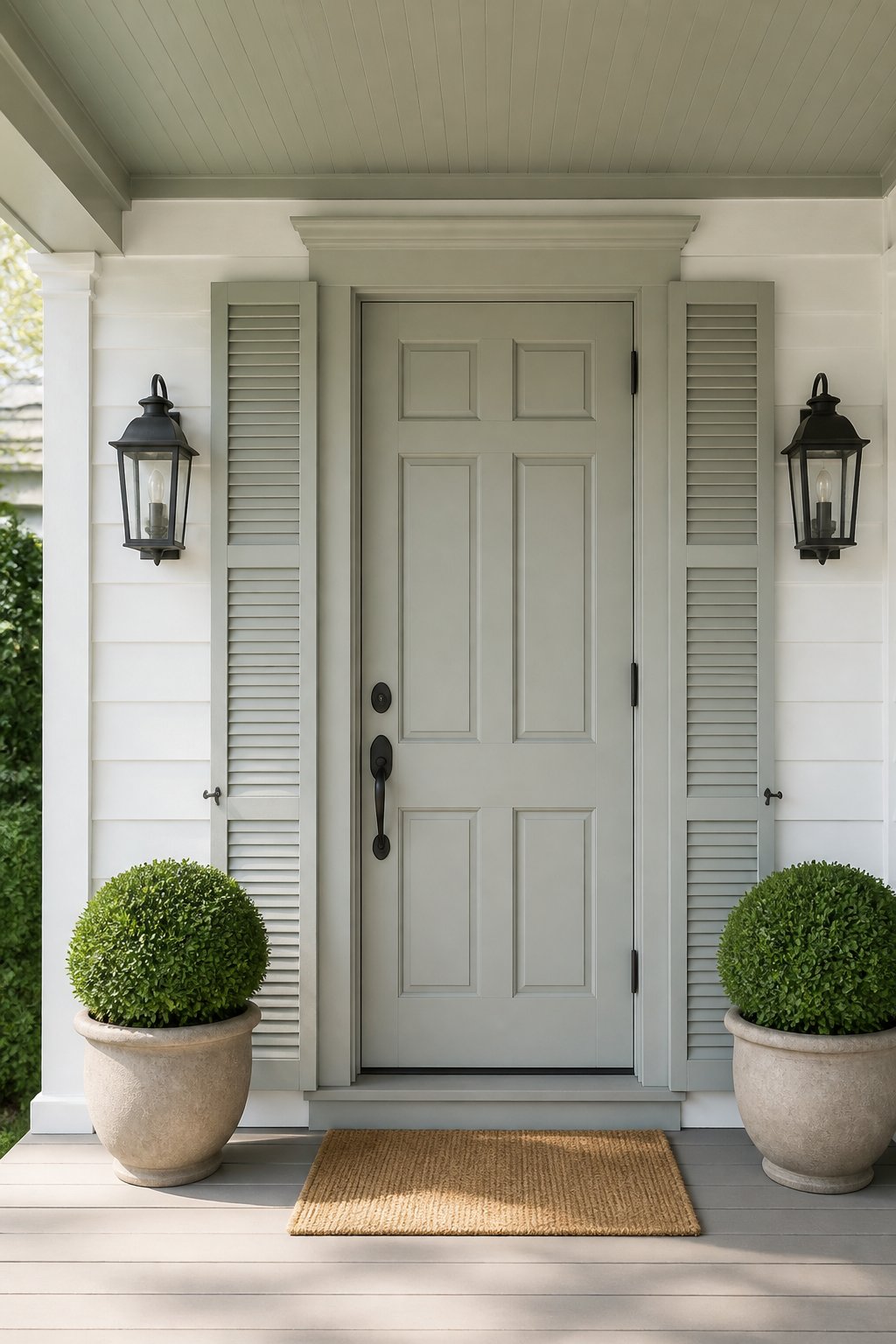
On a white or pale exterior, use Oyster Bay on the front door, shutters, and porch ceiling to create a welcoming entry with gentle color repetition. The muted gray-green feels established and calm, especially when paired with warm-white siding or brick.
A satin finish on the door gives you a durable surface with enough softness to complement the siding. Use an oil-rubbed bronze knob, keyed lock, and kick plate for a substantial, timeworn detail. Black lantern sconces provide definition at night, while a woven doormat and large terracotta or stone planters keep the porch from feeling too formal.
Painting the porch ceiling Oyster Bay offers a quieter alternative to a traditional sky-blue haint ceiling. The effect is subtle under daylight and especially pleasing beneath a warm pendant or flush-mount fixture.
Add a teak bench, a striped outdoor cushion, or clipped evergreen plants to layer the entry. Keep the surrounding trim warm white so the door and ceiling read as intentional accents rather than isolated patches of color.
Whole-Home Interior Flow Color
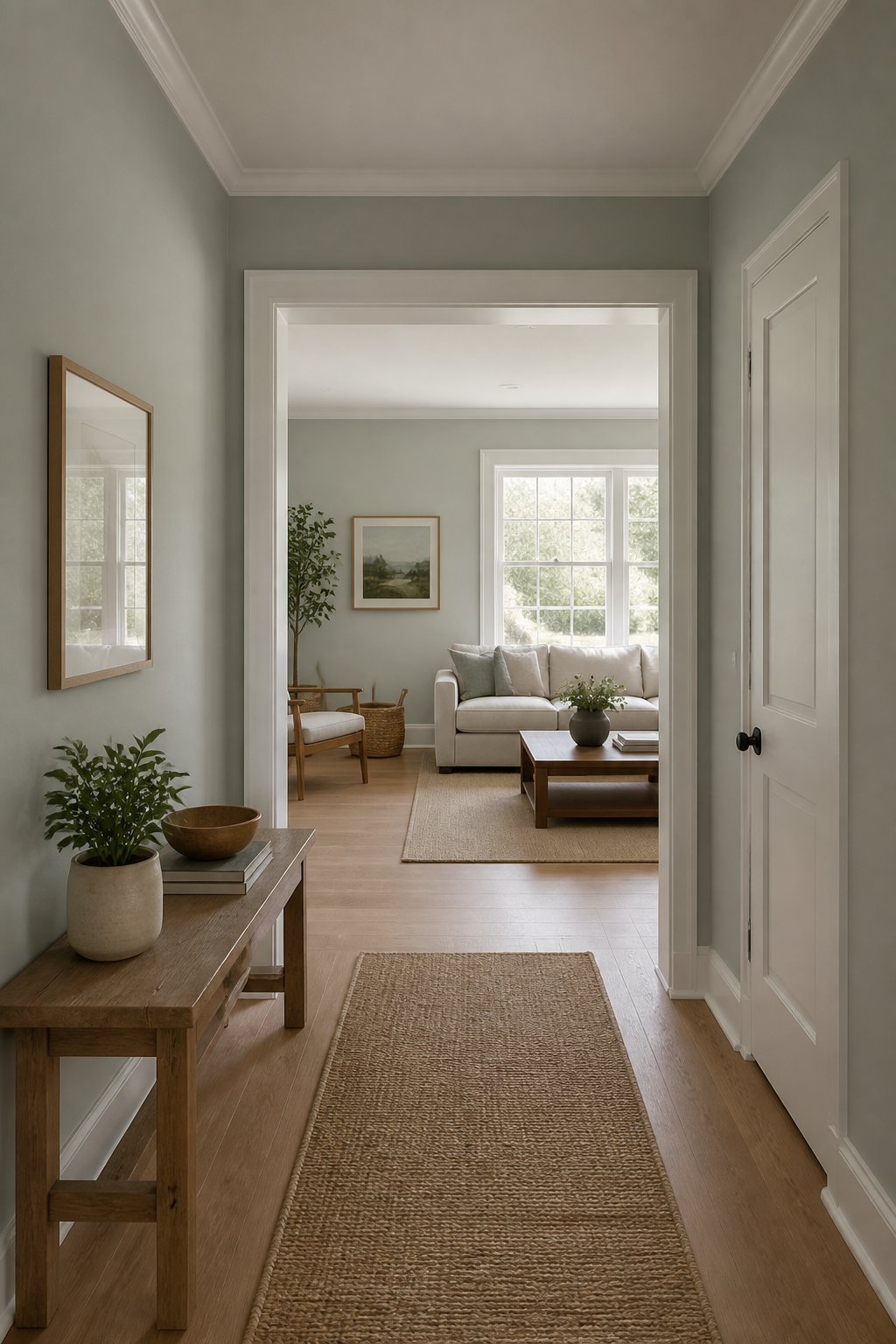
Carry Oyster Bay through the entry, main living room, hallways, and stairwell when you want your home to feel calm and connected. An eggshell finish gives walls a soft glow and stands up well to everyday living without looking glossy.
The color changes gently with exposure. North-facing rooms can feel cooler and more subdued, while south-facing spaces often bring out a warmer, greener quality. Test a large sample on more than one wall before committing, especially where daylight and artificial light overlap.
Keep baseboards, casings, doors, and crown molding in one consistent warm white. Then let the flooring and furnishings provide contrast: medium oak, walnut, woven rush, linen, limestone, and aged leather all sit comfortably against Oyster Bay.
Use aged brass lamps, black picture frames, and warm-glowing bulbs to keep the palette inviting after sunset. Collected art, pottery, and mixed wood tones add depth without interrupting the easy visual flow from room to room.
Detached Garage or Guest House Accent Structure
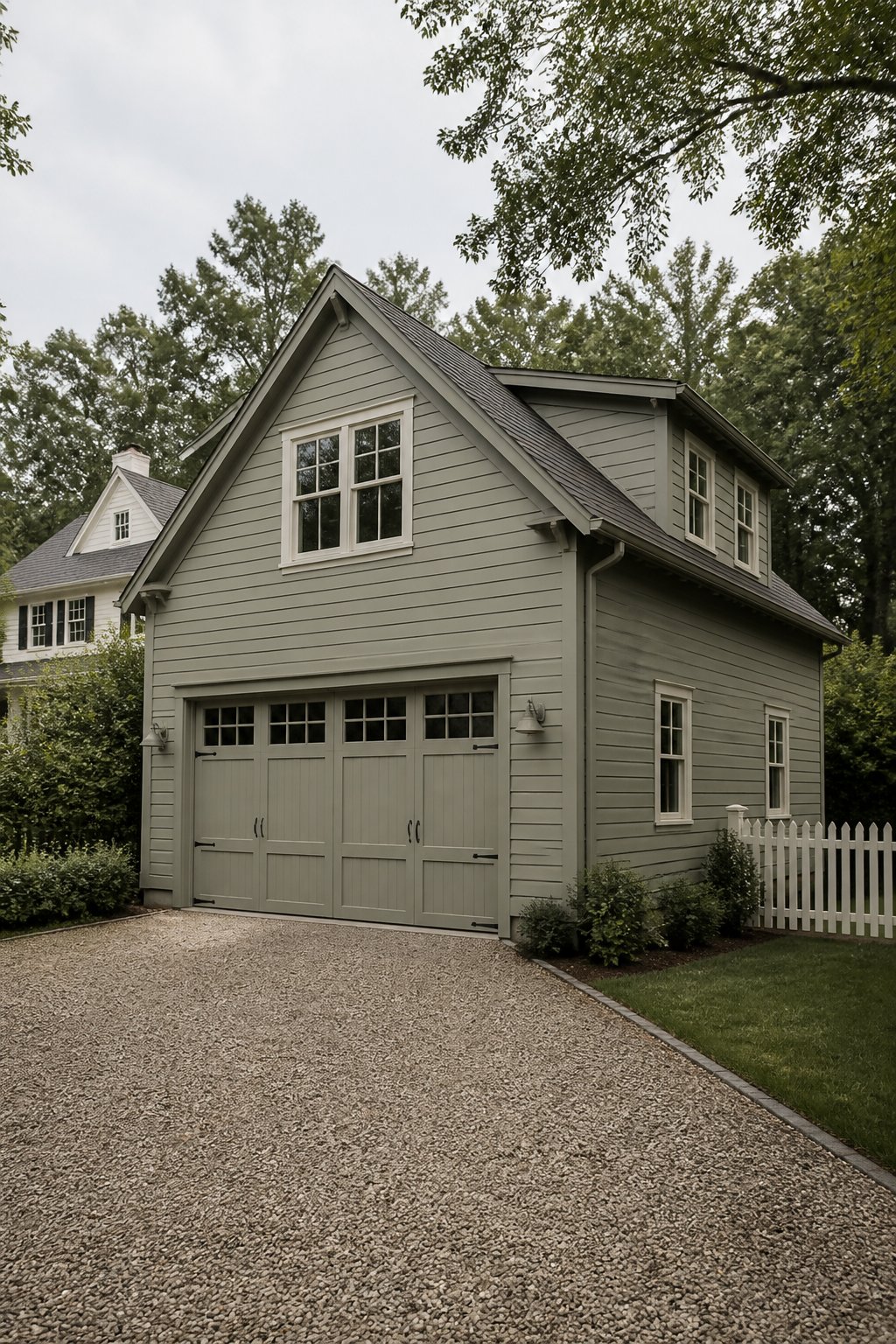
Paint a detached garage, pool house, shed, or ADU in Oyster Bay from siding through doors to give the secondary structure a cohesive, settled presence. Using the color on the garage doors or shed doors helps the building feel designed rather than treated as an afterthought.
The muted gray-green recedes into trees, fencing, and planting beds, making it useful when you want an outbuilding to support the landscape instead of dominate it. Choose a durable satin or low-sheen exterior coating for doors and trim, with extra preparation on high-touch surfaces.
Repeat the main house’s warm-white trim around the outbuilding windows, fascia, and corner boards. A charcoal roof, bronze hardware, and black wall lantern create a clear connection to the primary elevation. If the structure has a porch, add a stained wood bench, galvanized planters, or a simple teak chair.
For a guest house, continue Oyster Bay inside the entry or kitchenette through cabinetry, an accent wall, or built-in shelving. Natural oak floors, linen shades, and aged brass fixtures keep the small space airy and quietly polished.
Dining Room Color Drench with Ceiling
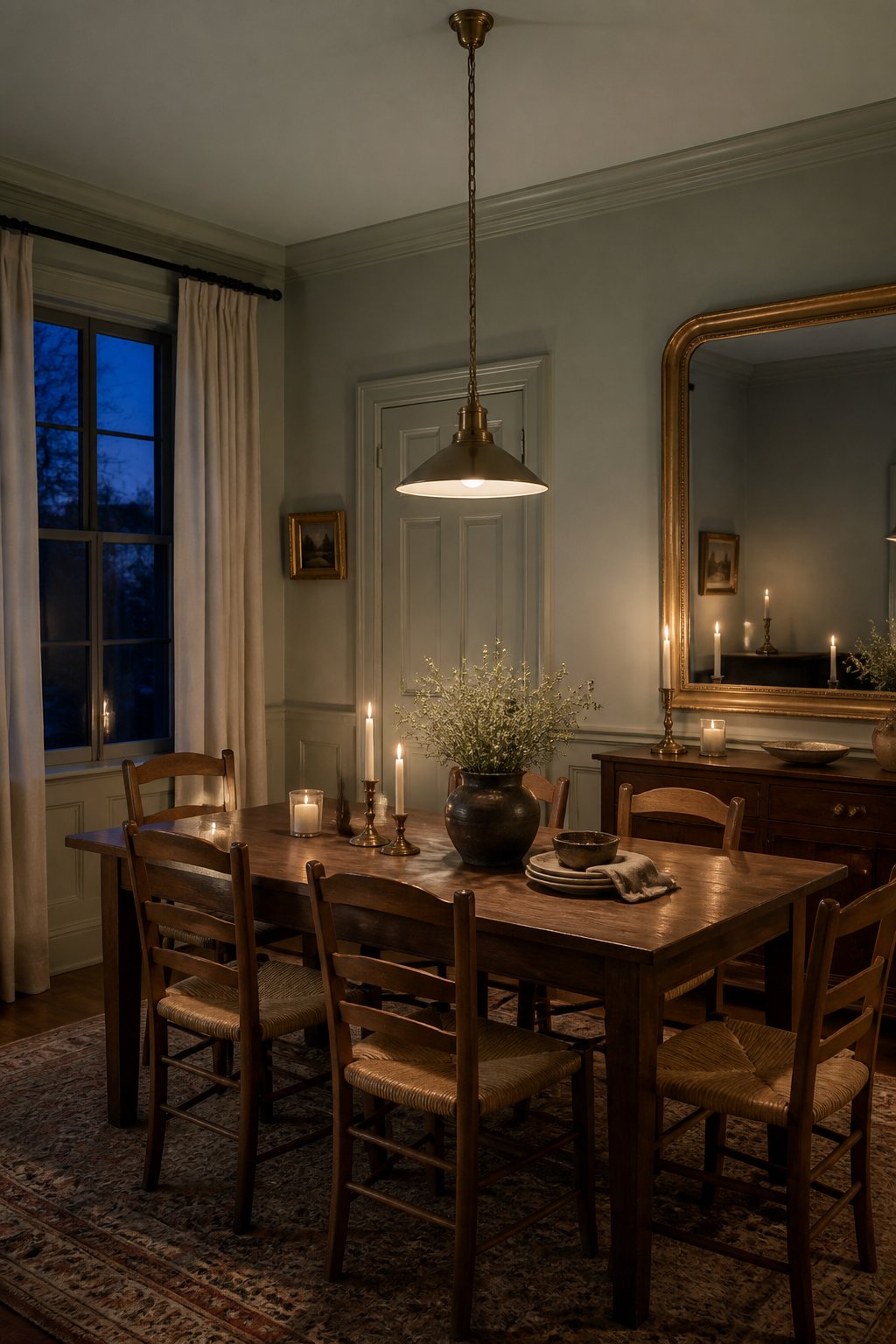
Color-drench a dining room in Oyster Bay by painting the walls, ceiling, trim, doors, and built-ins in the same shade. Use an eggshell finish on the walls and a softer flat finish overhead, or choose matching finishes if you prefer a seamless, enveloping effect.
The monochrome treatment gives a tall or modest room a more intimate mood. Under a warm brass pendant and candlelight, the gray-green takes on a dusky richness that makes a simple wood table feel especially inviting.
Choose a table in oak, walnut, or reclaimed wood, then pair it with rush-seat chairs or upholstered seating in oatmeal linen. Antique brass hardware on a sideboard, a large aged mirror, and framed landscape art add reflective surfaces without breaking the tonal scheme.
Use full-length linen drapery in flax or warm ivory to soften the windows. A low arrangement of branches, ceramic vessels, and woven placemats keeps the table styled for everyday meals as well as longer gatherings.
Exterior Body Plus Interior Mudroom Continuity
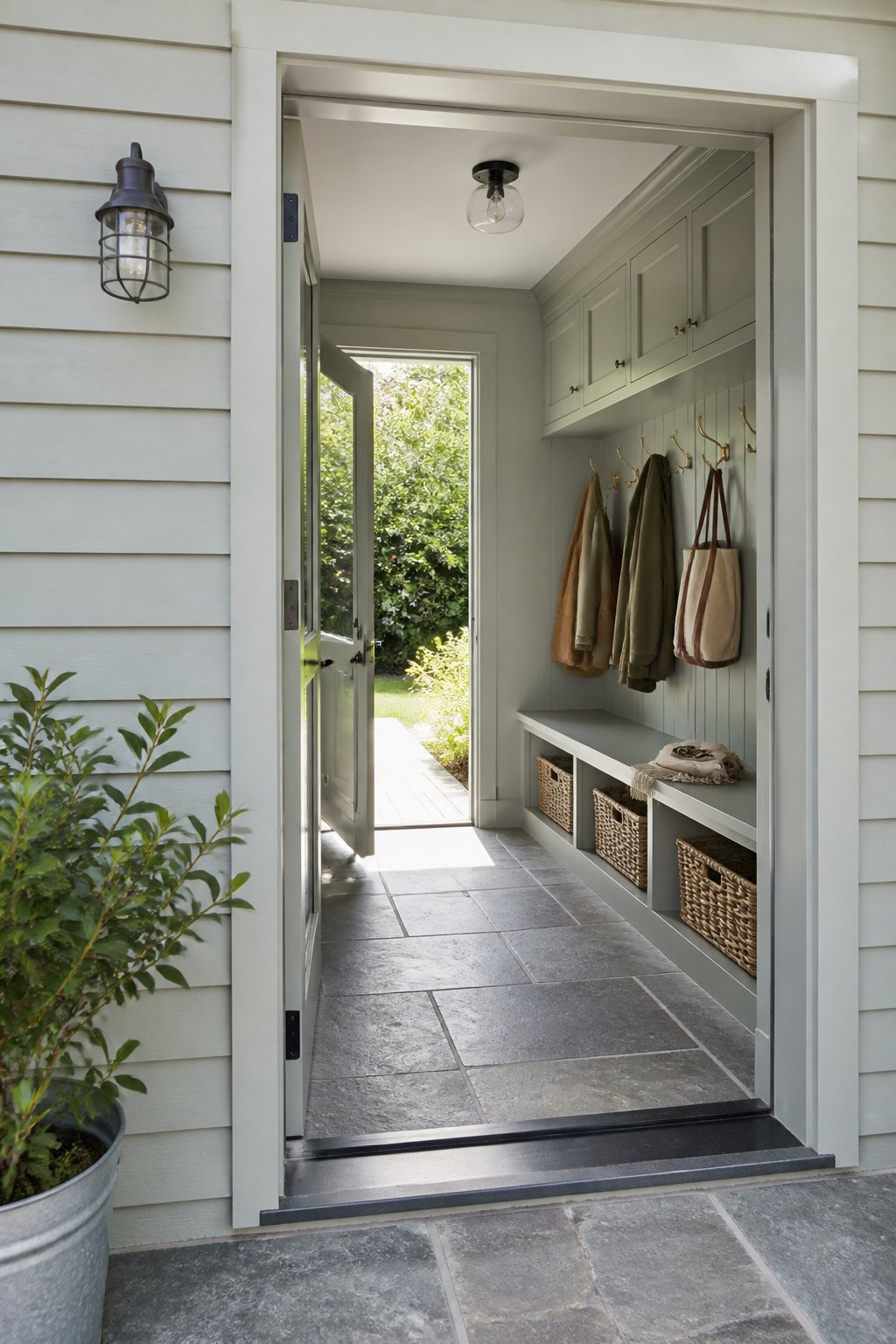
Match Oyster Bay on your exterior siding to the walls, lockers, or cabinetry of a mudroom near the back or side entry. The repeated color makes the passage from garden, driveway, or porch into the home feel deliberate and visually smooth.
For interior millwork, use a durable satin enamel so lockers, bench fronts, and cabinet doors can handle coats, bags, and frequent cleaning. Paint the walls in an eggshell finish, then ground the room with slate, terracotta, or textured porcelain tile.
A built-in Oyster Bay bench with a thick linen or striped cushion creates a practical landing place for shoes. Add aged brass hooks, a dark metal boot tray, and woven baskets for gloves, pet supplies, and daily clutter. Warm-white shelving or oak cubbies can provide a small break in the painted surfaces.
Use a flush-mount ceiling fixture or a pair of simple brass sconces to give the space a welcoming glow. The result feels hardworking, orderly, and connected to the landscape beyond the door.
Stairwell and Upstairs Hall Accent Runner
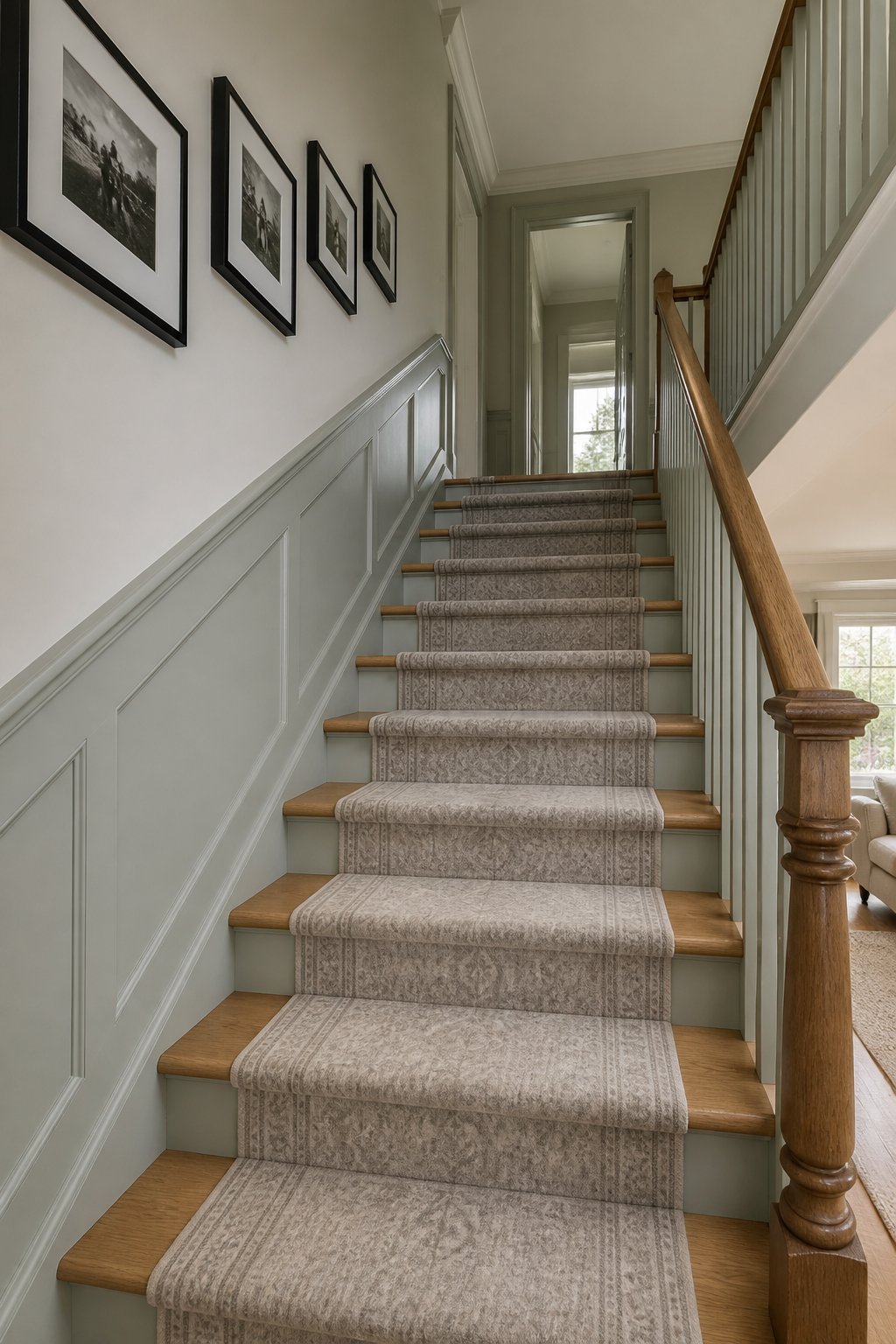
Use Oyster Bay on stair risers, staircase wainscot, and upstairs hallway walls while keeping the downstairs spaces in a lighter neutral. The color makes a tall stairwell feel more grounded and creates a softer transition toward bedrooms and private rooms.
Paint the risers and wainscot in a satin or semi-gloss enamel for durability, then use eggshell on the hallway walls. Natural wood treads and a stained handrail add warmth and keep the stair from feeling too enclosed.
A runner in charcoal, faded indigo, oatmeal, or muted rust brings pattern underfoot. Choose a low-pile wool style with a tailored border so it feels comfortable without competing with the paint.
Install warm-white bulbs in a pair of wall sconces or a slim stairwell pendant. Simple black gallery frames can march up the wall with family photos, sketches, or collected artwork. Against Oyster Bay, the frames feel crisp, while the natural wood rail keeps the composition personal and lived-in.